


Gichichi Factory
Gichichi Factory Washing Station – Nyeri, Kenya
Location and Context
The Gichichi Factory is a coffee washing station located in the Nyeri County of Central Kenya, a region globally renowned for producing some of the world’s most vibrant, complex, and high-acidity coffees. Specifically, the factory is situated near the Aberdare mountain range, which contributes to its cooler microclimate, fertile volcanic soils, and high altitudes—ideal growing conditions for exceptional Arabica coffee.
• Elevation: Approximately 1,700–1,900 meters above sea level
• Region: Othaya Division, Nyeri County, Central Kenya
• Nearby geographic features: The Aberdare Mountains and proximity to Mount Kenya, both of which shape the region’s unique terroir
The factory serves as a collection and processing hub for hundreds of smallholder farmers in the surrounding hills who typically cultivate SL28, SL34, Ruiru 11, and Batian varieties on small plots of land averaging 1/8 to 1/4 hectare in size.
Ownership and Management
The Gichichi Factory is operated under the Othaya Farmers’ Cooperative Society (FCS), one of the most respected and historic cooperative societies in Kenya’s coffee sector. Othaya FCS consists of more than 15 wet mills (factories) and over 10,000 smallholder members across Nyeri County.
• Cooperative Society: Othaya Farmers’ Cooperative Society
• Founded: Othaya FCS was established in 1956
• Factory Management: A factory manager and committee members elected by cooperative members oversee day-to-day operations, quality control, and farmer engagement
Gichichi is one of the smaller-volume factories within Othaya FCS, but it consistently punches above its weight in cup quality and lot traceability, often producing microlots and auction-quality coffees that score 87+ on the cupping table.
Processing Methods
The Gichichi Factory follows Kenya’s traditional washed (fully washed) method, widely regarded as one of the cleanest and most meticulous coffee processing systems in the world. The washed process here is tailored to maximize clarity, brightness, and structure in the cup.
Processing steps typically include:
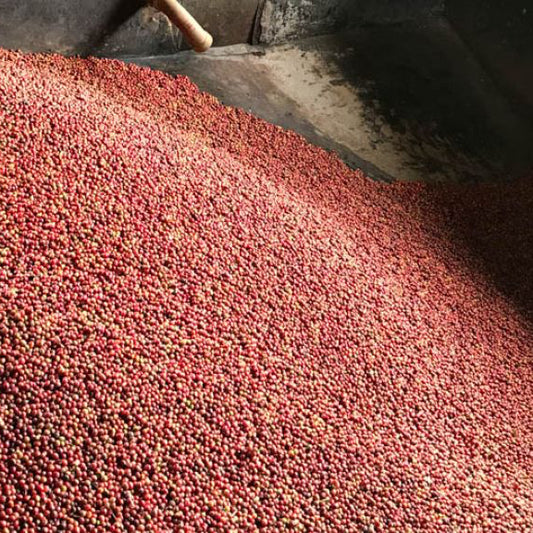
1. Cherry Selection: Farmers handpick only ripe, red cherries and deliver them to the factory the same day.
2. Sorting: Cherries are hand-sorted again to remove underripe or defective fruit before pulping.
3. Pulping: The cherries are depulped using a disc pulper, separating beans from fruit mucilage.
4. Fermentation: Beans are fermented for 12–24 hours (depending on ambient temperature) to break down the mucilage.
5. Washing: After fermentation, beans are washed in clean water channels where they are graded by density (the heavier, higher-quality beans sink).
6. Soaking: Beans may be soaked in fresh water for up to 24 hours to improve cup clarity and acidity.
7. Drying: The washed parchment coffee is sun-dried on raised drying beds for 7–15 days, with continuous turning and cover during intense sun or rain.
8. Storage & Milling: Once fully dried to ~11–12% moisture, parchment is bagged and stored in cooperative-owned warehouses before being transported to dry mills for export preparation.
Cultivars and Farming Practices
The majority of farmers delivering to Gichichi grow traditional Kenyan cultivars, primarily:
• SL28: Known for drought resistance and exceptional cup quality
• SL34: Similar to SL28, but more resistant to leaf rust; often adds depth and fruit complexity
• Ruiru 11: A modern, disease-resistant hybrid bred for higher productivity
• Batian: A newer hybrid combining disease resistance with better cup potential than Ruiru 11
Most farmers use organic farming techniques by necessity, as fertilizers and pesticides are expensive and applied minimally. Shade is provided naturally by banana, grevillea, and macadamia trees. Soil fertility is enhanced using composted cherry pulp and mulching, and many farmers interplant coffee with maize, beans, or tea to diversify income.
Cup Profile and Market Positioning
Coffees from Gichichi Factory are known for embodying the classic Nyeri profile—elegant structure, high acidity, and intense sweetness.
Common flavor notes include:
• Blackcurrant
• Raspberry
• Cranberry
• Pink grapefruit
• Floral notes (hibiscus, jasmine)
• Sugarcane, brown sugar, or honey-like sweetness
The washed coffees from Gichichi are often prized by specialty roasters for their clarity and explosive fruit, making them ideal for single origin offerings, pour-overs, and competition coffees. They often score between 86–89 points, depending on lot and year.
Gichichi lots have appeared in both international auctions and direct trade programs, and they are often separated by day or farmer delivery when quality warrants it.
Challenges and Opportunities
Challenges:
• Climate Variability: Erratic rains and rising temperatures affect flowering and uniformity of ripening
• Aging Trees: Many farmers have older SL28/SL34 trees needing renovation
• Low Yields: Small plots limit total cherry production per farmer
• Youth Migration: Fewer young people are taking up coffee farming in the region
Opportunities:
• Specialty Premiums: Traceability, elevation, and processing precision allow Gichichi to command higher prices on the specialty market
• Farmer Education: Ongoing agronomy programs through Othaya FCS help improve pruning, fertilization, and quality
• Experimentation: Some lots have been processed with extended fermentation or natural drying for more diversity in cup profile
• Direct Trade Relationships: Transparency and traceability have increased Gichichi’s appeal to boutique roasters and importers worldwide
The Gichichi Factory exemplifies the legacy, precision, and potential of Kenyan specialty coffee. Nestled in the rich volcanic soils of Nyeri County, this small but mighty washing station continues to produce vibrant, fruit-driven lots that capture the essence of high-altitude Kenyan terroir.
Its affiliation with the Othaya Farmers’ Cooperative Society gives it stability, access to resources, and a strong export channel. Meanwhile, the farmers’ commitment to quality, traditional SL cultivars, and meticulous processing reinforce Gichichi’s reputation as a producer of some of the finest coffees in East Africa.
For specialty buyers, Gichichi coffees are a go-to for classic Kenyan cup profiles, offering the bright acidity, complex fruit layers, and sweetness that define top-shelf microlots.
Shop Coffee from Gichichi Factory
Kenya Nyeri Gichichi
3.0 / 5.0
(1) 1 total reviews