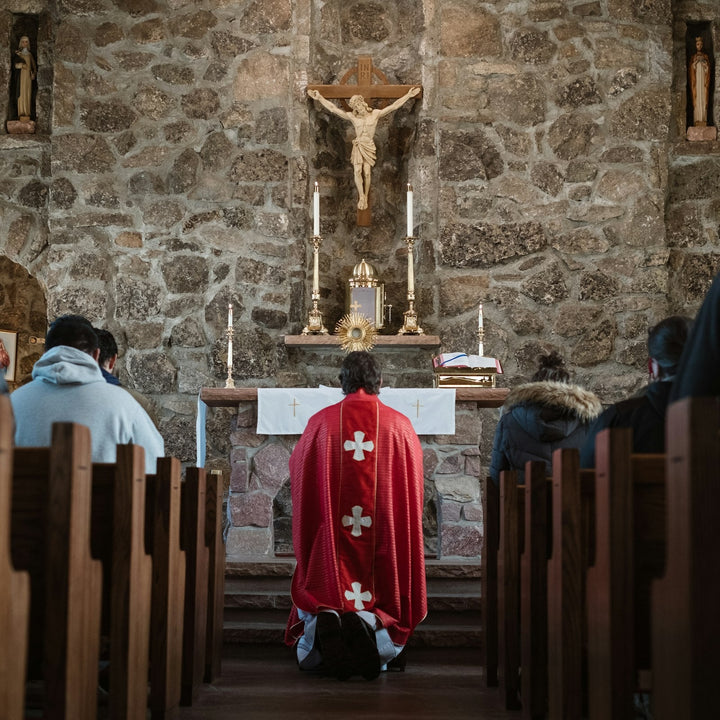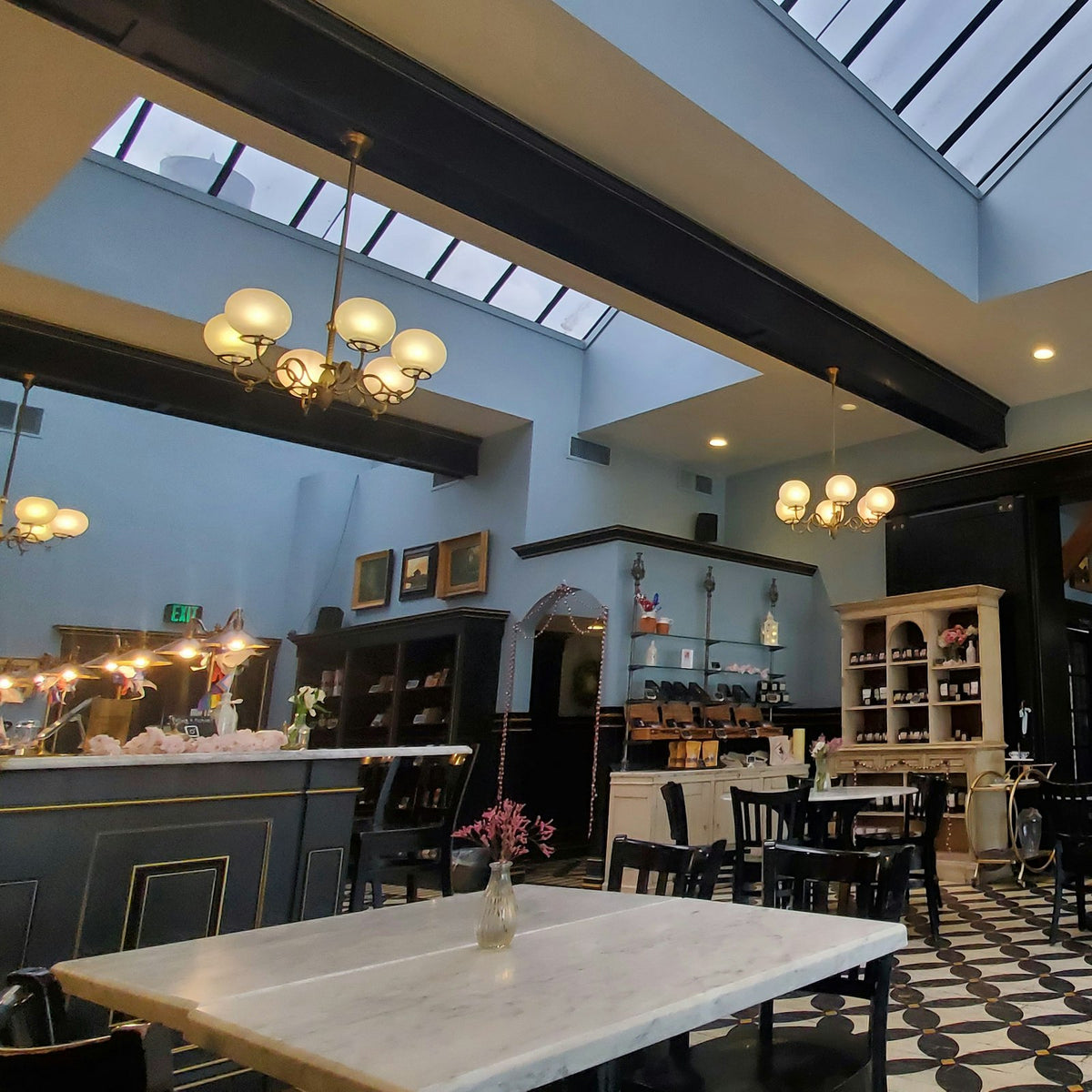
In 2023 my wife Melanee and I stood in an empty cafe space off the lobby at Echo Life Church, in Pensacola, and talked about renting it. The idea we walked in with was ours to run: lease the room from the church, build the shop, put our name on it, and open. On paper it is a good deal for a young coffee company. You get a room with a built-in audience and you do not have to buy a building.
We let that idea go quickly, and the reason we let it go is the answer to the question in the title. The church should own its coffee shop outright, including the buildout, the equipment and the business itself, and the coffee company should be there on a contract. I am the coffee company in that sentence. The structure I am arguing for is the one that leaves me holding the least, and I have held it that way since 2024 without regretting it.
A church cafe can be owned four different ways
The structural menu here is not a mystery and it is not something I invented. The most complete document in this conversation belongs to a denomination rather than to the coffee trade: the Baptist Union of Great Britain publishes Guideline Leaflet L03: Churches and Coffee Shops, a British guidance paper revised in November 2025, and it sets out four ways a church can hold a cafe.
The first is to run it inside the church's own activities, as one more thing the church does, on the church's own books. The second is to set it up as a separate legal entity, linked to the church but not part of it. The third is to run it in partnership with other churches, so that the entity and the risk are shared across more than one congregation. The fourth is to let it run as an outside commercial activity, which is the model where somebody like me leases the room and trades in it, and which the leaflet deliberately puts outside its own scope.
The leaflet prefers the second, and its reason is a good one. A separate entity is a safeguard for the church, whose general funds would otherwise be exposed if the trading went badly. That is a risk sentence, and it is written for trustees, and trustees are exactly who should be reading it.
Two things about it before we go further. It is British, and it is written against British charity law, so the registrations and the thresholds in it are not your registrations and your thresholds. The structures travel. The numbers do not. And the document is thorough enough that I would rather point you at it than restate it badly, which is what most of an article like this one would otherwise be.
The American versions of these questions are genuinely different questions, and I will come back to that at the end rather than pretend I can settle them here. What carries across is the shape. Every one of those four models is a decision about who holds the asset, who carries the loss if it goes wrong, and who is still standing in the room afterward. The last of those three is where I have something to add, because I have been the person standing in the room.
Every one of those structures is reasoned from the church's side of the table
Read the four models again and notice what they are built to protect. The general funds. The trustees. The church's ability to keep doing the thing it exists to do if the cafe loses money for two years running. That is the right thing for a church to protect, and if a church asked me which of the four to take, I would send them to the leaflet and agree with its answer.
There is a second seat at that table, though, and the person in it carries a different exposure. Somebody has to actually run the cafe. If that somebody is not the church, and instead is a coffee company, a local operator, or a couple from the congregation who happen to have a business, then that party is making a set of commitments the guidance is not written to weigh, because it was never that document's job to weigh them.
Here is the operator's version in plain terms. An operator inside somebody else's building holds no lease on its own future. Every dollar of buildout, every piece of equipment bolted to a wall, every hour spent training a bar team, raises the value of a room the operator does not control. The improvements do not travel. The espresso machine might — the counter it sits on does not, and neither does the foot traffic, and neither does the habit people form of turning left after the service.
The Baptist Union leaflet has a section titled "Leases, rents and guarantees," and it is a careful section, and it is about what the church should be careful to agree to. Security of tenure for the operator is a separate question, and it belongs to the operator to raise. So does the harder one underneath it, which is what happens to the business when the landlord's own plans change.
None of that makes the four models wrong. It makes them a document written for one of the two parties, which is what they are and what they should be. If you are a church weighing this, the useful move is to ask your prospective operator what they are exposed to, and then listen to the shape of the answer. It will tell you whether they have thought about the arrangement past opening week.
A growing church will need its room back, and that is a good thing
Back to the empty room in 2023.
Melanee and I had most of the plan built before we talked ourselves out of it. Rent the space. Put in our own equipment. Open under our own name. Have a cafe with a congregation walking past the door on a Sunday and a neighborhood walking past it the rest of the week. It is the arrangement a lot of small coffee businesses would take if it were offered to them — and we were close to taking it.
What stopped us was the church's growth, and specifically how fast it was going. A church that is growing will eventually be able to use every square foot it owns. Kids' space. Offices. A second service that needs somewhere to put people. The room we were standing in was the obvious candidate for all of that, because it was the flexible one, and flexible rooms are the first ones a growing congregation reaches for.
I was not upset about that then and I am not now. A church filling up its own building is a church doing the thing it exists to do, and I would rather be near a church that is growing than one that is not. It would still have been a disaster for us.
Work it forward and you can see why. We spend a year and a real amount of money building a shop in that room. We put our name over the door and teach people to look for our name in that spot. We build a customer base that is, honestly, mostly the church's own people. Then the church grows into the space, does the right thing for its own mission, and takes the room back. We would not have been wronged. We would just have been gone, with a brand that had spent a year telling people to go somewhere it no longer was.
The general form of that is uncomfortable if you are the tenant. The better the church does, the worse your deal gets. That is close to the opposite of how a commercial lease is supposed to work, where a landlord's success and a tenant's success at least point in the same direction, and it is why the room off a church lobby is a harder place to be a tenant than it looks from the parking lot.
Which turns the ownership question inside out. If I am the operator, the structure I should want is not the one where I hold the most. It is the one where the asset belongs to the party whose growth I am rooting for, and my stake is a contract that has to be earned rather than a lease that has to be defended. A lease makes the church's success my problem. A contract makes the church's success my argument for staying.
There is a practical version of the same point that has nothing to do with loyalty. A church that owns its cafe and needs the room can move the cafe, shrink it, pause it for a season or rebuild it somewhere else in the building, and the conversation it has to have is a conversation with its operator about a schedule. A church that leased the room to a tenant has to have a much worse conversation, with somebody whose money is in the floor. The first version protects the relationship. The second version is where church partnerships go bad, and they go bad at exactly the moment the church is succeeding.
That is the whole thesis, and I did not arrive at it as advice for somebody else. I arrived at it as a decision about my own business, standing in a room I wanted and did not take.
We lease equipment into a room we do not own, and we would not do it the other way round
The dates are already published on our own site, on the page that walks through how Echo Coffee got built. The order of them is short: a meal with the church's pastors in September 2023, a plan presented on October 16, 2023 with a financial review attached to it, a soft launch on Easter Sunday, March 29, 2024, and the full public opening on August 4, 2024.
The part of that plan I would point at is not a launch date. It is a line item. On October 16 we proposed leasing our own commercial coffee equipment to the church on favorable terms, and that is the thing that made the build affordable at the time. A church that has to buy a full bar outright before it has sold a single drink is making a much larger decision than a church that does not.
Notice the direction of that lease. It runs from the coffee company into the church. Not from the church into the coffee company. We put our own equipment into a building we do not own, on terms that favored the party that owns the building, and we did it on purpose, because the arrangement we were working toward was the one where the church ended up holding the cafe.
Echo Coffee is owned by Echo Life Church. Inheritance operates it under a contract we still hold, and have held since the launch. Our roastery did not exist yet when any of this started. We began roasting under the Inheritance name in December 2023, after the plan for Echo was already on paper, so the first substantial thing this company ever did was build something for somebody else to own.
The direction of a lease is also a signal, and it is worth reading as one if you are on the church side of this. A party willing to take the smaller position at the start is a party that has thought about what the arrangement looks like in year four. A party that wants the room, the name and the buildout is not necessarily acting in bad faith, but they are asking the church to carry the cost of their growth, and that is a fair thing to say out loud in a first meeting rather than in a third one.
The other thing an operating contract has that a long lease does not is a natural point of review. A contract is a thing both parties come back to; a lease is mostly a thing you sign once and then live inside for a decade. Under a contract the church keeps a real opportunity to decide whether we are still the right people, and we keep a real reason to be worth keeping. I would rather be re-examined than protected.
People ask what the operator gets out of an arrangement like that, and the honest answer is the work, the relationship, and a contract that has to be earned again. What we do not get is the asset. If Inheritance vanished tomorrow, Echo Coffee would still be there, because the church could hire another operator and the doors would stay open. I think that is the correct outcome. I would build it the same way a second time.
Church ownership is the wrong answer more often than we would like
Ownership is the wrong answer for a real number of churches, and for some of them a cafe is the wrong answer entirely. Three cases where I would say so out loud.
The first is when the job has no owner on staff once the excitement wears off. A cafe is a business with a schedule, an inventory, and a rota that has to be filled every single week. If the honest answer to "who is responsible for this in eighteen months" is a shrug, then owning it is a liability with an espresso machine attached.
The second is when the room is the only flexible space the church has. If the cafe takes the room that currently absorbs the youth group, the weekday mothers' morning and the deacons' meeting, the cafe will lose that argument in year two, and it should.
The third is when the actual problem is that the coffee in the lobby is bad. That is a much cheaper problem and it does not need a business built on top of it. Before ownership matters at all, a church can find out whether the demand is real by running a cart in the lobby for a few Sundays. And if what comes back is that people want better coffee and the church cannot find anyone to run a shop, that is a supply relationship rather than a build, which is why we sell coffee to churches that are never going to build anything.
Then the concession that costs us. The structure I have spent this article arguing for is the one where Inheritance owns nothing. Echo Life Church owns Echo Coffee outright, and if they ever decide we are not the right operator, they end the contract and keep the cafe. I would still tell you that is the correct arrangement.
And the tax question, because it comes up in the first meeting almost every time. Normally a coffee shop does not put a church's tax-exempt status at risk. There are conditions attached, and they turn on who the shop serves and when. A cafe that opens on Sunday for the congregation is likely to be treated as an amenity of the service, which generally means it can run without its own legal or tax structure and sits inside the church's own general liability insurance. A cafe that is open to the public and trades like any other cafe apart from the services is likely to be a separate legal and taxable entity. In between there are structures. A church can hold the cafe as a for-profit or a non-profit subsidiary, or set it up as a separate for-profit company altogether. What a for-profit subsidiary cannot do is use the parent's exemption. Some churches do set the cafe up as a mission-oriented non-profit subsidiary, and that route can carry exemptions of its own.
That is what I have watched churches do, and it is not a legal opinion. IRS Private Letter Ruling 201645017 denied tax-exempt status to a coffee shop affiliated with a church on the grounds that it was operating in a commercial manner, as reported by StartCHURCH. A private letter ruling binds the party who requested it and is not precedent. I am not an attorney and I am not your accountant, so take the structure you are considering to both of them with your county and your state in front of you. Whether to start a cafe at all is its own question, and what one costs is written down separately.
Melanee and I wanted that room. Deciding not to own it is the reason we are still in it.
If you want to work through this with us
Inheritance does coffee shop consulting for churches, and the first conversation is a conversation rather than a proposal. Bring three things to it: your average Sunday attendance, the space you actually have in mind, and who signs for that room. Not who would run the cafe. Who signs for the room. That third one shapes the structure more than the other two put together, and it is the one people have usually not asked by the time they call us.