More than 130 participants from 16 countries met in central Italy on 19 and 20 November 2026 for the first Science Driven Coffee Cup, a conference on how chemistry, the brain and the setting shape the way people taste coffee, according to Beverfood's report by Alessia Muraca on 20 November. The event was held at the Simonelli Group campus in Belforte del Chienti, in the province of Macerata, and organized by RICH, a research hub the University of Camerino and the espresso-machine maker Simonelli Group founded in 2016.
The program ran to five scientific sessions, 20 oral presentations, four keynote lectures, two plenary lectures and 18 posters, Comunicaffè reported on 22 November. The Società Chimica Italiana, Italy's chemical society, gave the event its patronage, and the Coffee Science Foundation took part.
What did the talks say about cups, sound and setting?
Charles Spence of the University of Oxford gave a talk titled "The gastrophysics of coffee," Comunicaffè reported in its account of the second day. According to that report, he argued that color, sound, shape, packaging and background music all shape what a drinker expects from a coffee, and that the noise of an espresso machine produces a different perception from a capsule machine or a moka pot. He also cited latte art and the shape and material of the cup. The report gave no figures from his work.
Vincenzo Russo of IULM University in Milan served the same coffee in three settings, one neutral, one Italian and one not Italian, while measuring brain activity, heart rate, skin response and implicit associations, Comunicaffè reported. The most Italian setting strengthened the link drinkers made with Italy and raised their positive emotional response, according to the report.
Kate Howell presented work on saliva, which she said helps explain why people perceive aroma differently. Comunicaffè reported that experts tend to produce more saliva, that individuals vary widely, and that filter coffee was perceived very differently hot and cold.
What did researchers report about decaf and consumer liking?
Mateja Lesar compared regular and decaffeinated coffee in 20 habitual drinkers who did not know which they were given, Comunicaffè reported. Most measures showed no significant difference between the two; only resting alpha brain waves and one of three cognitive tests did.
On the first day, Jean-Xavier Guinard of the University of California said consumer liking can be predicted from three answers: whether a coffee's flavor and its acidity were about right, and whether the taster ticked sweetness from a list, Comunicaffè reported on 19 November. That matches a UC Davis paper in npj Science of Food, published on 14 March 2026, in which a model built on those three features predicted liking with 0.75 accuracy on held-out data, using ratings from 118 consumers who tasted 27 black drip coffees.
Who was recognized at the conference?
Both Comunicaffè and Beverfood reported the same awards, presented at a dinner on 19 November. Chahan Yeretzian, founder of the Coffee Excellence Center at the Zurich University of Applied Sciences, received a lifetime achievement award. Devin Peterson of Ohio State University received an award for coffee science, Spence one for sensory research, and Davide Rovelli, who studies coffee chemistry, a rising star award. A fifth award went to work on reusing spent coffee grounds. Peterson's current project, which aims to predict flavor from green-bean chemistry, was reported here on 21 November.
No abstracts or papers from the talks had been posted by 22 November, and the coverage found was in the Italian trade press, so the findings above are as Comunicaffè reported them. For how cuppers score coffee, see what a coffee cupping score is, and for the attribute Guinard's model leans on, what sweetness in coffee is.
- Participants: more than 130, from 16 countries (reported by Comunicaffè and Beverfood, 20 to 22 November 2026)
- Program: 20 oral presentations, 4 keynotes, 2 plenaries, 18 posters (reported by Comunicaffè, 22 November 2026)
- Consumer-liking model: 0.75 accuracy from three sensory answers, 118 consumers (published in npj Science of Food, 14 March 2026)
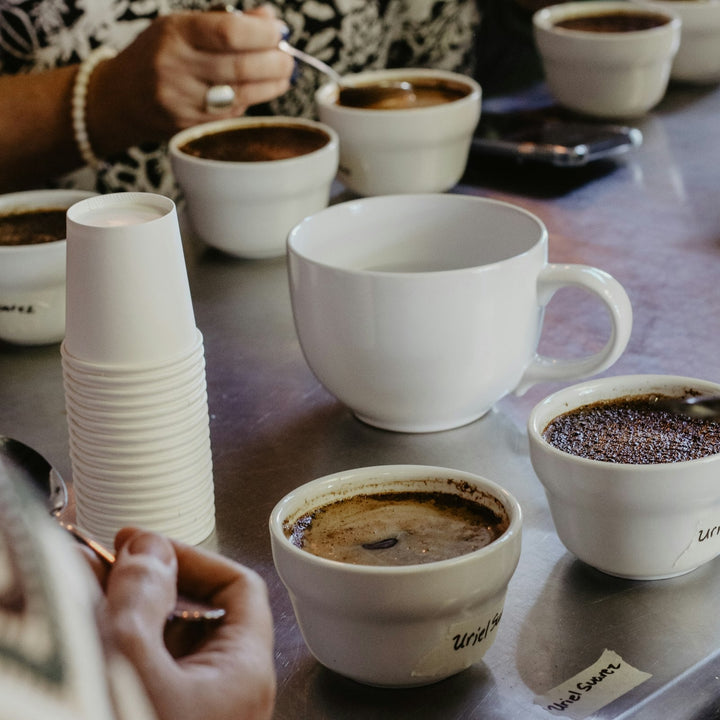
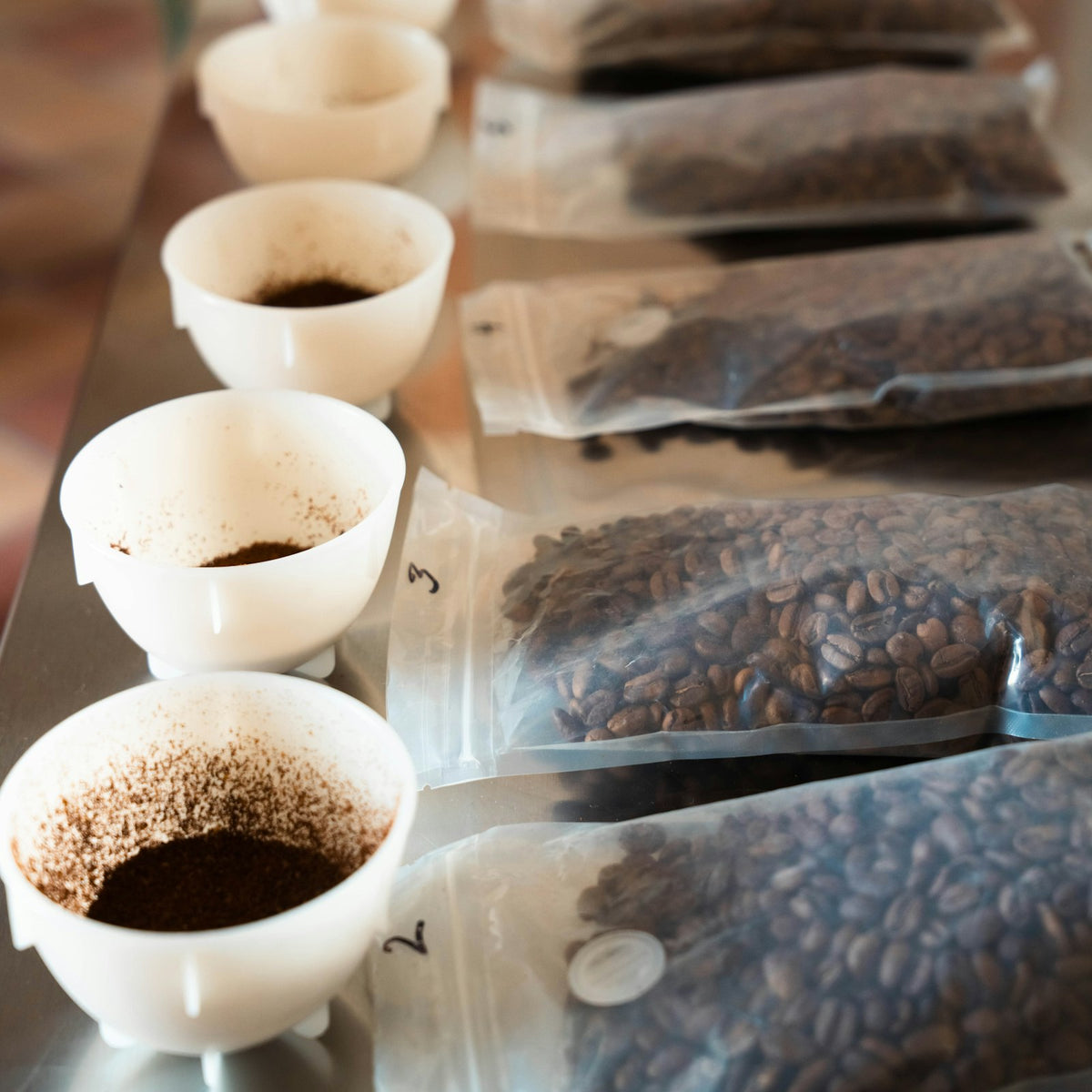
Photograph: Danny Pérez, Unsplash. A coffee cupping setup, not the conference.