Heirloom Coffee: A Term Rooted in Ethiopia’s Genetic Diversity
What Is “Heirloom” Coffee?
The term “heirloom” in coffee is not a formal botanical classification but rather a broad, informal term used in the specialty coffee industry to refer to the landrace and wild Arabica varieties native to Ethiopia. It’s often seen on coffee bags or menus as a cultivar name, but in reality, heirloom serves as a catch-all label for the hundreds—possibly thousands—of genetically diverse and largely undocumented coffee trees that grow in Ethiopia's highlands.
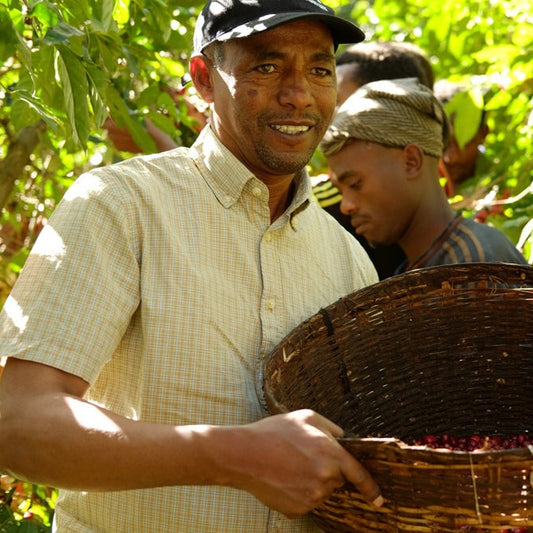
Heirloom coffees are typically found growing in forest, semi-forest, or garden systems and have not been selectively bred like cultivars such as Bourbon, SL28, or Typica. Instead, these plants evolved naturally over centuries in Ethiopia’s unique climate and topography, making them highly adapted to local conditions.
Origins and Terminology
The concept of heirloom coffee originates from Ethiopia, the birthplace of Arabica coffee (Coffea arabica). Ethiopia’s coffee trees are often referred to as heirloom because they stem from wild or indigenous coffee populations that predate modern agricultural breeding programs. When coffee was first domesticated and exported from Ethiopia centuries ago, it represented only a fraction of the genetic diversity found in the wild today.
In official documents and research, these coffees are sometimes called:
Landrace varieties – naturally occurring, locally adapted genetic lines
Wild Arabica – uncultivated plants in native forests
Local selections – traditional farmer selections not cataloged under formal breeding programs
Because of the difficulty in identifying and naming these distinct types, many exporters and importers group them under the label “Ethiopian heirloom”.
Genetic Diversity and Characteristics
Ethiopia is home to the broadest genetic diversity of Arabica coffee in the world. A single region—or even a single farm—might contain dozens of genetically unique coffee types, each with its own flavor potential, disease resistance, and yield characteristics. This diversity is why heirloom coffees are often prized in the specialty sector.
Agronomically, heirloom trees tend to be:
Medium to tall in stature
Low to moderate in yield
Variable in bean shape and cherry size
Highly adapted to altitude, shade, and soil types in Ethiopia
This diversity also makes heirloom coffees harder to classify or standardize in terms of production traits, though they are generally resilient to local climate pressures.
Cup Profile and Market Value
Heirloom coffees are highly sought-after in the specialty market for their extraordinary complexity and flavor range. Depending on the region and processing method, they can exhibit notes of:
Jasmine, bergamot, lemon, peach, and black tea (commonly from washed heirlooms in Yirgacheffe or Sidama)
Blueberry, strawberry, wine, and chocolate (often found in natural processed heirlooms from Guji or Harrar)
Their high acidity, floral aromatics, and clarity make them a staple in high-end cafés and barista competitions. In many cases, heirloom coffees set the global benchmark for washed and natural cup profiles.
Classification and the Future of Naming
In recent years, there has been growing interest in genetically mapping heirloom populations to better classify and preserve Ethiopia’s coffee biodiversity. Efforts by organizations like World Coffee Research and the Ethiopian Institute of Agricultural Research are gradually replacing the catch-all "heirloom" term with region-specific or genetically identified accessions, such as:
74110 and 74112 – selected from Metu-Bishari forest in the 1970s for their resistance and cup quality
Kurume, Dega, and Wolisho – local landrace names now being recognized more formally
These advances are helping producers and buyers move toward more accurate traceability and targeted agronomic development while preserving the extraordinary natural heritage of Ethiopian coffee.
The term heirloom is a convenient shorthand used in the specialty coffee world to describe the diverse, wild, and traditional varieties of Arabica coffee found in Ethiopia. While not botanically precise, it represents one of the most important and flavor-rich categories of coffee in the world. As genetic research continues and naming systems evolve, the industry is gradually moving toward a more scientific understanding of these coffees—without losing sight of the heritage, ecology, and craftsmanship they represent.