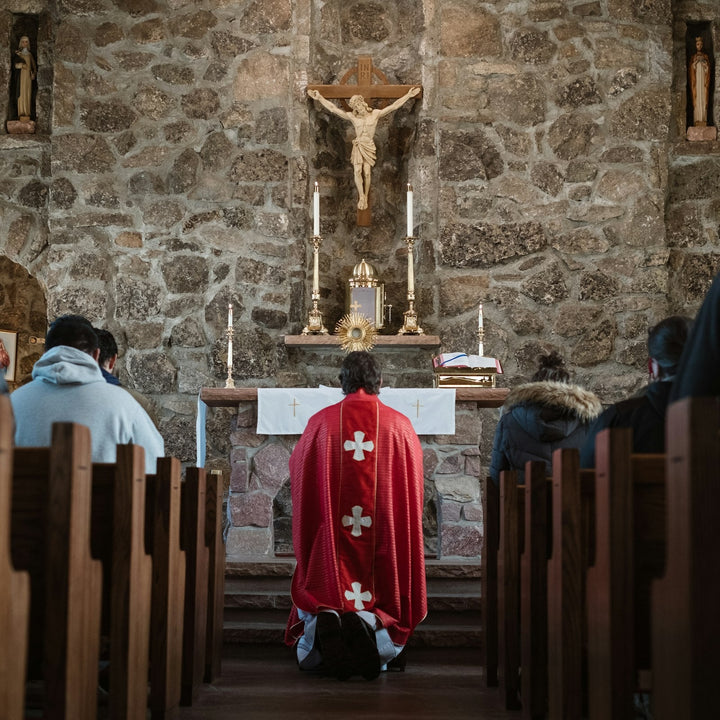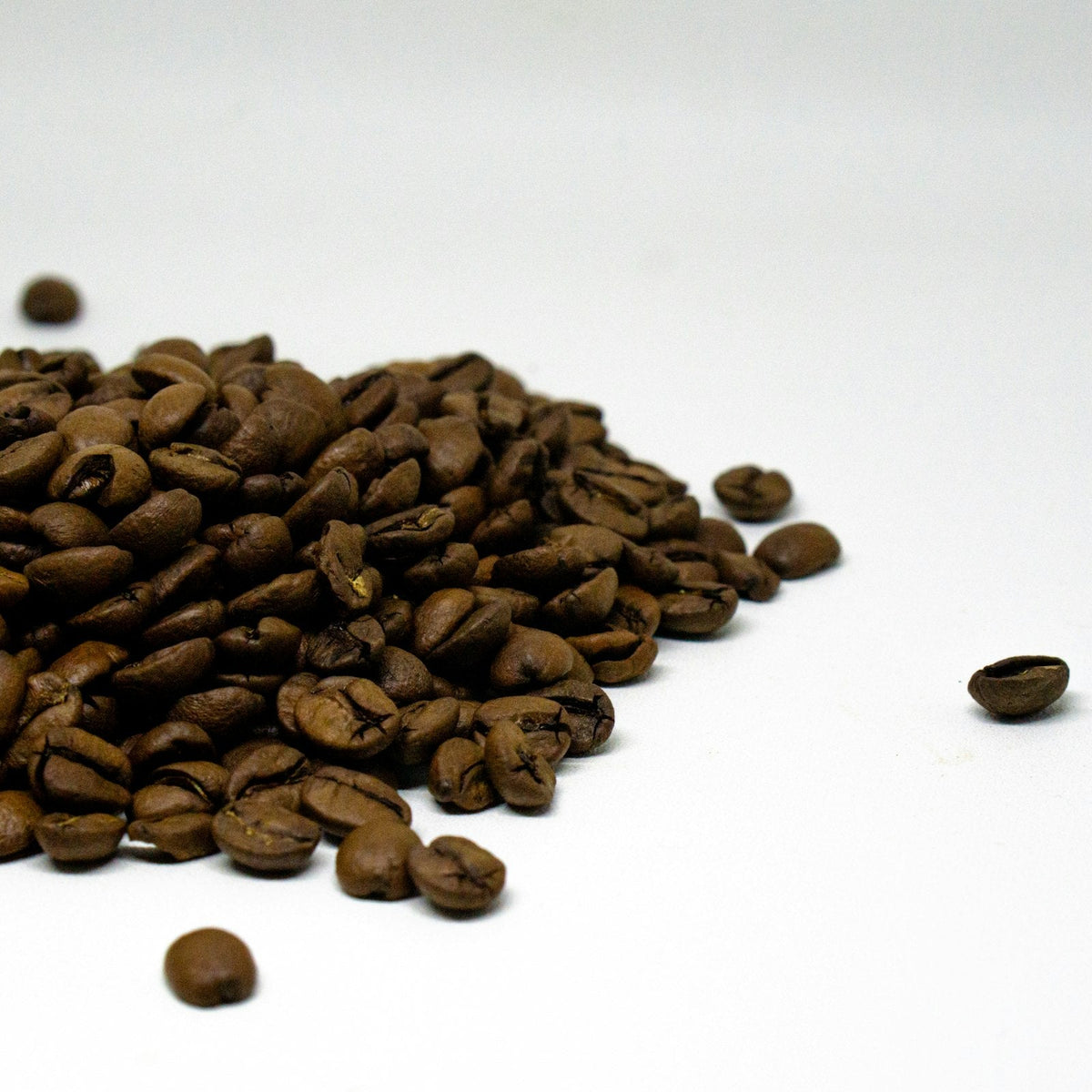
Yes. A church can put its own name on a bag of real, roasted coffee and sell it to the people already sitting in the room, without hiring a barista, buying an espresso machine, or asking a volunteer to run a register on Sunday morning. That is private label coffee, and it is a smaller, cheaper decision than the one most churches think they are facing when the idea of "doing something with coffee" comes up.
Key takeaways
- Private label means a church's name goes on a bag of coffee, while the roasting work stays with the roaster.
- It needs none of a coffee shop's apparatus: no point of sale, no staffing schedule, no equipment spec, no lobby layout decision.
- At low volume, the honest version of this is even smaller than a private-label production run: buy wholesale coffee and put a sticker with the church's name on the bag.
- The built-in advantage is the buyer. A congregation that already supports the church is the hardest part of a coffee brand, finding people who want to buy it, already solved.
- This sits as a third option next to the two a church coffee consultant usually names, build a shop or don't, and almost nothing written for churches names it at all.
What's the real difference between a coffee shop and a bag with your name on it?
A coffee shop is an operation. Someone has to be behind the bar every time it is open, which means a schedule, a menu short enough that the schedule works, a point of sale, and an equipment decision that gets harder the moment money changes hands in a register rather than a donation box. Our consulting page puts the real fork plainly: free coffee is hospitality funded by the ministry budget, and charged coffee is "a business inside a church building" that brings a point of sale, cash handled by volunteers, inventory, pricing, and a conversation with your accountant about revenue inside a nonprofit.
A private-label bag skips all of that, because nobody is behind anything. The product exists whether or not a single person is staffing a table on a given Sunday. Our private label page describes what it actually is: "our green coffee, we roast it, your brand on the bag," roasted on the same roast-to-order Wednesday schedule as everything else we sell, bagged in 250g, 2lb and 5lb, with Agtron roast-color grading and batch tracking on every run the same as our own label gets. There is no latte, so there is no decision about what to charge for one. There is a bag, a price, and a shelf, or a table in the lobby, which is as much infrastructure as this requires.
Who is this actually for, and who should skip it?
It fits a church that wants an ongoing way to fund something, missions, a youth program, a building fund, without taking on a staffed operation to do it. Our private label page names this directly: "a church or a nonprofit. Coffee sold to fund the work, with the mission on the bag. The buyers already want to support it, which solves the hardest part of a coffee brand." That is not marketing language. Most new coffee brands spend their first year finding people willing to try an unfamiliar bag on a shelf. A congregation already trusts the name going on it, which removes the single hardest problem a coffee brand has.
It does not fit a church chasing the thing a built coffee shop actually sells: a reason to linger in the building for twenty minutes after a service, a staffed welcome a bag cannot replicate, or revenue scaled to the kind of volume only a bar pulling drinks all morning can produce. Our article on what a church coffee shop actually costs to start runs that arithmetic in full, and it is a different, larger decision than the one this page is about.

What does it actually cost to get a church's name on a bag?
We do not publish a price list for this, for the same reason we do not publish one for wholesale: the same bag does not cost the same to produce for every project. Five things move the number, in roughly this order of weight: how much the church moves in a month and whether it is a one-time run or a standing rhythm, which of the three bag formats it uses, how the branding actually gets onto the bag, which coffee is behind it, and whether delivery sits inside our free forty-mile radius from the roastery or has to be freighted further.
What we also do not publish is a minimum order, and that is a real answer rather than an evasion. "Volume is part of the first conversation rather than a gate in front of it," as our private label page states, "because the answer changes with format and with what you are trying to do. If your volume is low enough that a run does not make sense, we will say so and point you at wholesale instead." That matters here specifically, because most churches starting this conversation are not ready for a production run at all.
What if the church is too small for a real production run?
Then the honest move is the smaller one, and it is worth naming plainly because almost nobody selling private label coffee will volunteer it. Buy coffee at wholesale and put a sticker with the church's own name on the bag, rather than commissioning a full private-label run with custom packaging and its own labeling process. Fewer decisions, less money committed up front, and a church can change direction after a single case rather than after a production run it has to sell through first. If the sticker version works and the church outgrows it, the private-label conversation is still there waiting.
This is also where the "mission on the bag" advantage does real work. A congregation that already wants to support the church will buy a bag with a sticker on it from a card table in the lobby. They are not evaluating it as a coffee brand competing on a retail shelf. That is a different, much lower bar than the one most new coffee products have to clear, and it is the reason the smaller version of this is often the more sensible one, not a compromise on the way to something bigger.
Why doesn't anyone talk about this option?
Because almost everything written for churches about coffee assumes a shop, even when it is explicitly trying to lower the bar to building one. Tithe.ly, a church software company whose blog is a genuine authority on church operations, published seven questions to ask before starting a church coffee shop: staffing, who it serves, coffee quality, location, food, seating, and branding. Its suggested ways to start smaller are a pop-up table in the foyer or a mobile espresso setup. Both are still operations: someone staffs them, on a schedule, making drinks to order. Even the lightest version that resource names still has a bar, a person, and a shift.
A bag with a name on it has none of those, which is probably exactly why it goes unmentioned. It is not a smaller coffee shop. It is not a coffee shop at all. It is a retail product decision, what goes in the bag, what it is called, where it gets sold, fully separate from the staffing and equipment decisions that every other piece of church coffee advice, including our own consulting page, is built around.
What does a church actually do with the bags once they exist?
Sell them the way a congregation already buys things from its own church: a table after services, a line in the bulletin, a mention from the stage during a giving season, or a standing shelf near the entrance if there is foot traffic worth putting one in. None of that requires the inventory system, the point of sale, or the volunteer schedule a working coffee bar needs, because a bag sale is a transaction that starts and ends in under a minute and does not require anyone to be an attendant rather than simply present. A youth group selling bags toward a mission trip, a building fund selling them year-round near the welcome desk, and a church simply wanting its own branded gift for visitors are the same mechanism with three different reasons behind it.
Where private label is the wrong tool entirely
Here is the concession, and it is the same one we make on the private-label page itself rather than a new one invented for this article. If a church's numbers do not support even a small run, no real foot traffic, no standing giving campaign, no group with a reason to sell repeatedly, we would rather say that up front than sell a production run that sits in a storage closet unsold. I would rather point a church at the free-or-charged decision on our consulting page, or at simply fixing the coffee urn it already owns, than take an order that was never going to move. That is not a sales pitch undermining itself. It is the same honest floor we hold wholesale accounts to, applied to a smaller, newer kind of customer who has less experience judging their own numbers than a cafe does.
Questions we get about private label coffee for churches
Does a church need a license to sell its own branded coffee?
That depends on your state and county, and on whether the coffee is sold as a standing retail product or as an occasional fundraiser, which different jurisdictions can treat differently. It is a real question and one we will not guess at on your behalf — check with your own county before you commit to a format or a sales location.
Is private label coffee the same as a coffee fundraiser?
Not necessarily. A coffee fundraiser usually means a short, one-time sale tied to a specific goal. Private label coffee with a church's name on it can be sold the same way, as a onetime run, or it can run as a standing product sold year-round the way a church bulletin or a gift shop item would be. The bag does not expire into a single use.
Can a small church afford to do this?
Often more easily than it expects, because the smallest version of this is not a production run at all. Buying wholesale coffee and putting a sticker with the church's own name on the bag is a far smaller commitment than commissioning custom packaging, and it is where most churches should start before considering anything larger.
What's the difference between private label and the coffee cart or a coffee shop?
A coffee cart and a coffee shop are both staffed service: somebody makes a drink to order, on a schedule, usually for an event or an ongoing bar. Private label is a packaged retail product with no service attached to it at all — closer to selling branded merchandise than to running a bar.
Does the church need to pick one option and commit to it?
No. A church can sell a private-label or sticker-label bag indefinitely and separately decide, later or never, whether it also wants a staffed coffee bar, a cart booking for a specific event, or nothing further at all. The three are not stages of the same project; they are three different answers to three different questions about what a congregation actually wants from coffee.
Where to start
If a run makes sense, our private label page covers what we need from a church to start one: what the product is for, a taste decision made on the actual coffee rather than a description, and a format. If the numbers are not there yet, the smaller sticker version is worth raising in the same conversation rather than treated as a separate, lesser option. Either way, we would rather tell a church its numbers do not support this yet than take an order that sits in storage — the same promise we make to every wholesale account we open. Our consulting page covers the staffed-shop side of this decision if that turns out to be the better fit, and coffee for churches covers Sunday urn service for the church that decides it wants neither.