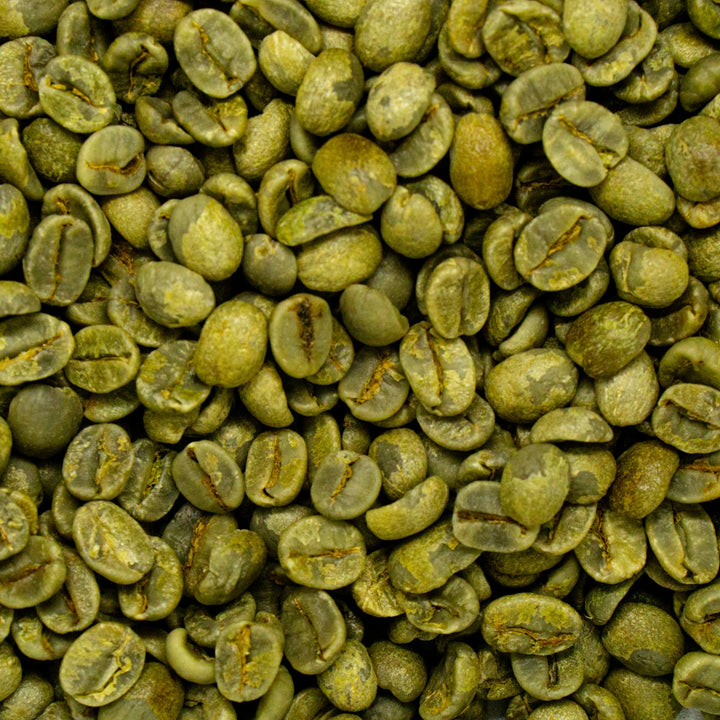
You ask the importer, and on a wholesale account the sample is usually free. Cafe Imports sends complimentary 300 gram green samples and ships them the same day when the request lands before 10am Central. Covoya will send up to six 200 gram samples at once with free USPS shipping, as long as every one of them sits in the same warehouse. Ally Coffee calls 200 grams the industry standard and drops to 100 grams on a Gesha microlot. Two or three business days is normal.
The part that takes longer to learn is that the five things called a sample are not five degrees of the same thing. They differ by what they were drawn from, and only three of the five were drawn from the coffee you would be buying.
How do you actually request one, and what does it cost?
You need a wholesale account with the importer first. Cafe Imports states it plainly: the company "is a wholesale business and therefore is not permitted to sell coffee to the general public." That is the gate, and it is the reason the retail path looks so different. Sweet Maria's sells a sampler set instead, four or eight one-pound bags at $33.50 or $65.50, which is a different product for a different person: you are buying coffee to practice on, not evaluating a lot you might contract.
On the wholesale side the sample is a cost of doing business for the seller, so nobody charges you for it and everybody limits it. Six at a time from Covoya. Three to five at a time from Keffa, at 100 to 250 grams each. The limit is not stinginess, it is the arithmetic of a warehouse pulling and mailing small parcels all day, and it means you should send a real list rather than a browse.
Ask which warehouse each coffee is in before you ask for the sample. Covoya says outright that it cannot transfer small amounts between warehouses, so a list that crosses two of them becomes two shipments or one refusal.
Which of the five samples is actually drawn from your coffee?
This is the whole question, and the vocabulary hides it because the names describe the timing rather than the source. Ally Coffee and Royal Coffee both publish the definitions and I am not going to restate them as though we worked them out. Read theirs. What I want to put next to them is the only sorting that matters when you are deciding what a cup is telling you.
- Type sample. Royal calls it "a non-representative sample, meaning it does not directly correspond to a specific lot of coffee for sale." Ally describes it as "indicative of the generally available quality from a given supplier." It is a seller showing you the neighborhood — which is useful, and is not your coffee.
- Offer sample. Ally: "Sample supplied by the producer, cooperative, or exporter to offer a particular lot of coffee for sale." Perfect Daily Grind adds the timing, calling it "a sample from the coffee that is currently being harvested." A named lot, yes. Your bags, not yet.
- Spot sample. Perfect Daily Grind: "when you decide to purchase it, it will be the exact bag of coffee that you've sampled." This is your coffee, sitting in a building, today.
- Pre-shipment sample. Ally: "Representative sample gathered prior to shipping coffee. Sample is blended with coffee from each bag in a lot to represent the coffee that is being loaded onto the ship." InterAmerican Coffee describes the material as "small, hand-milled portions of the larger lot of coffee that still awaits hulling." Your coffee, before it moves.
- Arrival sample. Ally: "Sample pulled from coffee after it has landed in the warehouse." Your coffee, after the trip.
Three of those five are pulled from the coffee you would take delivery of. Two are a resemblance. If you are choosing between two lots on the strength of a type sample, you are choosing between two suppliers, which is a real thing to do and a different thing than the one you think you are doing.
What does approving a pre-shipment sample commit you to?
More than it looks like, and the contract is where it is written rather than the email. Trabocca lays out the terms in plain language, and Ally publishes the same abbreviations: SAS is subject to approval of sample, SAPSS is subject to approval of the pre-shipment sample, SAS-NANS is no approval no sale, and SASR lets you ask for a replacement instead of walking away. Trabocca's own gloss on SAS-NANS is the one to remember: "If you cup, and the quality does not match with the contract, the sale is canceled."
The ITC Coffee Guide puts the buyer's side of it as a right: buyers are "not obliged to accept any shipment that they have not first approved." InterAmerican puts the seller's side as a hard stop, writing that "the coffee will not ship without this critical approval." And Royal is blunt about what happens once you give it, calling the pre-shipment sample "usually the point of no return for a buyer."
Timing is the part people underestimate. Sustainable Harvest recommends approving a pre-shipment sample at least two months before you need the coffee, then walks the sequence that follows: shipping instructions, a container booking, six to eight weeks on the water from the Americas and ten to twelve from Africa, customs, drayage, a bag-by-bag unload, and an arrival sample back out to you for a second approval before the lot is released. You approved a coffee in March and you are roasting it in June.
How should you roast a sample so the cup means something?
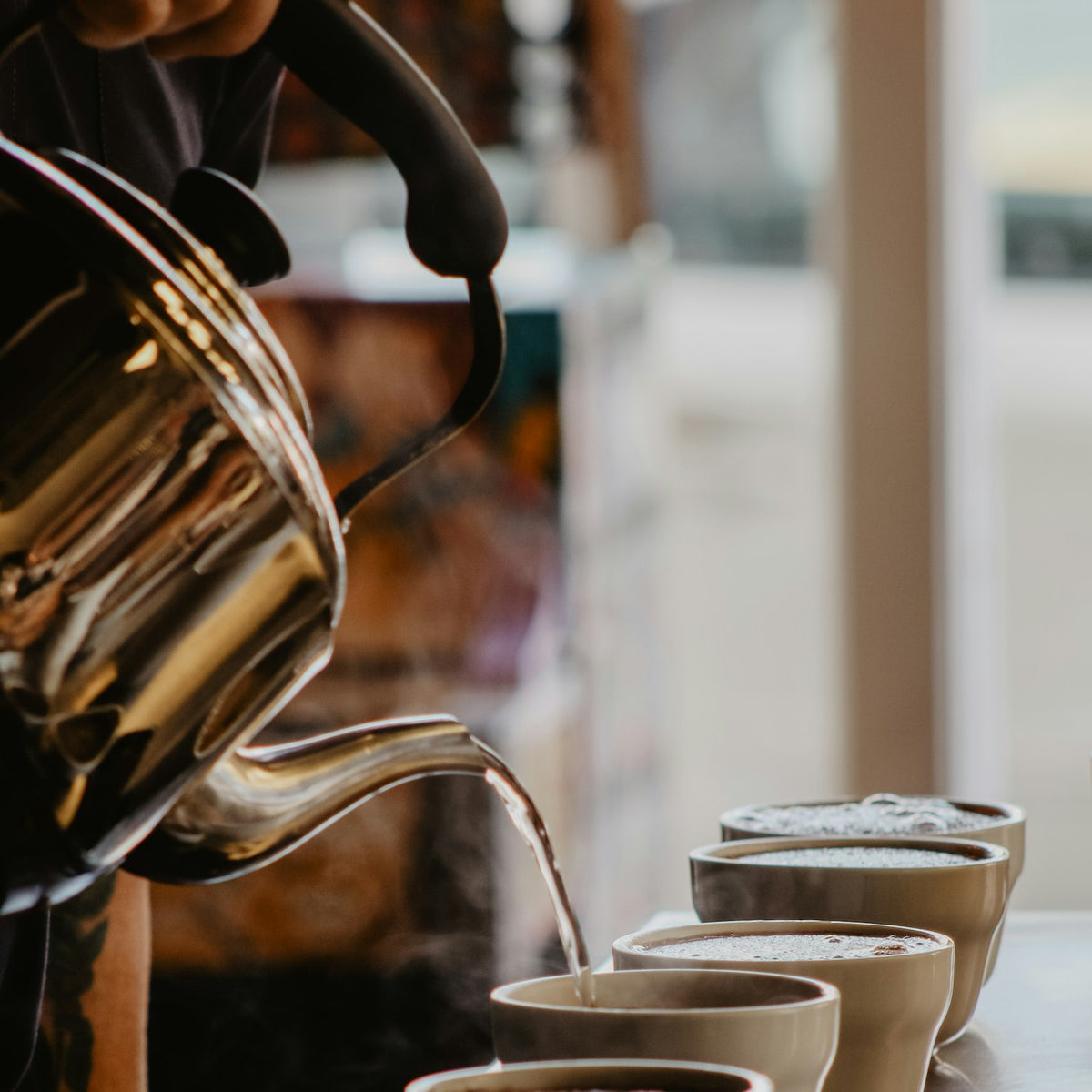
Small and fast, and then let it rest. Perfect Daily Grind puts sample roasters at 30 to 300 grams and says to drop about 90 to 120 seconds after first crack, earlier than a production roast, then evaluate within 8 to 24 hours. Royal publishes the SCA cupping numbers in full: rest 8 to 24 hours, 8.25 grams of whole bean to 150 milliliters of water, ground after weighing, 70 to 75 percent of the grounds through a number 20 sieve, water at 200 degrees Fahrenheit plus or minus two, five cups per coffee, crust broken at four minutes, and a roast color target of Agtron Gourmet 63.0 with a tolerance of one point either way.
There is a real dissent worth knowing about, and it is old. Michael Sivetz, in a piece Sweet Maria's keeps in its library, argued for taking the sample roast to a middle European degree at 15 to 16 percent weight loss rather than the lighter cupping roast, on the grounds that it tells you more about how the coffee will behave when you actually sell it. Both positions are defensible and they answer different questions. The light roast protects comparability between lots. The darker one protects you from a coffee that cups beautifully and then falls apart at the roast level your customers buy.
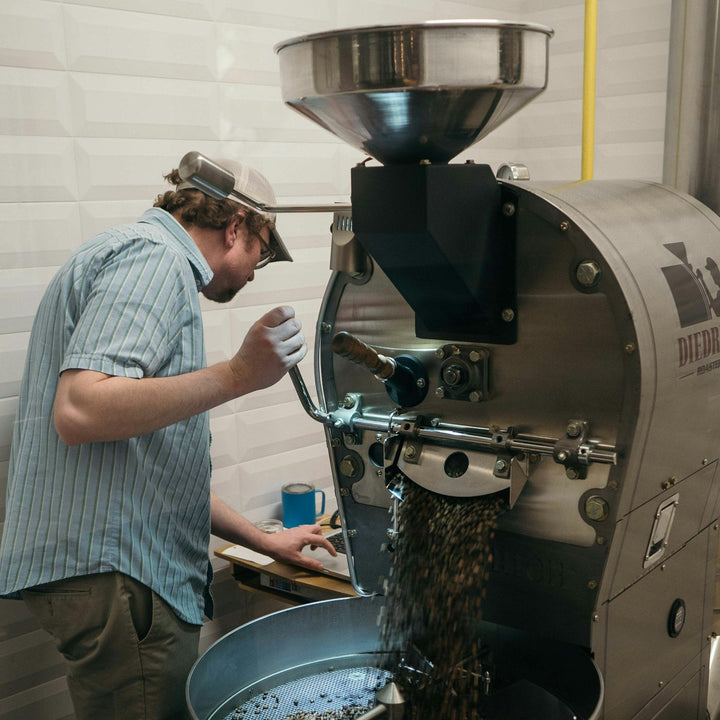
We test a new lot on a 2 kilo roaster before it goes anywhere near a pallet, and the 15 kilo machine is for production only. That split costs us a roast day that produces nothing to sell, on a machine that earns less per hour than the one beside it. It is worth it because the alternative is discovering the lot's behavior on the batch you have already promised to somebody.
Does the coffee have to taste like the sample?
It has to match the contract, and nobody I could read publishes a number for how close that is. Royal describes the remedy rather than the threshold, noting that "shipments of a disappointing physical or sensory quality can result in a quality 'claim'" with an adjustment requested against the price. Trabocca says the same about the trigger, that the quality does not match the contract, and that a dispute goes to an arbitrator. The ITC guide records where those arbitrations happen, which under Green Coffee Association rules is New York unless the contract names somewhere else. I tried to read the European Standard Contract for Coffee to see whether the tolerance is written down there; the document returned a 403 and I am not citing what I could not open.
So the practical protection is not a clause. Sivetz gives it in one sentence: "It is essential to keep at least 1/4 lb. of the green bean sample until the actual bags arrive to confirm that the bagged coffee is the same as the sample furnished and taste tested." He is writing about a period when a broker might send a better sample than the shipment, and about the plainer problem that a 250 bag lot is not uniform. Keep the quarter pound. It costs you an envelope and it is the only evidence you will have.
I have been on the wrong end of this. A decaf I bought from Ethiopia in 2025 did not arrive as the coffee I had approved, and what that did to the roast profile is its own article.
Why do we publish a cup score instead of the one on the offer sheet?
Because the score on the offer sheet was somebody else's table, on somebody else's roast, before the coffee moved. Every named coffee we sell carries a cup score on its product page, graded on the 100 point scale, and that number is ours: taken here, on a roast we controlled, after the lot landed. Kenya Kiambu is published at 91.5. El Salvador Finca San Luis at 86.8. ASCENT at 92.3, and Organic Peru Decaf at 88.4.
The cost of doing it that way is that we can be checked. A buyer with a cupping form and a sample of the same lot can disagree with us in public, and we have no way to argue that our number was the one on the paperwork. That is the trade, and it is the same trade the sample question is really about. A score you were handed describes a coffee on a day you were not there. A score you took describes what you have.
What if you are only buying one bag?
Then most of what is above does not apply to you, and it is worth saying so rather than letting you carry a vocabulary you will never use. A roaster buying a bag or a box at a time is buying spot, and a spot sample is the coffee itself, so there is no pre-shipment approval to give and no replacement clause to invoke. You cup it, you buy it or you do not, and the failure mode is not a mismatch with the sample — it is a coffee that has been sitting in the warehouse longer than you assumed. How long green coffee lasts matters more to you than any clause.
Where the minimums sit, and what a full bag actually costs you in cash rather than per pound, is a separate question we have answered properly. Read that one first if you have not bought green before.
And here is where we are the wrong place to ask. The Inheritance Coffee Lab does not buy your green coffee. Our own page says it in one line: either way the green is yours. We can give you a licensed room, a 2 kilo roaster to test a lot on and a 15 kilo to produce it, and we cannot get you onto an importer's sample list or stand behind a pre-shipment approval you gave. That relationship is yours to build, and building it is most of what separates a roaster from somebody with a roaster.
Questions we get about green coffee samples
How do you get green coffee samples?
Open a wholesale account with an importer and request them by lot, usually through the importer's own website. On a wholesale account they are normally free and shipped within two or three business days. Retail green sellers take a different route and sell practice sets instead, which are priced as coffee rather than offered as evaluation material.
Are green coffee samples free?
On a wholesale importer account, yes, and the free offer comes with a cap on how many you can take at once. Cafe Imports and Covoya both describe their samples as complimentary. Retail sample sets are sold, because the buyer is practicing rather than evaluating a lot they might contract for.
How much green coffee is in a sample?
Ally Coffee calls 200 grams the industry standard and drops to 100 grams for scarce microlots. Cafe Imports sends 300 grams. Keffa sends 100 to 250 grams for a roasting trial. Perfect Daily Grind puts sample roaster capacity at 30 to 300 grams, so a 200 gram sample gives you more than one attempt.
What is a pre-shipment sample?
Ally Coffee defines it as a representative sample gathered before the coffee ships, blended with coffee from every bag in the lot so it represents what is being loaded onto the ship. InterAmerican Coffee says the coffee will not ship without the buyer's approval of it. Royal Coffee calls approving it the point of no return.
What does SAS mean on a coffee contract?
Subject to approval of sample. Trabocca and Ally both publish the variants: SAPSS names the pre-shipment sample specifically, SAS-NANS means no approval no sale, and SASR lets you request a replacement lot instead of cancelling. Read which one your contract carries before you cup, because it decides what rejecting the sample actually does.
Does the coffee have to taste the same as the sample?
It has to match the contract, and no source I could open publishes a numeric tolerance for how close that is. Royal Coffee describes the remedy as a quality claim against the price. Michael Sivetz's advice is the practical one: keep at least a quarter pound of the green sample until the bags arrive so you can compare them yourself.
Roasting your first lots? The Inheritance Coffee Lab in Pensacola rents time on a 15 kilo production roaster with a 2 kilo alongside it for testing a new lot, and the green stays yours. Access runs as a membership by application, and every self-roaster completes our basic roasting class before running a machine. Start at rent a coffee roaster, or read more of our roasting guides.