Rate of rise is how fast the bean temperature is climbing at any one moment in a roast, measured in degrees per minute, not the temperature itself. Two batches can hit the identical first-crack temperature and still taste nothing alike, because what separates them is how fast each one got there, not where it landed. A roast is a slope, not a single number, and watching that slope is how a roaster catches trouble while there is still time to fix it, rather than after the beans drop already baked on one side and underdeveloped on the other.
A rate of rise that starts high and tapers down smoothly for the rest of the roast is not a sign anything went wrong. It is close to the shape of almost every well-run roast, the same way a sprinter's pace falls through a race even though the effort does not.
What Does the Rate of Rise Curve Usually Look Like?
Roasters did not always watch rate of rise this closely. Cropster's roasting software made it possible to chart the slope of a roast in real time rather than read it off a thermometer every thirty seconds, and Scott Rao's writing on roast curves gave most working roasters the vocabulary they now use to read one. The shape almost everyone describes is the same: high right after the beans go in while the drum is still recovering the heat it lost on charge, falling steadily through the rest of the roast, and approaching zero somewhere near the end, never flat for long and never climbing again once it has started to fall.
Two named faults interrupt that shape. A crash is a sudden, sharp drop in the rate of rise, usually because a roaster cut gas too hard trying to correct a curve that looked like it was running hot. A flick is the overcorrection that often follows a crash: a sudden uptick in the rate of rise when a roaster adds gas back too quickly, so the curve kinks upward again instead of continuing to taper down. Barista Hustle and Royal Coffee both teach new roasters to watch for either fault, because each can show up in the cup as uneven or baked even when the drop temperature matches the batch before it.
Does a Flat Rate of Rise Mean the Roast Is Under Control?
A flat, steady rate of rise sounds like control. In most cases it is closer to the opposite. A rate of rise that goes flat in the second half of a roast, instead of continuing to taper down, usually means the roast has stalled: the beans are holding near a temperature rather than still climbing toward one, and held there long enough, that shows up in the cup as flat and baked rather than developed and sweet. The reading that looks the steadiest on a chart is often the one describing the least healthy roast on the sheet.
Does Inheritance Publish a Rate of Rise Curve for the Coffee It Sells?
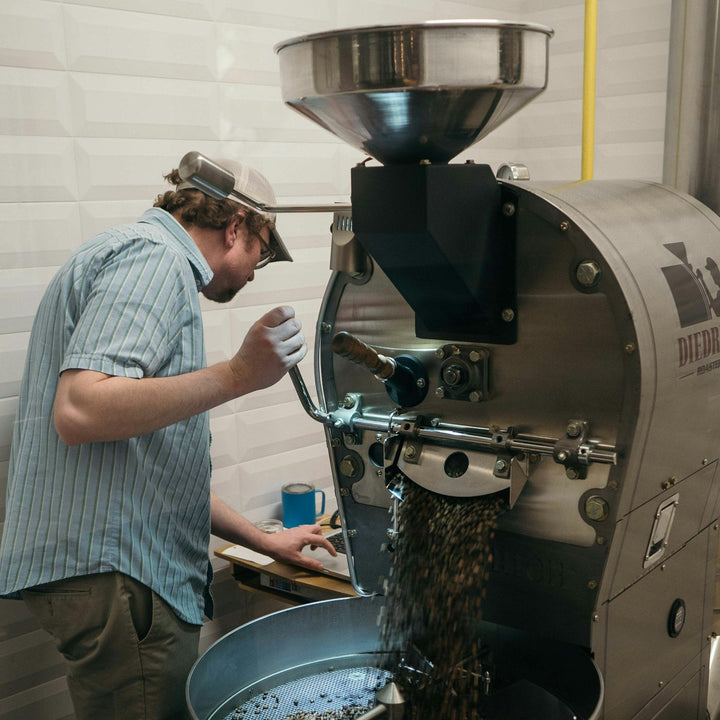
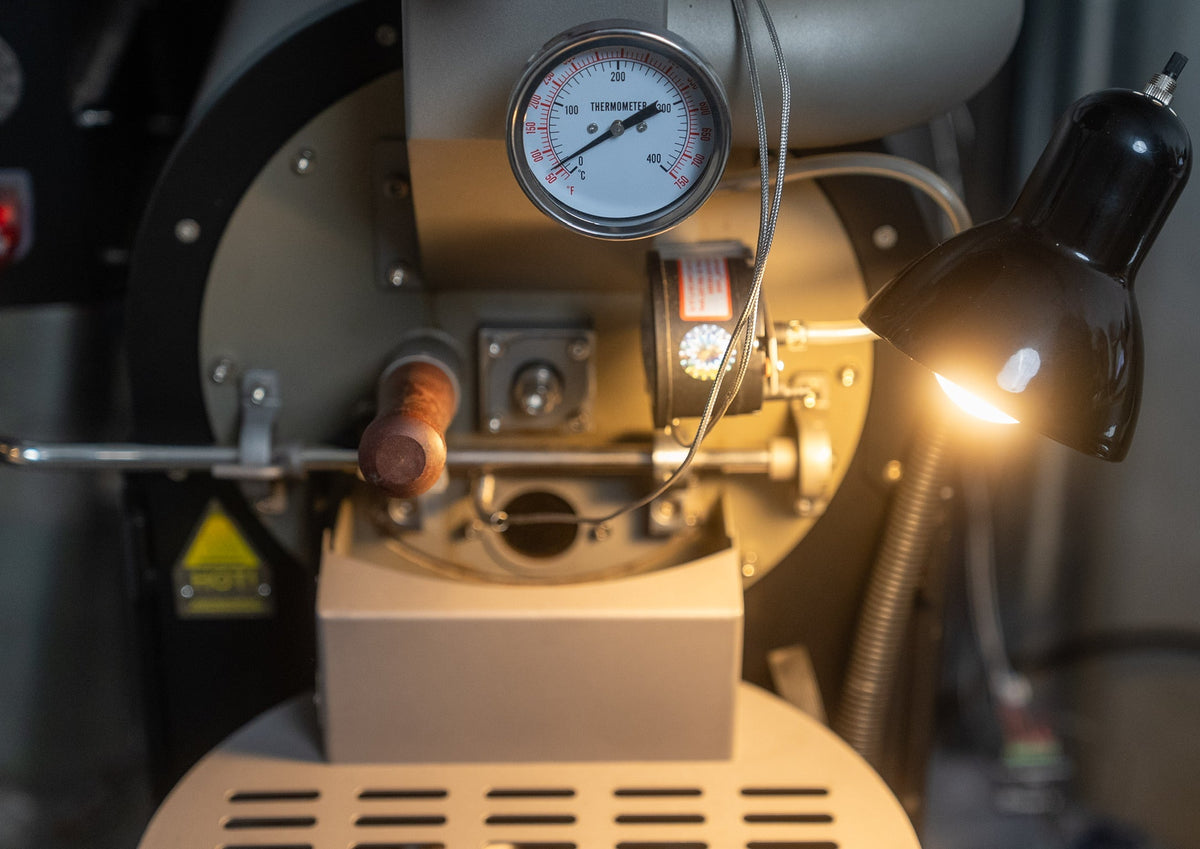
No, and that is worth saying plainly. Every batch we roast gets logged by hand at two points: bean temperature at the drop and bean temperature at first crack. The only roast-level field printed on a bag is Light or Medium. We watch the rate of rise live on the roaster's own gauge while a batch is running, but we do not export or publish the curve afterward. A different piece on this site already leans on that same curve without printing it: one on how roast level affects coffee sitting in an urn says plainly that an urn's behavior rides on the curve used to grade every batch sold. That sentence is the closest this site comes to publishing one.

If a wholesale account or a home roaster asked us to hand over one of our profiles data point for data point, the honest answer is that we could not. Our own records would show them two numbers and a roast level, not the shape of the curve that produced them. Building that out into something publishable would mean new logging equipment on every roast and a new habit of reading it, and we are not willing to publish a claim about repeatable curves before we can back it with data.
Frequently Asked Questions
Is a Crash the Same Thing as a Roast Stalling?
No. A stall is a rate of rise that goes flat and stays flat. A crash is a rate of rise that drops hard and fast, usually right after a big heat cut, and it is often followed by a flick back up rather than a stall.
Does a Flick Always Ruin a Roast?
Not always, but it is a sign the heat was adjusted too hard in one direction and then the other, and the sharper it is, the more likely the coffee tastes uneven between batches even when the end temperature matches. The same caution applies when a profile moves to a different roaster, covered separately in how to scale a roast profile to a bigger roaster.
Inheritance roasts ASCENT by Inheritance, our house blend, on this same drum every Wednesday, sold in 250g and 2 lb bags. For more on how we think about the rest of the roast, see our roasting guides.