




Learn
The latest trends in eco-friendly workout wear, tips for living a more
sustainable lifestyle, and stories of women.
Learn
Green Coffee Demystified: What It Is and How to Use It
Green Coffee Demystified: What It Is and How to Use It
Green coffee beans are the raw, unroasted seeds of Coffea plants. They’re what coffee starts as before a roaster brings them to life with heat and time. For researchers, educators, and curious home roasters, green coffee offers a hands-on way to study aroma compounds, roast development, and flavor potential. The Green Coffee Product Example #1 from Inheritance Coffee serves as a practical reference point for exploring how green beans behave during storage, roasting, and brewing.
In this guide, you’ll learn the basics of green coffee, how to evaluate quality, and simple steps to roast and brew. You’ll also encounter common questions shoppers ask—and you’ll see how to think critically about authenticity, safety, and where to buy green coffee in real-world settings.
Green Coffee 101: What It Is and Why It Matters
Green coffee is the non-roasted form of coffee beans. The beans retain more of their natural moisture and a different chemical profile than roasted beans. Moisture content, density, and bean size influence how evenly beans roast and how much aroma you can coax from them. For labs, classrooms, and keen hobbyists, green coffee is a way to study how flavor develops from bean to cup.
Choosing the right green coffee matters. Look for clear lot information, storage guidance, and sample roasting tips from trusted suppliers. A product like the Green Coffee Product Example #1 provides a consistent starting point for experiments and a baseline for comparing roast profiles.
🛍️
Green Coffee Product Example #1
This is a placeholder product for R,D&E
by Inheritance Coffee
✓ Available
🛒
View Product
From Green Beans to Roasted Coffee: Practical Steps
Start with proper storage. Store green beans in a cool, dry place and keep them away from strong odors. Airtight, opaque containers help retain moisture balance and aroma. For beginners, small batches are easiest to manage and learn from, especially when you’re dialing in roast curves.
Roasting is where science meets art. Minor changes in heat ramp, airflow, and roast duration shift flavor from grassy and green to caramelized and chocolatey. You can document roast curves and aroma development to build a repeatable process. A well-chosen green bean, like the Green Coffee Product Example #1, can anchor your trials and help you compare outcomes across roasts.
Addressing Common Questions About Green Coffee
When people search for green coffee, they often come across terms like MSI. While MSI can show up in some supply contexts, the most important details for home roasters are consistent moisture content, origin information, and a clean aroma profile. Always buy from reputable suppliers who provide batch data and storage recommendations.
Many shoppers worry about bahaya green coffee, or perceived dangers. The reality is that caffeine remains the main active compound, and sensitivity varies between individuals. If you’re pregnant, have caffeine restrictions, or experience stomach upset, consult a healthcare professional before changing your caffeine intake or using green coffee-derived products.
Questions about green coffee pelangsing—claims of weight loss—come up often. It’s important to be skeptical: there’s limited evidence that green coffee alone delivers lasting weight loss. A healthy diet and regular activity play a larger role, and any supplement claims should be evaluated carefully with reliable sources.
Authenticity matters when you’re shopping for green coffee asli. Look for clear origin labels, batch numbers, and trusted vendors. If you’re new to green coffee, start with a well-reviewed supplier and request a sample roast to gauge aroma and potential flavor before purchasing larger lots.
Availability varies by location, so you may not find green coffee di Alfamart in every area. In many places, you’ll find green coffee beans through specialty retailers, roasters, or online suppliers with transparent origin stories. Knowing what you’re buying helps you evaluate flavor potential and roast outcomes more confidently.
Roasting, Brewing, and Getting the Most from Green Coffee
After you roast, adjust grind size and brew method to unlock flavor. Lighter roasts emphasize brightness and acidity, while darker roasts add body and sweetness. Keeping a simple log of roast times, temperatures, and cup notes helps you refine your process over time.
Brewing is the final step in revealing a green bean’s potential. Start with a controlled method, such as a pour-over or a measured immersion brew, to appreciate aroma and sweetness. Whether you’re roasting for a café experiment or a home setup, green coffee like the Green Coffee Product Example #1 offers a concrete way to study how beans transform and how you can influence taste via roast and brew decisions.
Conclusion: Start Your Green Coffee Journey
Green coffee opens a doorway to flavor science, roasting craft, and ongoing discovery. By choosing a trustworthy green coffee candidate and roasting with intention, you’ll gain insight into aroma development and cup balance. Remember to verify authenticity, manage storage properly, and enjoy the learning process as you explore the many flavors green beans can unlock.
Inheritance Coffee Lab & Co-Roasting: Grow Your Brand
Inheritance Coffee Lab & Co-Roasting: Grow Your Brand
Launching a coffee brand or scaling an existing one can feel like juggling beans, machines, and people all at once. The Inheritance Coffee Lab & Co-Roasting Membership is designed to simplify that mix. It provides not just roasting capacity, but a collaborative ecosystem: access to exclusive events, a network of seasoned roasters and brand builders, and the kind of hands-on support that helps you turn a good cup into a growing business. If you’ve ever wondered how to move from idea to shelf with a trusted partner, this program is worth a closer look.
Why a Coffee Lab Membership Makes Sense
Starting or growing a coffee brand isn’t just about beans. It’s about consistent quality, reliable supply, and a clear path from concept to consumer. A dedicated coffee lab gives you a testing ground for roast profiles, blend ideas, and packaging concepts without risking your everyday line. That means you can experiment with confidence, invite feedback from a trusted network, and scale only when a recipe proves its worth.
For founders who are comparing options like driftaway coffee or premium gourmet offerings, the Lab model reframes the relationship from “buy beans” to “co-create your roast.” It’s not simply curated coffee online; it’s a collaborative space where your brand voice, roast style, and customer experience grow together with experts who have seen what works in the market.
Brand-building isn’t just about the taste. It’s about how you tell your story, how you partner with farmers, and how you invite fans to participate in the journey. The Lab nurtures that narrative by connecting you with events and peers who understand the pressures and opportunities of building a coffee brand from the ground up.
🛍️
Inheritance Coffee Lab & Co-Roasting Membership
Join the Coffee Lab to start or grow your coffee brand, get invited to exclusive events, and expand your network.
by Inheritance Coffee
✓ Available
🛒
View Product
What You Get with Inheritance Coffee Lab & Co-Roasting
When you join, you gain access to a structured ecosystem designed to accelerate growth while keeping quality front and center. You’ll find collaboration-focused opportunities that let you iterate on flavor, packaging, and brand identity with guidance from experienced roasters and industry peers. Beyond roasting, the membership opens doors to exclusive events, networking circles, and practical resources that help you move from concept to market with confidence.
Co-roasting opportunities to align roast profiles with your brand story
Limited-access events featuring tastings, supplier conversations, and market insights
Access to a network of roasters, marketers, and coffee professionals
Mentorship and practical guidance for scaling production and distribution
Support with quality control, sourcing strategies, and sustainability considerations
For those exploring the landscape of coffee subscriptions and direct-to-consumer models, the Lab offers a different angle. It’s about partnering to build your product and your reputation—whether you’re selling to local cafes, launching a private-label line, or curating a boutique roastery brand. It also helps you think bigger if you’re comparing options like Blue Bottle coffee subscription or other premium services—this program is less about a monthly box and more about a robust, co-created roasting program that scales with your business.
How It Works: Who Should Consider This Partnership
The Lab is ideal for founders who want control over their roast profile but don’t want to own a full-scale roasting facility. It’s also a fit for micro-roasters, coffee brand startups, and teams looking to test new product lines with lower risk than investing in new equipment. Members benefit from a structured onboarding, ongoing feedback loops, and a calendar of exclusive events where you can sample, compare, and validate ideas with peers and professionals.
For teams operating globally or considering options like the best coffee subscription Australia has to offer, this program can align local preferences with a consistent roasting standard. The emphasis on collaboration means you can tailor flavors and packaging to fit your target markets while maintaining a cohesive brand identity.
From Subscriptions to Substantial Growth: Weaving in Your Consumer Experience
People often search for different subscription experiences: driftaway coffee, gourmet coffee online selections, or even premium subscriptions like a Blue Bottle coffee subscription. While those models focus on consumer deliveries, the Lab shifts the emphasis toward co-creating the product itself. You still deliver exceptional coffee to customers, but with your own roast language, aroma, and story—built alongside a trusted roasting partner. The result is a more distinctive brand that can stand out in a crowded market.
As you plan gifts, think beyond gadgets and gadgets: a coffee subscription gift can be a thoughtful way to bring teammates, investors, or early supporters into the brand-building process. The Lab membership aligns naturally with a gift strategy, offering ongoing access to resources, tastings, and mentorship that help a new brand reach its first milestones.
Choosing Your Co-Roaster Partner: What to Look For
When evaluating a co-roasting arrangement, consider flavor versatility, production capacity, and the ability to experiment with micro-lot profiles. Communication matters as much as beans: transparent sourcing, clear timelines, and collaborative reviews help you stay aligned with your brand goals. You’ll also want to assess how on-site or virtual tastings are run, how feedback is captured, and how the final roast aligns with your packaging and marketing strategy.
Quality control processes, sustainability commitments, and traceability are also crucial. A true lab relationship should feel like an extension of your team—supportive, honest, and oriented toward long-term growth rather than a single batch win.
Maintenance, Growth, and the Path Forward
Once you’re set up, ongoing participation depends on your milestones. The Lab isn’t a one-off service; it’s a partnership designed to adapt as you scale. You’ll have opportunities to refine blends, test new origin profiles, and expand your distribution footprint with a roasted product that carries your brand’s signature.
For teams craving ongoing inspiration, remember that the best coffee subscription models can be a gateway to broader brand exploration. A well-managed program can energize a team, attract retailers, and keep your customers excited about what’s next.
Conclusion: Start Your Lab Journey Today
If you’re ready to move from planning to producing with purpose, the Inheritance Coffee Lab & Co-Roasting Membership provides a practical, networked path to growth. It’s a rare blend of hands-on roasting collaboration, educational events, and community support that can accelerate your brand’s trajectory while keeping quality front and center. Consider what a co-roasting partnership could unlock for your idea, your team, and your customers.

What Is Heirloom Coffee? Ethiopian Varieties, Explained
Heirloom coffee refers to Ethiopia's thousands of native wild varieties. What the term really means, how heirloom cups taste, and whether it signals quality.
How Instant Coffee is Made
The Process of Making Instant Coffee
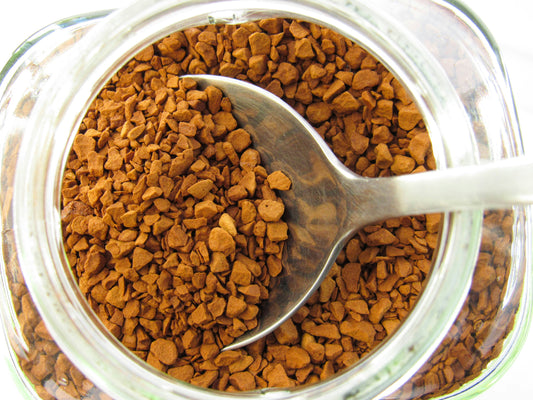
Instant coffee is a ready-made solution for quick and convenient coffee. There's no need to brew the coffee. Just add water and you're set! But how is it made? Instant coffee is made by freezing brewed coffee, then, while in a vacuum chamber, rapidly increasing the temperature so that the ice sublimates (goes from a solid to a gas state, skipping the liquid state), stripping away the water content and leaving the soluble matter extracted from the coffee during the brew. That soluble matter is then ground into coarse chunks, similar in size to coffee grounds used for brewing coffee, except they will redissolve after coming in contact with water.
When you brew a pot of coffee at home, you're really drinking about 98% water and 2% solubles extracted from the coffee during the brew. When you enjoy an espresso at the nearby cafe, that number is closer to 9% coffee and 91% water. In some cases, that number could be as high as 20% coffee. We call that number "total dissolved solubles" (TDS), and you'll also hear coffee aficionados refer to it as "extraction" or "yield."
That's important for understanding because the brew method can impact the strength and taste of the instant coffee.
🛍️ Product
Ratio Four Coffee Machine
Meet Ratio Four: the first affordable and beautiful “half batch” pour over coffee machine. The Four is our smallest brewer yet, an agile, sleek machin...
by Ratio
✓ Available
🛒
View Product
- Brewed from espresso: more body, more bitterness, could be turned back into espresso using 30-50ml of water and 3-5g of instant.
- Brewed from drip coffee: less body, more sweetness.
The TDS also has implications on the economics and viability of instant coffee.
- Coffee brewed at 2% yield has greater clarity in taste, but is costly to produce.
- Coffee brewed at 9% yield is a happy medium in terms of flavor and versatility, but difficult to scale.
- Coffee brewed at 20% yield keeps production costs low, but muddies the flavor of the coffee.
Best Instant Coffee Brands in the Market
In terms of accessibility and affordability, Nescafe has been a leader in the instant coffee game. They were one of the first companies to go big and bring this product to shelves in every major grocer. Blue Bottle is a specialty coffee brand (acquired by Nestle in 2017) that also focused on expanding their specialty offerings to major grocers. Their product is more expensive, but is considerably more flavorful than other instant coffee producers. Black and White Coffee Roasters (North Carolina) takes it one step further by releasing only single-origin instant coffee products.
🛍️ Product
Coffee Subscription
Rotating Single Origin Coffee Delivered Monthly Our Coffee Subscription is built for people who want to keep exploring. Every month, we feature a new ...
by Inheritance Coffee
✓ Available
🛒
View Product
How to Tell if Instant Coffee is Good
Transparency and traceability are key to discerning great coffee products from mediocre ones. Most often, if a coffee roaster went through the trouble of tracing and making transparent the origin of their coffee, it means that there is a greater level of trust and accountability, both for the product, and for the company and producers involved. Looking for signs of the name of either the producer or the farm from which the coffee came would be a dead giveaway that the product will be good. Try to identify either the name of the region from which the coffee was sourced, or the name of a coffee blend used to make the instant coffee. That would be a sign of thoughtful curation, and would give some level of anchoring to an existing region or product. Second to that, look for tasting notes. Tasting notes are a sign that the roaster paid close attention to the details, and even offers a bit of a guidepost for consumers as to what type of coffee they can expect, and which drinks it might be most suitable for.
How Technology is Improving Instant Coffee
In recent years there's been a focus on aroma capture. Aroma capture refers to the brewing and processing techniques used to lock-in the volatile compounds and preserve the ideal flavors. Otherwise, there's been a general focus on quality increase across the board. Farmers are experimenting with innovative processing methods to increase the flavor and quality of their crop. That too has downstream effects on the quality of our instant coffee.
Myths About Instant Coffee
There's a perception from within the specialty coffee industry that convenient coffee products are in some way disrespectful because they lower the quality of the coffee. I think that's an outdated point of view. Convenience, as in any other industry, is an outgrowth of customer demand. At one point, our phones were connected to the walls of our homes by a physical cable. Certainly, the early versions of these products are not as high quality as their potential. However, in time, our understanding of brewing and processing techniques will grow, and the quality will improve because of it.
The Future for Instant Coffee
It's likely that a handful of well-known specialty roasters will lead the way by creating thoughtful instant coffee products. Unfortunately, most coffee roasters lack the financial and human capital required to get instant coffee products off the ground and keep them on the shelves. I'd like to see roasters experiment with additive mineralization I think you will see interesting decaf options in a way that wasn't available before. Roasters will look for ways to add value for customers, like adding tear-off condiments with each pack of instant.

Exploring the Differences Between Light and Medium Roasts: What Makes Them Stand Out?
The Art of Coffee Roasting
When it comes to coffee, the roasting process plays a crucial role in determining the final flavor profile of your brew. Light and medium roasts are two popular options that offer distinct characteristics. Let's delve into the differences between these roast levels and what sets them apart.
Light Roast: A Delicate Balance
Light roasts are roasted for a shorter amount of time, allowing the beans to retain more of their original flavor nuances. These roasts are known for their bright acidity, floral aromas, and pronounced fruitiness. The caffeine content in light roasts is slightly higher compared to darker roasts due to the shorter roasting time.
Medium Roast: A Balanced Blend
Medium roasts strike a balance between the flavors of the bean and the roasting process. They are roasted for a longer duration than light roasts but still preserve some of the bean's inherent characteristics. Medium roasts offer a well-rounded flavor profile with balanced acidity, body, and aroma.
Key Differences
Light roasts have a brighter acidity and more pronounced fruitiness compared to medium roasts.
Medium roasts offer a balance of flavors with moderate acidity and body.
Light roasts retain more caffeine due to the shorter roasting time.
Medium roasts provide a versatile option that appeals to a wide range of coffee enthusiasts.
🛍️ Product
Medium Roast Profile
Calibrated Water™ The Best Water for Brewing Medium Roast Coffee – Optimized for Perfect Flavor If you're searching for the best water for brewing cof...
by Third Wave Water
Choosing Your Perfect Brew
Whether you prefer the vibrant notes of a light roast or the balanced flavors of a medium roast, exploring the differences between these two roast levels can help you discover your ideal cup of coffee. Experiment with different roasts to find the one that best suits your taste preferences and enjoy the diverse world of coffee roasting.

The History and Cultural Significance of Matcha
Matcha is more than just a trendy health drink or stylish coffee alternative. Its origins reach back nearly a thousand years, to a time of emperors in China and samurai clans in Japan.