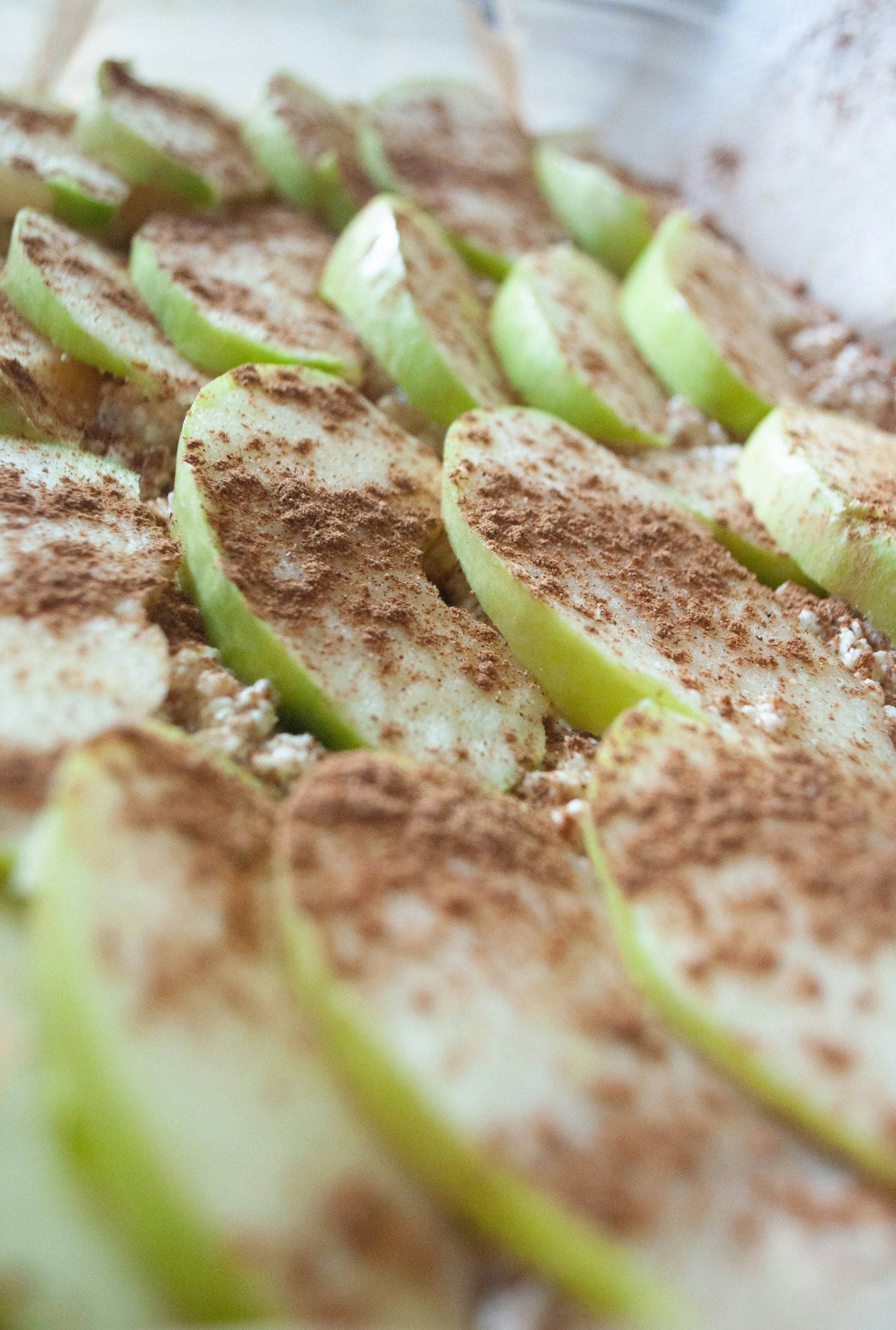
Malic acid tastes like an underripe green apple: crisp, tart, and faintly mouth-watering, and it lands on the sides of the tongue and the back of the palate rather than up front. Citric acid is the one that flashes first in a cup of coffee and is gone within a few seconds. Malic acid is slower on both ends. It takes a moment to show up, and the mouth-watering sensation it leaves behind can linger for fifteen to thirty seconds after you swallow.
Both are organic acids that coffee shares with the rest of the plant world, and most cups carry some of each. The reason one coffee tastes like a snap of green apple and another tastes like a flash of lemon is mostly a question of which acid is carrying more of the weight, and that is set by where the coffee grew and how it was roasted, not by chance.
Citric acid flashes. Malic acid coats.
The clearest short account of the difference comes from the SCA Q Grader study material on organic acid chemistry, which describes malic acid as delivering "the crisp, tart bite of a green Granny Smith apple, unripe pear, white grape, or rhubarb," while citric acid reads as lemon, lime, and general citrus. Timing is the other half of it, and the material is specific about which acid is which: malic acid "exhibits a noticeably slower temporal onset than citric acid," arriving later and then staying. Citric acid is the one that flashes first. Malic acid is the one that "coats the mid-palate and posterior lateral tongue margins" and keeps the mouth watering well after the cup has gone down.
Citric acid also tends to be the more plentiful of the two in green coffee, by weight: roughly 0.6 to 1.4 percent of the dry bean against roughly 0.2 to 0.5 percent for malic acid, and about 0.20 to 0.50 grams per liter once it is in the cup, per the same study material. Less of it doesn't mean less noticeable. Malic acid's slower arrival and longer finish mean it tends to register as structure and juiciness rather than as a bright top note, which is why tasters reach for "juicy" almost as often as they reach for "tart" when they're describing it.
Altitude is most of the reason one coffee has more of it than another
Organic acids build up while the cherry is still on the tree, and the study material ties malic acid specifically to elevation: its synthesis is "favored by high altitudes (>1,600 to 2,200 meters above sea level)," where cooler temperatures slow the cherry's ripening. A cherry that ripens slowly has more time to accumulate acid before sugar production takes over, and the material names Kenyan SL-28 and SL-34 lots, high-grown washed Ethiopian coffees, and high-altitude Nariño and Huila lots from Colombia as the coffees where this shows up hardest.
That is also, more or less, a description of Kiambu County. Our Kenya Kiambu is grown at Spike Farm Estate, on the Aberdare side of Kiambu County at roughly 1,930 meters, inside the exact elevation band the chemistry points to. It's planted to SL-28 and SL-34, the same two varieties the study material names. We've already written, on the SL-28 cultivar page, that the variety's signature is "sharp, structured citric and malic acidity, most often described as blackcurrant." That sentence is true as far as it goes, but it doesn't say which acid is doing what, or why a coffee grown four hundred meters lower wouldn't taste the same way even if it were the identical variety. The altitude and the variety are doing the work together; neither one gets there alone.
Roasting is the other half of the equation, and it runs the other direction
Green coffee arrives with whatever acid the altitude and the variety gave it, and from there, the roast can only take it away. Royal Coffee's own explainer on acidity puts it plainly: "lighter roasts retain fruity malic and citric acids, while darker roasts break them down into bitter quinic and caffeic acids." The breakdown happens through heat, mostly after first crack, as the roast pushes further into the bean's organic material.
That's a roaster's blog post rather than a peer-reviewed paper, and it doesn't put a number on how much malic acid survives a given roast degree. But the direction it describes matches why we roast Kenya Kiambu light rather than taking it into medium or dark: a roast that pushed past the first stages of browning would be burning off the exact acidity the altitude spent months building. A light roast isn't a stylistic choice here so much as a decision not to undo the growing conditions.
How to actually taste it
Brew it as a pour-over or in any other filter method rather than espresso; filter brewing shows acid structure more clearly than an espresso shot does, where pressure and crema can mute it. Take a sip and hold it across the whole mouth rather than swallowing immediately. The citric acid, if the coffee has much, will hit fast and fade in a second or two. What's left after that first flash, sitting along the sides of the tongue and toward the back of the palate, making your mouth want to water again a few seconds after you've swallowed, is the malic acid. On Kenya Kiambu it shows up alongside the coffee's own tasting notes of citrus and cranberry, both of which share the same family of bright, juicy acidity.

One honest limit: we don't run our own titratable acidity measurements on any coffee we sell, so I can't give you a number specific to this lot. The 0.20 to 0.50 grams-per-liter figure above is the Q Grader material's general range for malic acid in coffee, not a reading off our own cup, and I'd rather tell you that than hand you a borrowed number dressed up as ours. If you want a lab figure tied to the exact bag in front of you, that's a question for an importer with a wet-chemistry lab, not for us. We covered the acid's general chemistry, separate from how it tastes, in our earlier piece on what malic acid is in coffee.
Common questions about malic acid in coffee
Is malic acid the same as citric acid?
No. Both are organic acids and both show up as brightness, but they behave differently. Citric acid tastes like citrus and arrives and fades quickly. Malic acid tastes like green apple or rhubarb, arrives more slowly, and lingers on the sides and back of the mouth for fifteen to thirty seconds or more.
Why do some coffees taste more like green apple than others?
Mostly altitude. Malic acid synthesis is favored above roughly 1,600 to 2,200 meters, where cooler temperatures slow the cherry's ripening and give it more time to build acid. High-grown Kenyan, Ethiopian, and Colombian coffees are the usual examples.
Does roast level change how much malic acid you taste?
Yes, and it only goes one direction. Light roasts retain more of the malic and citric acid the green coffee arrived with. Darker roasts break both down, through heat, into less fruity acids as the roast progresses past first crack.
Which of your coffees has the most malic acid?
Kenya Kiambu is the one built for it: grown around 1,930 meters in Kiambu County on SL-28 and SL-34, and roasted light to keep that acidity in the cup rather than roast it out.
Taste it for yourself. Kenya Kiambu is grown at roughly 1,930 meters on SL-28 and SL-34, roasted light in Pensacola every Wednesday to keep that acidity in the cup.