Taste
What Does Malic Acid Taste Like in Coffee?
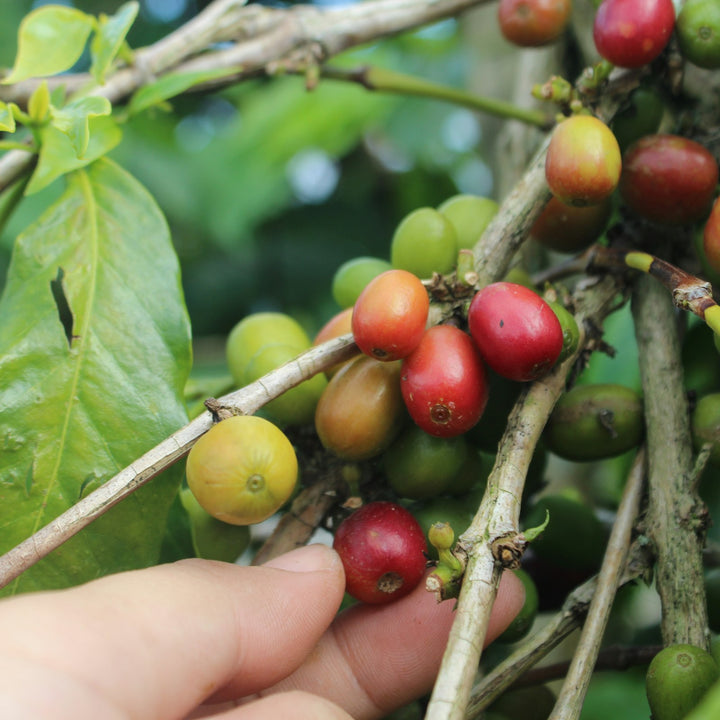
Citric acid flashes and fades. Malic acid, the slower acid altitude builds into high-grown lots like Kenya Kiambu, coats the tongue and lingers for up to thirty seconds.


Your cart is empty
Notes from the roastery: what we buy, how we roast it, and what we have learned building coffee programs on the Gulf Coast.
Tagged “tasting notes” · see all of Learn
Citric acid flashes and fades. Malic acid, the slower acid altitude builds into high-grown lots like Kenya Kiambu, coats the tongue and lingers for up to thirty seconds.
Fermenting coffee with wild microbes is the default. A growing number of producers add a chosen yeast strain on purpose, and two peer-reviewed studies measure exactly ...
A clean cup has nothing to do with how sanitary the kitchen is. It's what's left after quakers, broken beans, and fermentation faults get caught before the roast.
Most explanations credit Lactobacillus for a lactic-processed coffee's creamy tang. A 2019 peer-reviewed study says the real story runs through two different bacteria,...
ASCENT, our 50/50 Kenya-Ethiopia blend, cups at 92.3 against Kenya Kiambu's 91.5. Here's what that does, and does not, prove about blends versus single origin coffee.
We checked our own shelf: a cup score tracks a trained panel's scorecard, not the price we paid for the green coffee. The two don't move together in either direction.
A 2022 study found a sealed anaerobic coffee fermentation is dominated by different microbes than the lactic acid bacteria popular coffee writing usually credits for it.
Producers on India's Malabar Coast hold green Arabica and Robusta in humid monsoon air for twelve weeks to six months on purpose, and two academic papers and a governm...
A Colombian lab trial compared pineapple-inoculated and spontaneous coffee fermentation and found real chemical differences, and why one farm, three tasters, and an un...
What actually causes a coffee's aftertaste, how the cupping form scores it, and why roast level and brew method change what lingers after you swallow.
Chlorogenic acid makes up a large share of green coffee. Roasting breaks down nearly 90 percent of it into lactones, quinic acid, and bitterness compounds.
Liberica and excelsa were treated as one species on paper since 2006. A 2025 genomic study says that was wrong, and names a third, largely unknown coffee species: Coff...
A 2024 microbiology study traces exactly what takes over a honey-processed coffee bed while it dries, bacteria first, then yeast, and shows why "no fermentation tank" ...