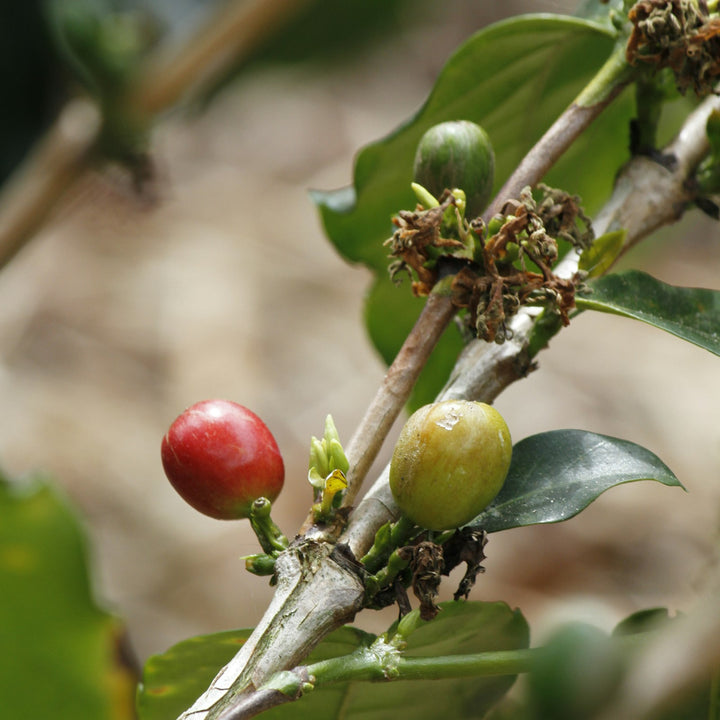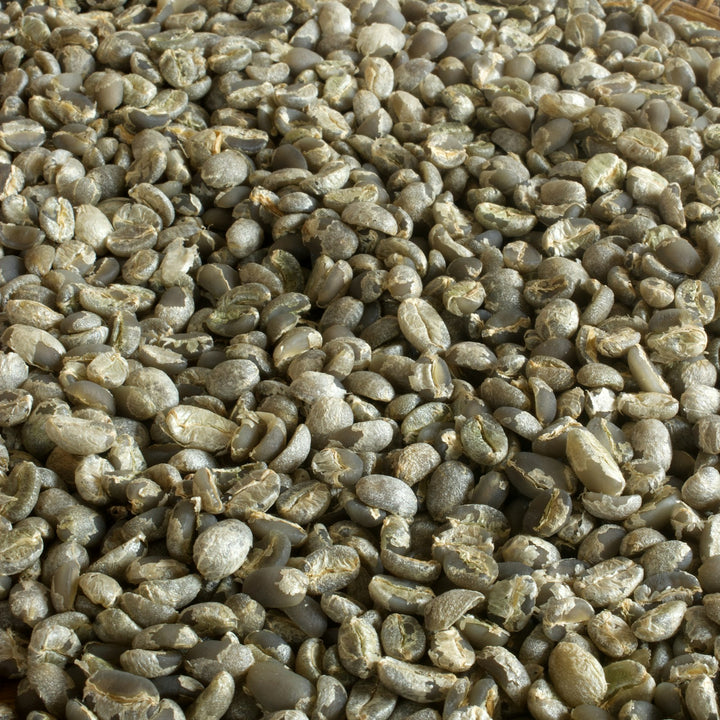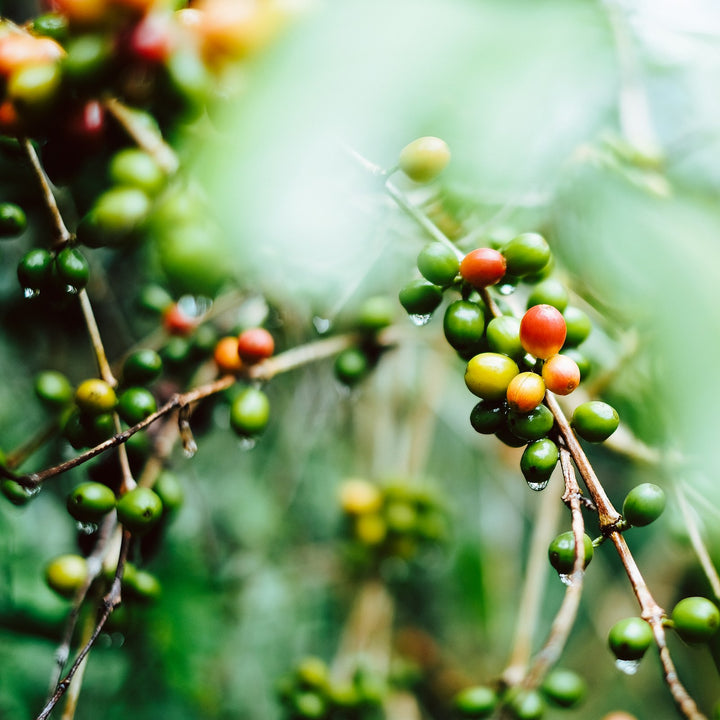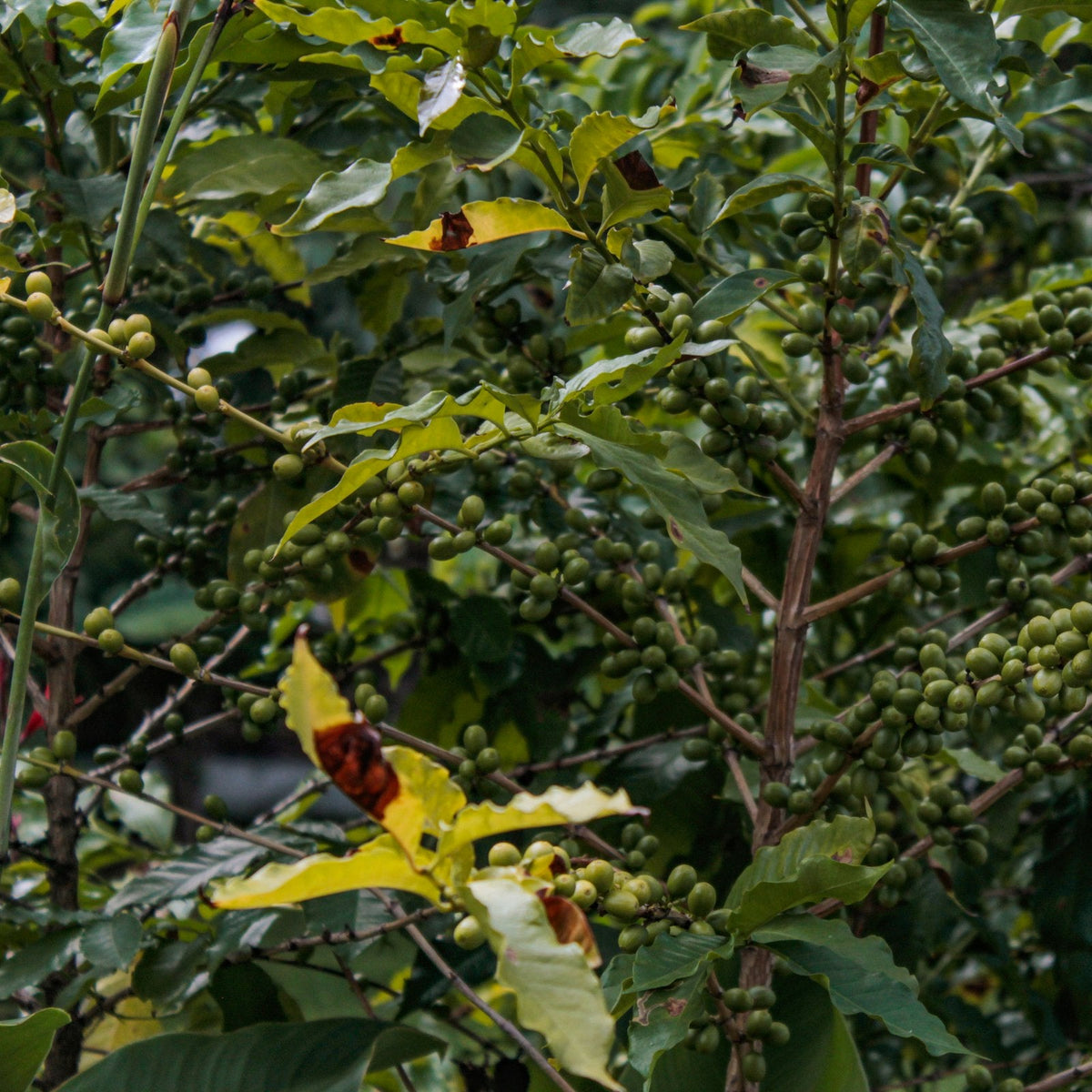
For two decades, Coffea liberica was treated as one sprawling species with a tart, fruity variety called excelsa folded inside it. A 2025 paper in Nature Plants says that arrangement was wrong, and not just wrong by a little. The liberica group is splitting back into separate species, and the split changes how growers plant it, how researchers study it, and how the industry counts it.
What Changed in 2025?
In August 2025, a team led by Aaron Davis at the Royal Botanic Gardens, Kew, working with research partners in Uganda and Cameroon, published a genomic study in Nature Plants (vol. 11, issue 9, pp. 1729-1738, DOI 10.1038/s41477-025-02073-y). The team sequenced 353 nuclear genes from 55 plant samples spanning the liberica group's range and compared the resulting genetic lineages against morphology and geographic distribution. Sequencing 353 genes rather than one or two marker genes is the point: a handful of genes can drift or get inherited together by chance, but hundreds of independent genes pointing the same direction is much harder to explain as noise.
The three genetic lines didn't blur together the way a single, variable species should. They matched clean genetic splits to clean differences in leaf, bean, and habitat, and the authors proposed three species where the books currently list one: Coffea liberica, Coffea dewevrei (the plant known commercially as excelsa), and a third, little-known line called Coffea klainei.
Davis also pointed out something the genomics alone didn't predict: wild liberica and wild excelsa don't overlap in range, and their climate envelopes diverge. His own words, as quoted in trade coverage of the paper: "the climate profiles of wild Liberica and excelsa coffee are markedly different." Two populations that don't share a map and don't share a climate make a much easier case for separate-species status than two populations that only differ by a gene count on a lab printout.
Older coffee taxonomy leaned heavily on morphology: leaf shape, bean size, tree height, the things a botanist in the field could measure with calipers and a notebook. That approach built the original Coffea classification, and it is also how excelsa got folded into liberica in 2006, by comparing physical traits that genuinely do overlap between the two. Morphology is a real signal, but it is a noisy one. Hybridization, environmental variation, and plain overlap between close relatives can make two genuinely separate lineages look like one variable population, or make one species look artificially split if a few plants happen to grow unusually large or small for their kind.
A single marker gene has the opposite problem: it can drift, get inherited in a way that does not track the rest of the genome, or simply be the wrong gene to ask the question. Davis and his co-authors sidestepped both failure modes by sequencing 353 nuclear genes across 55 samples and asking whether the genetic lineages were internally consistent with each other, not just consistent with one convenient marker. When hundreds of independent genes all sort the same 55 plants into the same three groups, and those three groups also line up with where the plants actually grow and what their leaves and cherries look like, the case for separate species stops being a matter of taste. That convergence of genomics, geography, and morphology, all pointing the same direction independently, is what gives this particular reclassification more weight than the 2006 one it reverses.
Why Were Liberica and Excelsa Treated as One Species Before That?
Excelsa has its own strange history inside this story. It was described as its own species, Coffea excelsa, after its discovery in Central Africa in 1903, and traded under that name for a century. In 2006, botanists collapsed excelsa, along with two closely related populations called dewevrei and dybowskii, into Coffea liberica as a variety: Coffea liberica var. dewevrei. That demotion is still the name printed on most reference material today, including our own internal excelsa reference notes, written under the 2006 standard and already flagged, in general terms, that newer genetic work was pushing back toward species rank. The 2025 paper is the specific study behind that hedge, with a name, a sample size, and a journal attached to it.
This is not the first time a coffee reclassification has rippled through how a species gets talked about on a bag. Arabica and robusta went through a version of the same argument: robusta is formally Coffea canephora, a distinct species from arabica with a different chromosome count, but the two were long discussed almost interchangeably in trade writing as simply "good coffee" and "cheap coffee." We covered that history and the genetics behind it separately in Is Robusta a Different Species of Coffee?. The pattern repeats: commercial habit lumps species together for convenience, and it takes a formal genomic study, sometimes decades later, to pull them back apart with real evidence attached.
How Did the Old One-to-Two-Percent Estimate Get Corrected?
You'll see it written, on specialty coffee sites and occasionally on our own, that liberica and excelsa together supply somewhere around one to two percent of the world's coffee. Davis and his co-authors traced that figure back to the late 1800s, when liberica was briefly a major commercial replacement for rust-damaged arabica across parts of Asia. It has been repeated ever since without anyone re-measuring it, the way an old stat outlives the study that produced it once enough people quote the quote instead of the source. Their own estimate, built from current planting and export data rather than a century-old citation, puts combined liberica and excelsa production at probably under 1,000 metric tons a year, which the authors calculate at roughly 0.01 percent of global coffee exports. That is not a small correction. It means the commonly cited figure overstates the real number by somewhere around a hundredfold.
The redefined liberica's native range shrank just as sharply. Once the population is split along its actual genetic lines, true wild Coffea liberica turns out to grow naturally in only five West African countries, a roughly 95 percent reduction from the range earlier botanists had assigned to the old, lumped-together species. A species that looked continent-spanning on paper turns out, once you separate it from its relatives, to be a narrow West African specialist, with excelsa and klainei occupying their own, different ground.
What Is Coffea Klainei?
Klainei is the quiet part of this story. Before 2025 it was treated as a synonym of Coffea liberica, not even granted variety status, and it barely appears anywhere in the specialty coffee literature. The Kew-led team's genomic data pulled it out as a third, distinct lineage native to West-Central Africa, and the paper describes it as poorly understood: no commercial trade, no cup profile on record, and comparatively little botanical study behind it. It is the clearest example of what a genomic re-survey can turn up that a century of cupping and trading never flagged, simply because growers and researchers were not growing or selling it under a name of its own. Whether klainei ever becomes a coffee anyone cups on purpose is an open question the paper does not answer; for now it exists mainly as a line on a phylogenetic tree, waiting on the agronomic work that liberica and excelsa have already had decades of a head start on. If klainei ever does reach a cupping table, it will be as a genuinely new coffee rather than a rediscovery, since there is no historical trade name, no heritage market, and no prior cup profile for anyone to compare it against.

Does Any of This Change How Excelsa Tastes or Where It's Grown?
Not in the cup, and not yet in the field. Excelsa's tart, fruit-forward profile and liberica's big, floral, polarizing one are the same coffees they were before the paper came out. Taxonomy describes a plant; it does not change what is already growing in the ground, and growers are not about to pull out productive trees over a name change. What the paper does change is where agronomists look next. Davis and his co-authors argue that liberica and excelsa, now understood as genuinely distinct lines with different climate tolerances, deserve dedicated breeding and planting programs rather than treatment as a single minor variety lumped under arabica and robusta's shadow.
Excelsa is already expanding commercially in Uganda, South Sudan, and Guinea, where it tolerates heat and long dry spells better than robusta does, and plantings are rising in India, Vietnam, and Indonesia as growers look for options that survive hotter, less predictable seasons. "Climate envelope" is a dry way of describing something concrete: the combination of temperature range, rainfall pattern, and elevation a wild population can actually survive in without irrigation or shade intervention. Wild liberica clusters in humid, lower-elevation West African forest; wild excelsa's range runs hotter and drier, closer to the savanna edge. That is a meaningfully different set of conditions for a breeding program to design around, and it is the kind of distinction that gets lost entirely if the two are treated as one interchangeable gene pool. Liberica consumption is growing in Malaysia, Indonesia, and Fiji, layered on top of its long-standing heritage markets in the Philippines, where it survives as kapeng barako, a coffee tradition that outlasted the same nineteenth-century leaf rust epidemic that first pushed liberica into wide cultivation to begin with. A cleaner species boundary makes it easier for breeders in those countries to select for climate tolerance in the right population instead of an averaged-together one that may be borrowing traits from a neighbor it does not actually share a gene pool with.
The concession worth making here: this is not a closed case. Davis and his co-authors present a proposal backed by strong genomic and ecological evidence, not a binding decree. Species boundaries in coffee have moved before, and taxonomic committees can take years to formally adopt a reclassification; the 2006 lumping took hold quickly in commercial usage without ever being universally accepted among botanists, and the same could happen in reverse. Reasonable growers, traders, and roasters can wait for the formal taxonomic process to catch up before changing how they label a bag, and nothing about this argument requires anyone to rush.
Why Hasn't Inheritance Stocked Either One?
Neither liberica nor excelsa has made it into our lineup, and the honest reason is availability, not interest. Both are still niche crops grown in small, often smallholder-scale plots, frequently interplanted with other crops rather than grown as a dedicated block of trees. A specialty importer bringing in a full container needs consistent lots at a scale these origins mostly cannot supply yet, which is exactly the gap the 2025 paper's authors want dedicated breeding programs to close over time. We would rather wait for a lot we can stand behind on quality and consistency than bring in a one-off novelty bag that cups differently from the next bag with the same label. If that changes, it changes because the supply side does, not because the species argument got settled on a label.
In the meantime, this is part of why the Inheritance Roastery exists. Roasters and green buyers curious enough to chase down a small lot of real excelsa or liberica, from a supplier willing to ship a sample-sized batch, can book time on our roasters to develop a profile for it without owning the equipment themselves. Small, irregular lots like these are exactly the kind of coffee a co-roasting model is built to handle, since nobody needs to commit to a production-scale run just to find out what a new species tastes like. That is a more realistic path to tasting the species split for yourself than waiting for either one to show up on a wholesale coffee's shelf.
Is excelsa the same species as liberica?
Under the classification used since 2006, yes: excelsa is formally Coffea liberica var. dewevrei, a variety within liberica rather than its own species. A 2025 genomic study in Nature Plants proposes splitting them back into separate species, Coffea liberica and Coffea dewevrei, based on distinct genetic lineages, non-overlapping wild ranges, and different climate tolerances. The proposal has strong evidence behind it but has not been adopted as the formal taxonomic standard.
Does Inheritance sell liberica or excelsa coffee?
Not currently. Both remain niche, smallholder-scale crops that are difficult to source at the lot size and consistency a specialty roaster needs. Roasters interested in developing a profile for either species can rent time on Inheritance's roasters through the Inheritance Roastery.
What is Coffea klainei?
Klainei is a third species identified in the same 2025 study, previously treated as a synonym of liberica rather than its own variety. It is native to West-Central Africa, has no established commercial trade, and remains poorly studied compared with liberica and excelsa.
Why did this take until 2025 to sort out?
Because the tools changed. The 2006 classification relied mainly on morphology and limited genetic markers; the 2025 study used genomic sequencing across 353 nuclear genes and 55 samples, a scale of analysis that was not routine or affordable for a minor, commercially small species group until relatively recently. Low-volume crops like liberica and excelsa tend to wait near the back of the queue for this kind of research funding, behind arabica and robusta, which supply the overwhelming majority of the world's coffee.