Lactic fermentation gets its name from the bacteria a producer is trying to put in charge of the tank, and the genus most explanations reach for, Lactobacillus, usually is not the one that wins. A 2019 study in Frontiers in Microbiology sampled real coffee fermentation water and found Leuconostoc and Lactococcus running the fermentation instead, with Lactobacillus showing up only at the margins and only under certain conditions. That is a small correction with a real consequence: the reason a lactic-processed coffee tastes the way it does is not "lactic acid bacteria" as one blurry category, it is a specific, temperature-sensitive handoff between a few related genera, and which one is active changes what a producer would actually do differently at a cool processing-room temperature versus a warm one.
I wrote last month about anaerobic fermentation and found, to my own surprise, that sealing a coffee tank away from oxygen does not hand the fermentation to lactic acid bacteria at all when nobody is steering it. A 2022 study found a fungal family called Nectriaceae and a bacterial family called Enterobacteriaceae running an uninoculated, sealed tank instead. I still think that finding is correct, and I would make the same argument again. What I want to be more careful about this time is the conclusion a reader could draw from it: that lactic acid bacteria are a minor player in coffee fermentation generally. This deliberately engineered method is the exception, the one case where a producer forces the exact outcome the popular story assumes happens on its own.
What Makes a Fermentation "Lactic" Instead of Just Anaerobic?
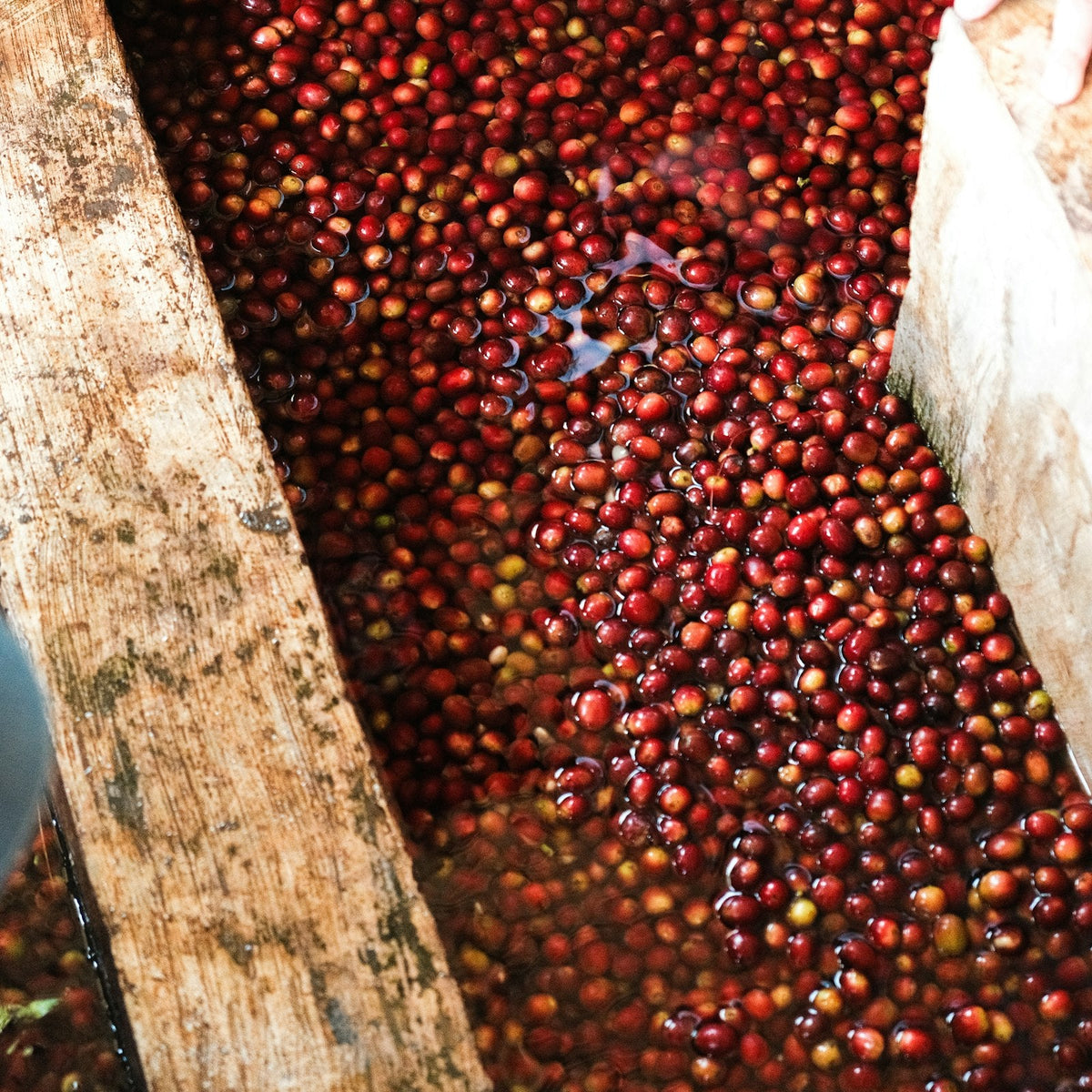
Every fermentation on a coffee cherry is anaerobic in part, the moment it is sealed into any kind of container, but "anaerobic processing" and "lactic fermentation" are not interchangeable names for the same thing. Anaerobic processing, as we have written about before, describes the setup: coffee goes into a sealed tank or bag, oxygen is excluded, and whatever microbes already live on that fruit compete for the run of the tank. The named method describes an outcome a producer is trying to engineer inside that setup: conditions deliberately tilted so that lactic-acid-producing bacteria take over the ferment rather than losing it to something else. Depulped cherries, sometimes left whole, go into a sealed tank, and the producer controls temperature and tracks pH through the ferment, because both of those numbers are the actual levers being pulled. Some producers add a store-bought lactic starter culture to force the outcome directly. Others use a light salt brine, between two and three percent, because the salt-tolerant lactic bacteria handle it better than most of their competitors do. Either way, the tank runs long: Felipe Sardi, co-founder of the Colombian farm La Palma y El Tucán, has said publicly that his best results came from fermentations held past eighty hours.
Which Bacteria Actually Dominate the Tank?
This is the part almost every explanation of the method gets a little bit wrong, including our own processing-method page, which names Lactobacillus as the bacteria doing the work. Lactobacillus is a real and common genus in coffee fermentation, and it is not a false thing to say. It is an imprecise one. A 2019 paper in Frontiers in Microbiology, led by Sophia Jiyuan Zhang alongside researchers including Florac De Bruyn, Stefan Weckx and Luc De Vuyst, tracked the microbial population through real wet-processing fermentations and reported bacterial counts reaching the equivalent of a billion cells per gram, with the activity driven mainly by two genera: Leuconostoc, which the paper found present across every variant it tested, and Lactococcus, which built up a larger share specifically in demucilaged fermentation water. Lactobacillus appeared too, but its relative share only rose toward the end of the longest ferments, and the clean takeover by acid-tolerant lactobacilli that an earlier study out of Ecuador had reported did not show up clearly in this data set. The paper that most coffee writing cites when it says "lactic acid bacteria" is, more precisely, describing Leuconostoc and Lactococcus doing most of the early work and Lactobacillus arriving late, if at all.
The practical result is the same regardless of which genus gets the credit, but the chemistry behind it is more specific than "bacteria eat sugar and make acid." Lactic acid bacteria run one of two metabolic routes on the sugars in the mucilage, a pathway chemists call Embden-Meyerhof-Parnas or a second one called the phosphoketolase pathway, and depending on which route a given strain runs, the byproducts differ: lactic acid always, but also ethanol, acetic acid, or mannitol, a sugar alcohol, in different ratios. The same bacteria can also grab malic acid and citric acid already present in the fruit and convert those into more lactic acid, or into acetic and succinic acid, which is part of why a lactic lot's acidity reads rounder than a plain washed coffee's even though the raw acid level has not necessarily dropped. Zhang's team measured the end product directly rather than inferring it. After eighty-four hours of a depulped fermentation, the water held roughly 1.7 to 1.8 milligrams of lactic acid per milliliter, alongside mannitol at nearly twice that concentration. The beans themselves carried about six times more lactic acid, and three times more mannitol, than beans from a shorter, demucilaged process run in parallel in the same study. That is a measured chemical signature, not a tasting-note guess, and the falling pH that produces it does a second job at the same time: it suppresses the spoilage organisms that would otherwise compete for the same sugar.
What Does a Lactic Coffee Actually Taste Like?
The milk analogy that shows up in almost every explanation of this method is not a marketing flourish; it is the most accurate shorthand available, because the same broad family of bacteria doing the work in a lactic coffee tank is the one that turns milk into yogurt. Perfect Daily Grind's reporting on the method, built on interviews with Sardi and with green buyer Christopher Feran, describes the finished cup as showing more intense sweetness, chocolate, butter, and a velvety body, while Barista Magazine's account describes a similar result in different words, a very sweet cup with medium-high body, strong lactic acidity, and a finish that reads like papaya or pineapple yogurt. Feran draws a sharper distinction worth keeping: lots fermented with a salt brine on whole, dried cherries tend to land brighter and more complex, while lots that are depulped first and fermented without salt tend toward brighter, floral, tropical notes instead of the heavier dairy register. Both descriptions are consistent with what the chemistry above predicts, more mannitol and lactic acid, less raw sugar, and a flatter, rounder sweetness instead of a sharp one, but neither publication connects its own tasting notes back to the specific genus doing the work, which is the gap this piece is trying to close.
Why Does Temperature Decide More Than Oxygen Does?
Removing oxygen is the setup, not the whole mechanism, and the Zhang paper's most useful finding for a producer is the one most coffee writing skips: Lactococcus built up where the fermentation ran cooler, because lactococci, unlike most of their competitors, can still multiply at temperatures as low as 10°C, roughly 50°F. A tank held warm favors a different balance of the same handful of genera than one held cool, and both still read as "lactic" to a cupper, because both are still acid-forward and bacteria-dominated. Barista Magazine's own explainer on the method names temperature and pH as two of the three variables a producer tracks through the ferment, alongside oxygen, and that is the right list; what the trade coverage generally does not explain is why temperature earns a place on it. It is not just a spoilage risk, the way it is in a plain washed ferment. It is a selection pressure that decides which bacterium, not just which process, ends up running the tank.
Does a Longer Ferment Make It Taste Better, or Just Different?
Longer is the default instinct in this method, and the data complicates it rather than confirming it outright. Zhang's team found that a long fermentation duration produced a fruitier, more acidic cup, with extended fermentation increasing several specific floral and fruity volatile compounds, including linalool, the same compound responsible for a lot of the perceived floral character in natural wine. That is a real, measured shift, but it points toward fruit and acid, not toward the creamy, buttery roundness that most marketing around lactic coffee promises. Perfect Daily Grind's reporting on the method credits a different variable for the creamy body: Sardi told the outlet that up to 90 percent of the glucose and fructose in the mucilage gets consumed during a long lactic ferment, compared with an ordinary natural process, and it is that sugar depletion, not the fermentation length by itself, that gives the finished coffee its rounded, less-sweet-reading sweetness. Pushed too far in the wrong direction, the same long tank turns on a producer. Both Perfect Daily Grind and Barista Magazine report the same failure mode from opposite sides of the method: a ferment run too warm, too long, or with sloppy tank hygiene tips from a clean lactic tang into vinegary sourness or outright spoilage, and the margin between the two is narrower than most of the romantic framing around the method lets on.
Who Is Actually Doing This, and Where Did It Start?
Lactic fermentation as a named, marketed method traces most directly to Colombia, and specifically to La Palma y El Tucán in Zipacón, Cundinamarca, where Felipe Sardi and his collaborators built out the technique as part of a wider wave of fermentation experimentation that started in the mid-2010s. The method's biggest public moment came in 2019, when World Barista Champion Jooyeon Jeon used a lactic-processed Sidra coffee from that farm in her winning competition routine, which is the kind of result that turns a farm's internal experiment into an industry-wide category almost overnight. Christopher Feran, a green buyer and former Q grader who has worked with the method from the buying side, has made the point publicly that the process differentiates a coffee rather than straightforwardly improving it, which is a more honest claim than most of the coverage settles for.

Colombia is still where the method is most associated, but it has not stayed there. Producers in Central America, Africa, and parts of Asia now run their own lactic lots, usually on farms already experimenting with other engineered ferments like co-fermentation or anaerobic honey processing, because the equipment and the discipline the method demands, sealed tanks, a thermometer, a pH meter, and someone checking both on a schedule, are the same infrastructure those other methods already require. We have written before about one of those adjacent methods, co-fermentation, where a producer adds something other than coffee, fruit, hops, a saved starter batch, into the same kind of sealed tank, and that piece covered the 2024 controversy at the Best of Panama competition, where organizers disqualified several entries over added ingredients. This method generally sidesteps that fight entirely, because nothing non-coffee goes into the tank; the intervention is temperature, salt, time, and sometimes a starter culture of bacteria the fruit was already carrying anyway, which is a smaller, easier claim to defend than fermenting cherries next to pineapple or hops.
Why Doesn't Inheritance Carry One Right Now?
Plainly, because we have not bought one, and I want to say why rather than let an empty shelf answer the question on its own. A lactic lot done well is a genuinely good coffee, and I am not skeptical of the method the way I was skeptical, early on, of some of the louder claims around co-fermentation. The honest reason is smaller and less interesting than a verdict on the science: the farms doing this well are mostly small, known producers selling limited lots into a competitive, often auction-priced market, closer to the kind of pricing a record Gesha lot fetches than to the pricing on a container of washed Kenyan I can buy with confidence a year from now. Building a relationship with one of those producers, at a volume that makes sense for a roastery our size, has not yet been where I put my own buying time, and every lot we do carry gets cupped and scored before it earns a spot on the shelf regardless of how interesting the process behind it is. That is a choice about where I have spent attention and what I have prioritized buying against, not a statement that the coffee is not worth buying. I would rather say that plainly than dress it up as a quality judgment it is not.
If you want to taste what a related, more common fermentation choice does to a cup without a sealed tank or a pH meter anywhere near it, our washed Kenya Kiambu, cupping 91.5, runs on nothing but its own sugars and whatever lived on the cherry already. It is the plain baseline every engineered ferment, lactic included, is a deliberate departure from.
Taste the baseline a lactic ferment departs from. Our washed Kenya Kiambu is fermented on nothing but its own sugars, cupping 91.5, and it ships whole-bean or ground to order.