The Philippine Department of Agriculture and Nestlé Philippines signed an agreement on Friday, 23 October, to start a coffee research and planting program in Northern Mindanao aimed at yields of one metric ton per hectare, the Inquirer reported the next day. The program is called the Mindanao Integrated Coffee Development and Genetic Resource Program, according to the report by Jordeene B. Lagare. Converted to the 60-kg bags that most coffee trade figures use, the reported target equals about 16.7 bags per hectare; the conversion is our arithmetic.
Separately, an agriculture department official has said the government also wants a ten-year, P10-billion commitment to the industry written into law, Context.ph reported on 26 October.
What does the Mindanao program include?
The program's main fixture is a national coffee genetic resource repository at the Northern Mindanao Agricultural Crops and Livelihood Research Complex in Malaybalay City, Bukidnon, the Inquirer reported. The repository is meant to conserve priority varieties, among them robusta selections from Nestlé that are registered with the country's National Seed Industry Council. The research complex will also get a coffee laboratory.
The rest of the agreement, as the Inquirer described it, is about getting plants and practice onto farms:
- Nurseries and mother-plant gardens to supply high-yielding robusta seedlings to smallholders
- Field trials of an intensive model that combines those selections with fertilizer and drip irrigation, spread across Bukidnon
- Training in regenerative agriculture
- Soil conditioner from Nestlé's coffee-sludge compost program for farms in Bukidnon and Misamis Oriental
- Inorganic fertilizer, regional buying and farm-level distribution handled by the department's Northern Mindanao office
Nestlé will keep running its Bukidnon Integrated Coffee Center, a demonstration farm, according to the same report. Jose Apollo Pacamalan, the department's regional executive director for Northern Mindanao, said the work turns research into economic gains for farmers, and Carl Khoury, a vice president at Nestlé Philippines, said it was meant to give growers the resources and knowledge they need, the Inquirer reported.
It is not the first agreement between the two. The department announced on 14 June 2023 that it and Nestlé had signed a memorandum of agreement on 7 June 2023 for a Mindanao Robusta Coffee Project, which included fertilizer support, training for extension workers and an integrated coffee center in Sultan Kudarat.
What is the Coffee Industry Development Act?
It is a proposed law that would set a ten-year roadmap for coffee with a permanent budget of about P10 billion, Agriculture Undersecretary Jerome Oliveros said, according to Context.ph. He said a counterpart bill in the Senate is expected to be sponsored by Senator Pia Cayetano and other lawmakers. Context.ph's report did not give a bill number or say where the Senate measure stands.
Oliveros also said the department has already approved P3.6 billion for its Coffee Industry Development Office under the Philippine Sustainable Agricultural Transformation initiative, and that the P10-billion figure would still need Congress to act, the outlet reported. The department is updating the Philippine Coffee Roadmap for 2027 to 2031, with targets for higher output, better quality and better returns to farmers, according to the same report.
Our reports have also covered a 32-variety arabica trial across 17 countries and Rwanda's new climate-resilient varieties, and our explainer covers whether robusta is a different species.
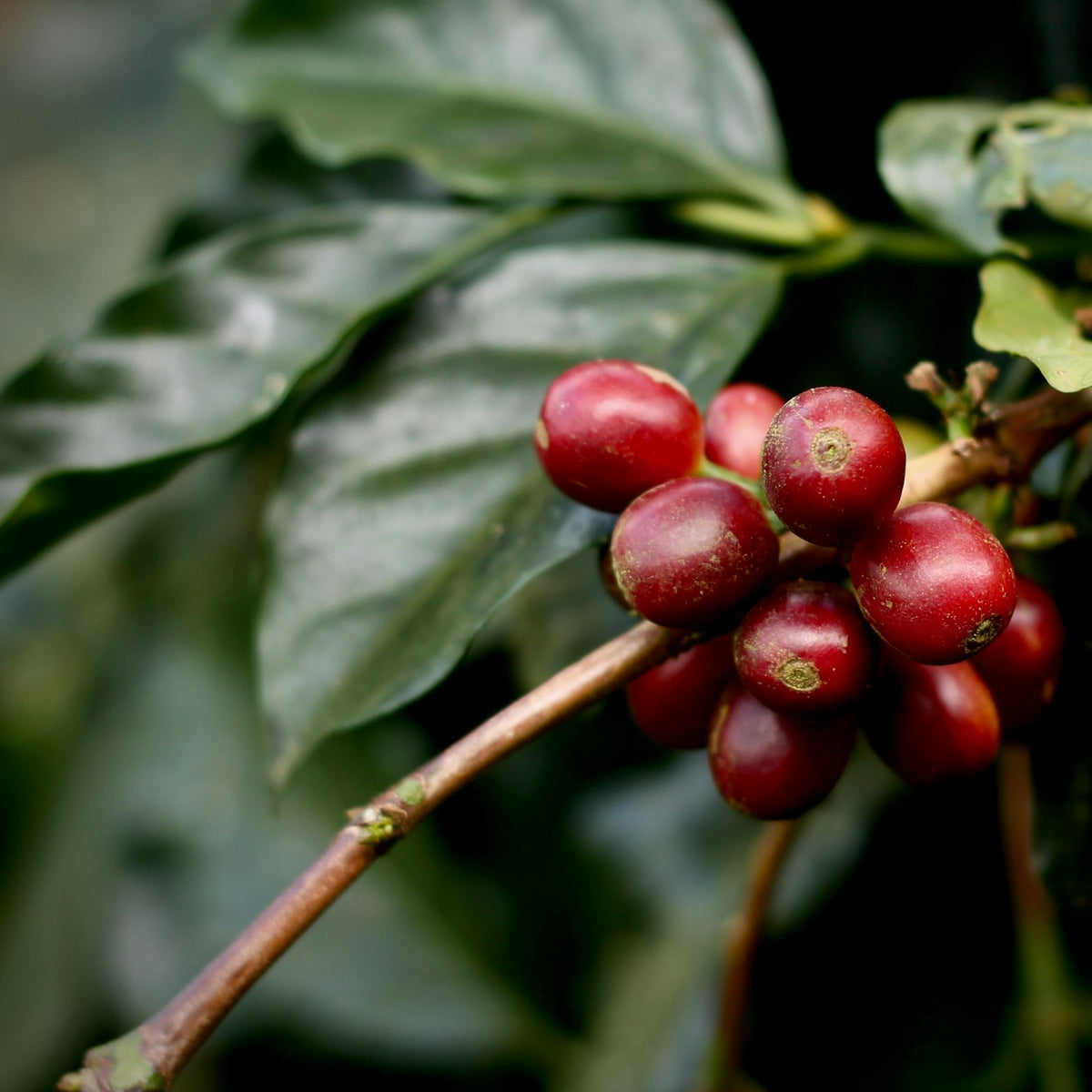
Photograph: Sara Hobbs, Unsplash. Coffee cherries on a farm near Da Lat, Vietnam; it is not a photograph of the Mindanao program.