Not necessarily. A cup score measures how a trained panel rated a coffee against a fixed procedure and a fixed set of attributes. Whether you personally like that coffee more than a lower-scoring one, and whether it costs more, are two different questions, and the honest answer to both is: not always.
We sell five coffees right now, every one specialty grade, every one scored on our own cupping table. If a higher number meant a better coffee in any simple sense, the price would climb with the score. It doesn't.
What a cup score actually measures
A cup score is the sum of a scorecard filled out by a trained evaluator under controlled conditions: same grind, same water, same temperature, same procedure for everyone at the table. We've written separately about what a cupping score is and who assigns it, including a gap in our own records: no grader field, no cupping date, nothing that says which instrument produced the number. That piece is about where the number comes from. This one is about what it predicts.
The short version: it predicts how a trained panel rated the coffee against a fixed set of criteria. It does not promise you'll like it more than a lower-scoring coffee, and on our own shelf, it does not promise you'll pay more for it either.
A trained panel and a thirsty customer aren't scoring the same thing

This isn't a coffee-specific problem. Ares and Varela, in a 2017 opinion paper for Nofima on trained versus consumer sensory panels, make the point plainly: hedonic ratings from a small trained panel cannot be "regarded as a measure of the potential performance of the product in the marketplace," because assessors are trained to leave personal preference out entirely. That's the opposite of what a shopper does at a shelf.
The paper's sharpest example isn't even coffee. Citing earlier work on extra virgin olive oil, Ares and Varela note that for most consumers, hedonic liking didn't track the expert quality score at all. Defects like fusty, musty and rancid, which trained panels are built to catch and penalize, often went undetected by ordinary tasters. The trained panel is doing quality control. The consumer is doing something else.
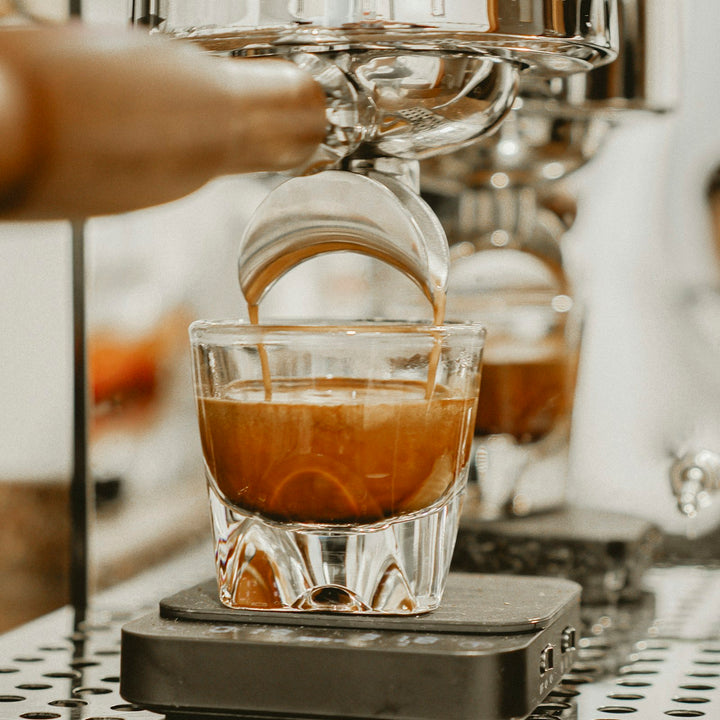
Their second example is closer to home: espresso crema. A trained panel found no significant difference in bitterness intensity between two espressos. Ordinary drinkers, tasting the same two shots, perceived a real difference, because the crema changed the mouthfeel and that changed how bitter the coffee seemed. The authors are careful not to overclaim here. Most of the time, trained and consumer panels agree closely enough to stand in for each other. The exceptions are specific and attribute-driven, not proof that scoring is arbitrary. They just aren't rare enough to ignore.
Where that leaves our own shelf
Here's what's on the table right now, cup score and green cost side by side, re-checked against our live product pages:
- El Salvador Finca San Luis: 86.8 points, $7.45 a pound green. Lowest score. Lowest price.
- Organic Peru Decaf: 88.4 points, $8.90 a pound green. Middle score. Highest price.
- Ethiopia Hambela Buku: 92.3 points, $7.60 a pound green. Highest score. Second-lowest price.
- Kenya Kiambu: 91.5 points. No green price published on this lot.
- ASCENT by Inheritance: 92.3 points. No green price published; it's a blend, not a single traceable lot.
Rank those three priced coffees by score and the price doesn't follow in order, either direction. The highest scorer isn't the most expensive one to buy green. The most expensive one is the middle scorer. If score predicted price on our shelf, that table would read as a straight line. It reads as scatter.
We've made a version of this point before, at a much larger scale, in writing about why coffee is still so expensive. Across the Specialty Coffee Transaction Guide's roughly 105,000 real contracts, coffees scoring 88 and above fetched a median price nearly four times higher than coffees scoring 80 to 81.9. That relationship is real at the scale of the whole specialty trade. It doesn't survive being run on five coffees that have all already cleared the specialty bar. Once every coffee on the table is good, the remaining price difference comes from somewhere else: how much of the lot there was to buy, which importer carried it, what the harvest did that year. Not from how many points separate a 92 from an 88.
The industry does use scores to set price. That's a different claim.
It's worth naming the belief this is actually correcting, because it isn't wrong exactly. It answers a different question than the one you're asking. "Many industry professionals use cup scores to dictate coffee quality and pricing," Perfect Daily Grind reported in a 2024 piece on cup scores and consumers, quoting Pact Coffee's Will Corby: scores exist "to define a coffee's intrinsic quality and, therefore, value." That's true while an importer and an exporter are negotiating a lot's worth, before anyone has roasted a bag of it.
What that same piece is careful to say is that the professional use of a score and your experience drinking the coffee are not the same thing. Scores can make a buyer think they deserve the number with the bigger digits attached, when a coffee several points lower might sit closer to what that person actually likes to drink. A score sets value in a negotiating room. It doesn't set your palate.
So what should actually decide what you buy?
Process and origin tell you more about what's in the cup than the number does. A natural-process lot and a washed lot at the same score can taste nothing alike: one leans toward ripe fruit and body, the other toward clarity and acidity. That's a bigger fork in the road for most drinkers than the three or four points separating two washed lots from each other. If you already know you like bright, floral coffee, Kenya Kiambu's 91.5 will probably serve you better than a higher-scoring natural that isn't built for the way you brew.
Price, on our shelf, is telling you about the lot (its size, its rarity, what it cost to get a few sacks rather than a container) more than it's telling you about the cup. We've written about what it costs to buy green coffee in small amounts, and that arithmetic runs on its own logic, separate from any scorecard.
None of this is an argument against the number. It's a real measurement, made under real conditions. It's an argument against treating it as a single-axis ranking of "better" that a price tag or your own enjoyment should automatically follow. Read the score as what a trained panel thought under a fixed procedure. Read the tasting notes and the process for what's likely in your cup. Only one of those is about your coffee tomorrow morning.
Key takeaways
- A cup score measures how a trained panel scored a coffee against a fixed procedure and a fixed set of attributes. It is a measurement, not a promise about your own preference.
- Research on trained versus consumer sensory panels shows real cases, like an olive oil defect panel and an espresso crema effect, where expert ratings and ordinary liking diverge, even though the two usually track closely.
- On our own five-coffee shelf, cup score and what we paid for the green coffee don't move together in either direction: the lowest-scoring coffee is also the cheapest, and the most expensive one is a middle scorer, not the highest.
- Score-to-price correlation is real in large industry-wide datasets, where it separates specialty coffee from commodity coffee. It doesn't survive being applied inside one roaster's shelf of coffees that have all already cleared that bar.
- Process and origin predict what you'll actually taste better than the score does. What you paid for the green predicts the lot's scarcity, not its quality.
Common questions
Is an 88-point coffee always better than an 85-point coffee?
Better by a trained panel's scorecard, under one procedure, on one day. Not necessarily better to you. The gap can come from attributes like balance, aftertaste or uniformity that matter to a judge running a fixed protocol and matter less to someone drinking the coffee at home with milk in it.
Why does a higher cup score usually cost more, then?
At the scale of the whole specialty trade, large transaction datasets show a real relationship between score bracket and price. Inside one roaster's curated shelf, where every coffee has already cleared the specialty threshold, that relationship breaks down, because the remaining price difference is driven by lot size and scarcity rather than quality bracket.
Should I just buy the highest-scoring coffee on a menu?
Only if the process and origin style already suit how you brew. A high-scoring natural and a high-scoring washed coffee can taste almost nothing alike. The score tells you the panel liked it. It doesn't tell you which one you will.
Can a trained panel and an ordinary drinker disagree about the same coffee?
Yes, and sensory research documents real cases of it, most often around attributes, like certain off-flavors or mouthfeel effects, that a scorecard is built to isolate and an ordinary cup doesn't present in isolation.
Our own cup scores sit on each coffee's product page next to what we paid for the green, the process, and the region. Read them side by side and decide for yourself whether the number or the notes tell you more about what you're about to drink.