The first trades have gone through on ICE's Coffee "C" Metric futures, the contract built to replace the cents-a-pound arabica benchmark: traders exchanged 48 lots of the September 2028 contract at between US$5,724 and US$5,737 a metric ton on Tuesday 10 November 2026, Perfect Daily Grind reported in its 13 November news recap, written by Bhavi Patel. Each lot is 10 metric tons, so 48 lots is 480 tons, or about 8,000 sacks of 60 kilograms by our arithmetic. ICE's own pages carry no trade figures, so the volume and price range rest on Perfect Daily Grind's report.
The contract itself is not new. ICE Futures U.S. told the Commodity Futures Trading Commission that it would list the metric contract on 8 September 2025, in a self-certification filing dated 21 August 2025 and signed by its general counsel, Jason V. Fusco. The first delivery month listed was May 2028, so a September 2028 trade is a price for coffee nearly two years out.
Why is ICE replacing the Coffee C contract?
The filing gave three reasons. It said "the global market has increasingly shifted toward metric-based pricing standards," that the smaller size "will allow for more granular hedging," and that it would make arbitrage easier against the ICE Futures Europe robusta contract, which already trades in dollars a ton. The same filing said March 2028 would be the final expiry month for the current Coffee "C" futures.
That older contract, according to ICE's product page, covers 37,500 pounds of coffee and is priced in cents a pound. The new one, according to its own product page, covers 10 metric tons, about 22,046 pounds by our arithmetic, priced in whole dollars a ton. Measured that way, the 10 November trades at US$5,724 to US$5,737 a ton work out to roughly US$2.60 a pound.
When ICE first announced the change, in May 2025, Judith Ganes of J Ganes Consulting told Daily Coffee News reporter Nick Brown: "To me it makes sense, and I'm surprised they didn't do it a while ago." She added that "price-by-the-pound was becoming more obsolete." That is her assessment, given on 30 May 2025, rather than a measured finding.
What else changes for the coffee behind the contract?
Storage is the practical change. Reuters reported on 1 June 2025, in a story carried by Business Recorder, that the new contract would allow coffee to be held in big bags, which usually carry around one metric ton, and which some producers, cooperatives and traders already use in place of the traditional 60-kilogram jute sack.
ICE's product page says a notice of certification is issued after the beans are graded and the coffee is cup tested for flavor, and that coffees judged better or worse than the standard trade at a premium or a discount, the mechanism explained in our guide to coffee differentials. Those differentials are now stated in dollars a ton, as listed on the page when we read it on 16 November 2026:
- Colombia, Costa Rica and Kenya: a premium of US$220 a ton, according to ICE's Coffee "C" Metric product page.
- Mexico, El Salvador, Nicaragua, Papua New Guinea, Tanzania, Uganda, Panama, Peru and Honduras: delivered at par, according to the same page.
- Brazil and Vietnam: a discount of US$132 a ton, according to the same page.
- Delivery points: New York and Virginia at par, New Orleans, Miami and Houston at a US$11 discount, Antwerp and Bremen/Hamburg at a US$28 discount, according to the same page.
- First recorded trades, 10 November 2026: 48 lots of September 2028 at US$5,724 to US$5,737 a ton, according to Perfect Daily Grind.
When does the old contract stop trading?
March 2028 is the last expiry month for the Coffee "C" futures, according to the 2025 filing, and Perfect Daily Grind's 13 November recap said the same month ends the monthly options. Until then the cents-a-pound price remains the one quoted in market reports, including our coverage of arabica's fall to a five-week low on 5 November and the certified-stock story behind October's jump.
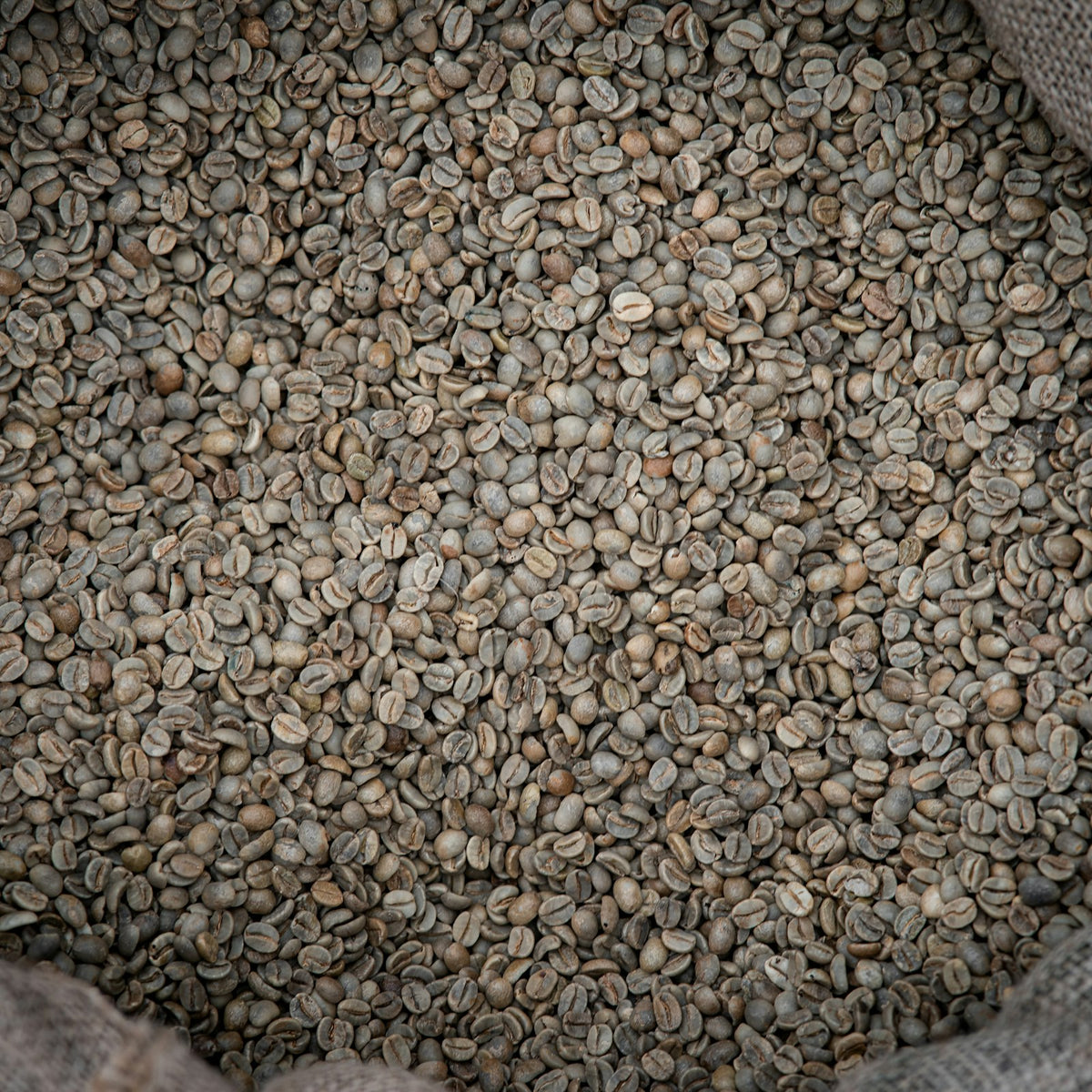
Photograph: Yasin Onus, Unsplash. Unroasted coffee beans in a burlap sack; not a photograph of exchange-certified coffee.