Arabica coffee futures in New York rose by more than 20 US cents a pound across two trading sessions on 16 and 19 October 2026, by the closing figures that Notícias Agrícolas and Uganda's coffee authority published. On Monday 19 October the December contract closed at 315.70 cents a pound, up 10.10 cents or 3.31%, according to Guilherme Dorigatti's market report for Notícias Agrícolas. The session before, on Friday 16 October, had ended with the same contract at 305.60 cents, up 10.80, according to the daily market report dated 19 October on the website of Uganda's coffee authority. Both gains followed a fall. Comunicaffe reported that on 15 October the December contract had closed at 294.80 cents, down 1.1%.
The three sources agree with each other. Adding the reported daily changes to the 15 October close gives exactly the closes reported for 16 and 19 October, and the same holds in London for robusta.
How far did arabica and robusta move?
These are the closes reported for the front contracts in New York and London across the three sessions, each with its source.
- New York arabica, December 2026, 15 October: 294.80 US cents per pound, down 1.1% (Comunicaffe)
- New York arabica, December 2026, 16 October: 305.60 cents, up 10.80 (Uganda daily market report, 19 October)
- New York arabica, December 2026, 19 October: 315.70 cents, up 10.10 (Notícias Agrícolas, 19 October)
- London robusta, January 2027, 15 October: US$3,364 per tonne, down US$106 (Comunicaffe)
- London robusta, January 2027, 16 October: US$3,405, up US$41 (Uganda daily market report, 19 October)
- London robusta, January 2027, 19 October: US$3,480, up US$75 (Notícias Agrícolas, 19 October)
A standard export sack of green coffee holds 60 kilograms, or about 132 pounds. At the 315.70-cent close that Notícias Agrícolas reported for 19 October, that sack is worth roughly $418 on the futures screen by our arithmetic, and the two sessions together added about $28 to it.
Why did arabica jump?
Notícias Agrícolas gave three reasons in its 19 October report: buyers covering short positions in the futures market, low stocks of coffee in the exchanges' certified warehouses, and high premiums at some origins that make it harder to swap a futures contract for physical coffee. Short covering is what happens when traders who sold contracts they do not own buy them back to close the position, and a rush of it pushes the price up whatever the weather is doing.
Vicente Zotti, an analyst at NRT, told Notícias Agrícolas on 19 October that the rise was mainly about that short covering rather than any recent change in the climate outlook. That is his analysis, not a measurement. He also said that futures were rising faster than Brazilian physical prices, and that Brazil had a good 2026 crop with large volumes still stored in producing regions while stocks in consuming countries and on the exchanges stayed low. In his reading, low stocks support prices but do not remove the risk of later pressure on the Brazilian market. He added that some producers may have to sell more in the coming months to clear storage before the 2027 harvest, and he said his projections were market scenarios rather than a general recommendation to hold or sell.
How low are certified stocks?
Notícias Agrícolas, citing Reuters on Friday 16 October, reported that arabica stocks in ICE-certified warehouses were near their lowest level in about 27 years. The same report said traders doubted that enough Brazilian coffee would reach those warehouses before the December contract expires. Certified stock is the coffee graded and stored so that it can be delivered against a futures contract, and a thin supply of it matters most to anybody holding a short position into delivery.
Where does El Niño fit in?
The World Meteorological Organization expects the current El Niño to strengthen, peak in December and last into the start of summer 2027, as Comunicaffe reported on 16 October. The Uganda report of 19 October noted that Vietnam's agriculture ministry had warned the Central Highlands, the country's largest coffee region, could face a drought linked to El Niño later this year and in early 2027. It also cited a trader who said El Niño might delay rains in Brazil this month.
Zotti questioned El Niño as the main explanation for the arabica move. He told Notícias Agrícolas that robusta, which Brazil calls conilon, is the more exposed crop, naming Espírito Santo, Rondônia and Indonesia, and that no confirmed estimate of crop losses had been issued. Notícias Agrícolas also reported on 19 October, citing Reuters, that Vietnamese industry representatives expect a stable 2026/27 crop but are worried about irrigation water for 2027/28. We covered the earlier stage of this story in how El Niño is affecting coffee.
How does this compare with September?
September went the other way. The December contract lost 6.7% across September 2026, according to Safras & Mercado as reported in our story on why coffee prices fell in September. The International Coffee Organization's September Coffee Market Report put its composite indicator price at an average of 262.18 US cents per pound for September 2026. That indicator blends several physical coffee groups and is not the same measure as a New York futures close, so the two numbers are not one series.
On 6 October the December contract had closed at 304.45 cents, its first close above $3 since 1 September, according to Comunicaffe as cited in our story on Brazil's September coffee exports. The 315.70 close reported for 19 October sits about 11 cents above that, by our arithmetic. The ICO's October report, which would give the composite price for the month as a whole, had not been published when this story was written.
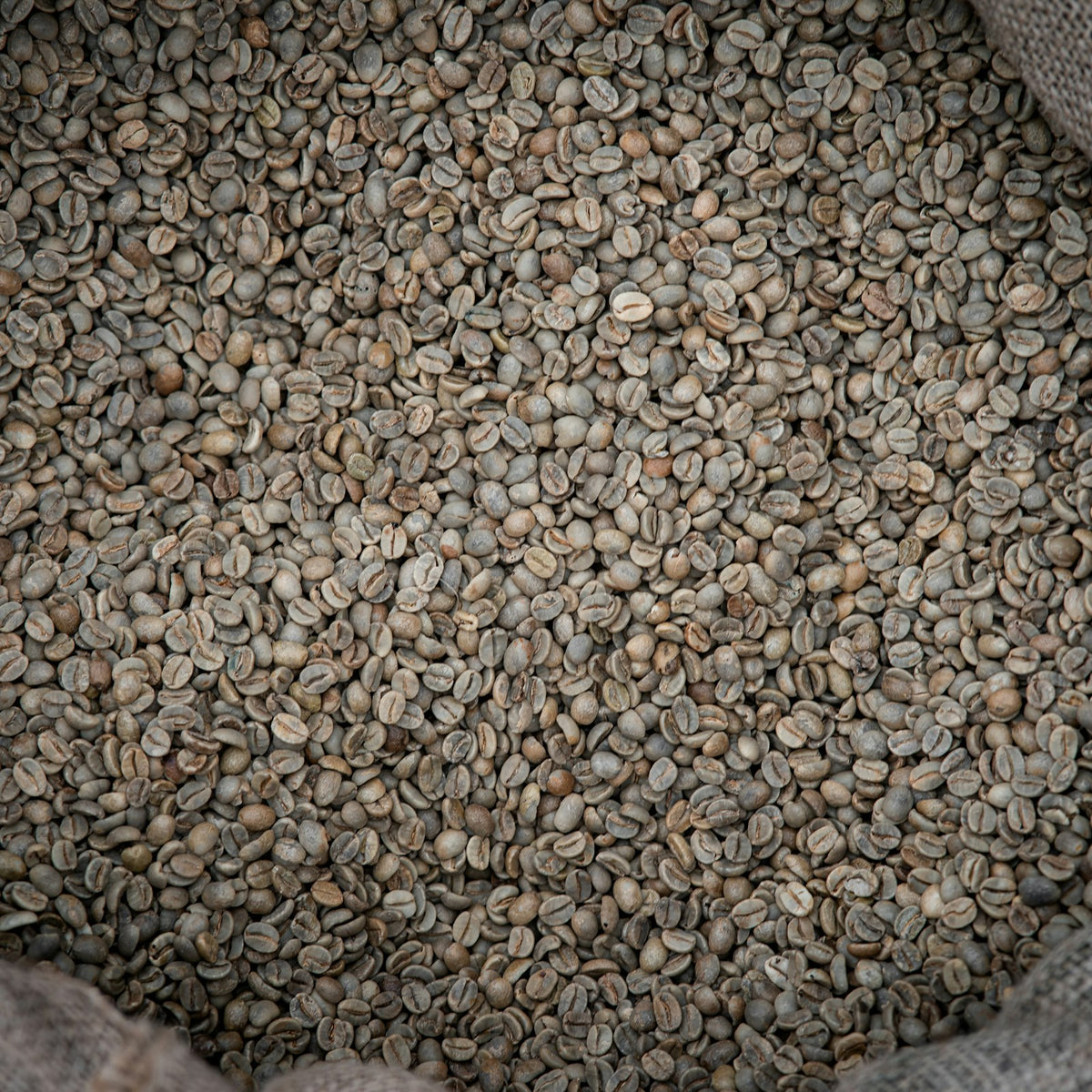
Photograph: Yasin Onus, Unsplash. Green coffee in a burlap sack, not taken at an exchange warehouse.
Figures are closing prices as reported by the outlets named and refer to the session dates given. Neither this story nor its sources describe a price for any date after 19 October 2026.