A restaurant should install an espresso machine once someone on the floor is already pulling shots by hand consistently, on a loaner or a portable setup, and running out of capacity. Buy the machine before that happens and the building now owns a $2,000 shelf nobody can run.
We sell the machines ourselves, through our own shop, and I know that is not the answer that sells one. It is the answer that keeps a caller from buying a machine he will resent by the second month, and I would rather lose that sale than watch it happen.
What does an espresso machine actually cost a restaurant?
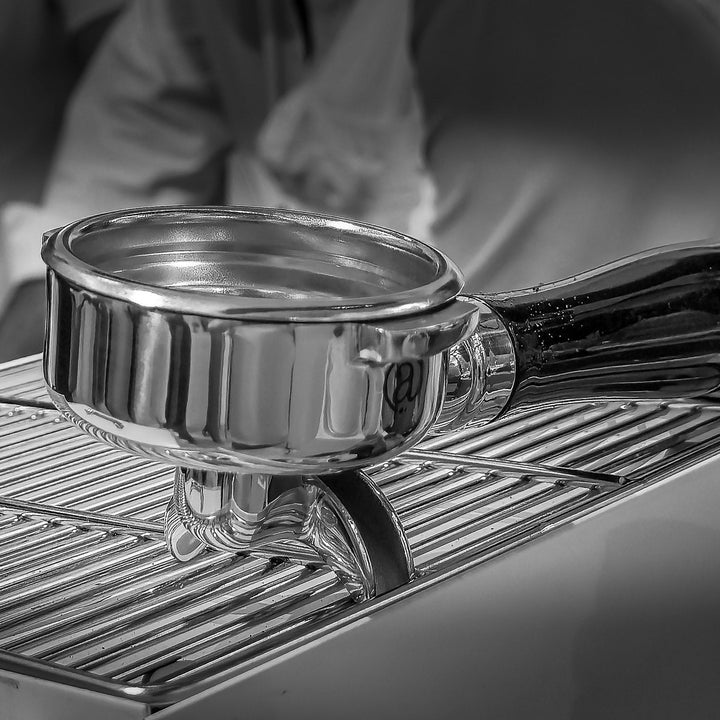
More than the machine. The Turin Gallatin DB dual boiler we carry runs $1,949 before anything else arrives, and a machine is not a complete system. It needs its own grinder, dialed to espresso rather than shared with a drip brewer, and a grinder built to keep up runs another $350 to $400 on top of it.

Then there is the coffee, and the real cost is the dial-in rather than the bag. We publish elsewhere what it costs a cafe just to land a new espresso on a machine that already has a trained hand on it: fifteen to thirty shots before the shot is right, more once milk drinks are on the menu. A restaurant installing its first machine is paying that same cost blind, with no trained hand and no second person to catch a bad pull before it reaches a table.
How many drinks a day justify the equipment?
The threshold is not a number on a spec sheet. It is a person already doing the job by another route and running out of room to do it. If the kitchen is sending out a handful of cappuccinos a night off a portable machine or a stovetop moka pot, a dedicated espresso machine solves a problem you do not have yet.
Our own restaurant coffee supplier program runs the arithmetic for brewed coffee the same way: a 90-seat room turning 120 covers a night, with a quarter of the table taking coffee, comes out to roughly a pound and a half of ground coffee. Espresso volume in most dining rooms is a fraction of that number, because it is an after-dinner order rather than a seated one. The machine earns its place once that fraction is big enough that somebody is standing at a portable unit through the rush, not before.
What does the machine actually require once it is running?
A routine, and a name attached to it. Group gaskets, shower screens and the steam wand all want daily attention on a machine pulling shots, and we have published the full schedule for a bar that already runs one. The part that matters here is smaller: nobody on your floor is a barista and nobody should have to be, which is the honest line our own restaurant page already takes. A server closing out at nine with coffee as item fourteen on the list will not dial in a shot correctly twice in a row, no matter which machine is under it.
Is a French press really good enough instead?
For most dining rooms, yes. Our restaurant page says it plainly: a French press brought to the table beats mediocre espresso at a fraction of the equipment cost, and mediocre espresso is what an untrained floor produces most nights. A press asks nothing of anyone except hot water and four minutes, and it fails politely instead of loudly. An espresso machine run by someone who does not run one daily fails in the cup, in front of the guest who ordered it.
What changes the answer is a rooftop bar, a dedicated espresso counter, or a line cook who already pulled shots somewhere else and wants the machine. Those are staffing facts, not menu ones, and they are worth naming out loud before a purchase order goes out rather than after.
If the volume and the hands are already there: the Turin Gallatin DB is $1,949 and in stock, and I would pair it with a dedicated grinder like the Turin DF64 at $399 rather than let it share a hopper with batch brew. If it is not there yet: our wholesale coffee program and the restaurant coffee supplier page cover the brewed and decaf side with no equipment commitment at all, and that is where we would start the conversation.