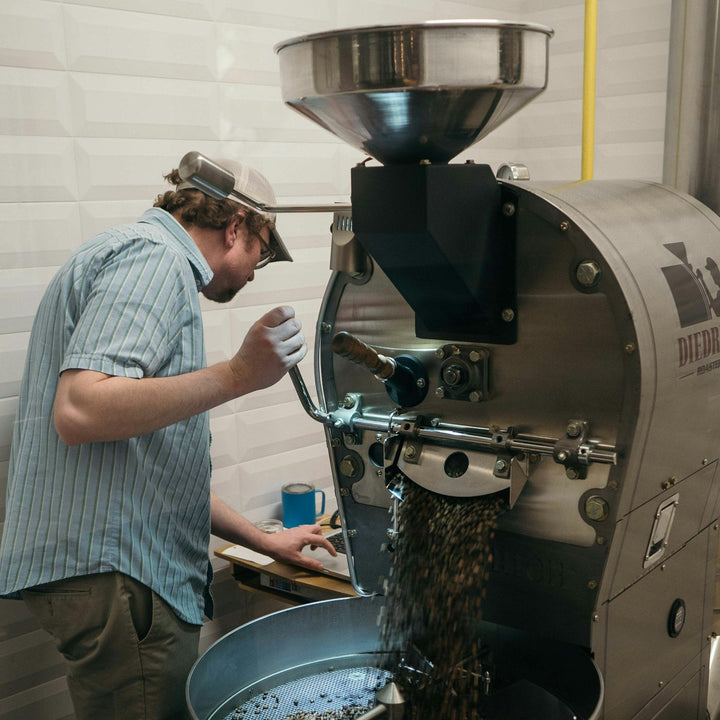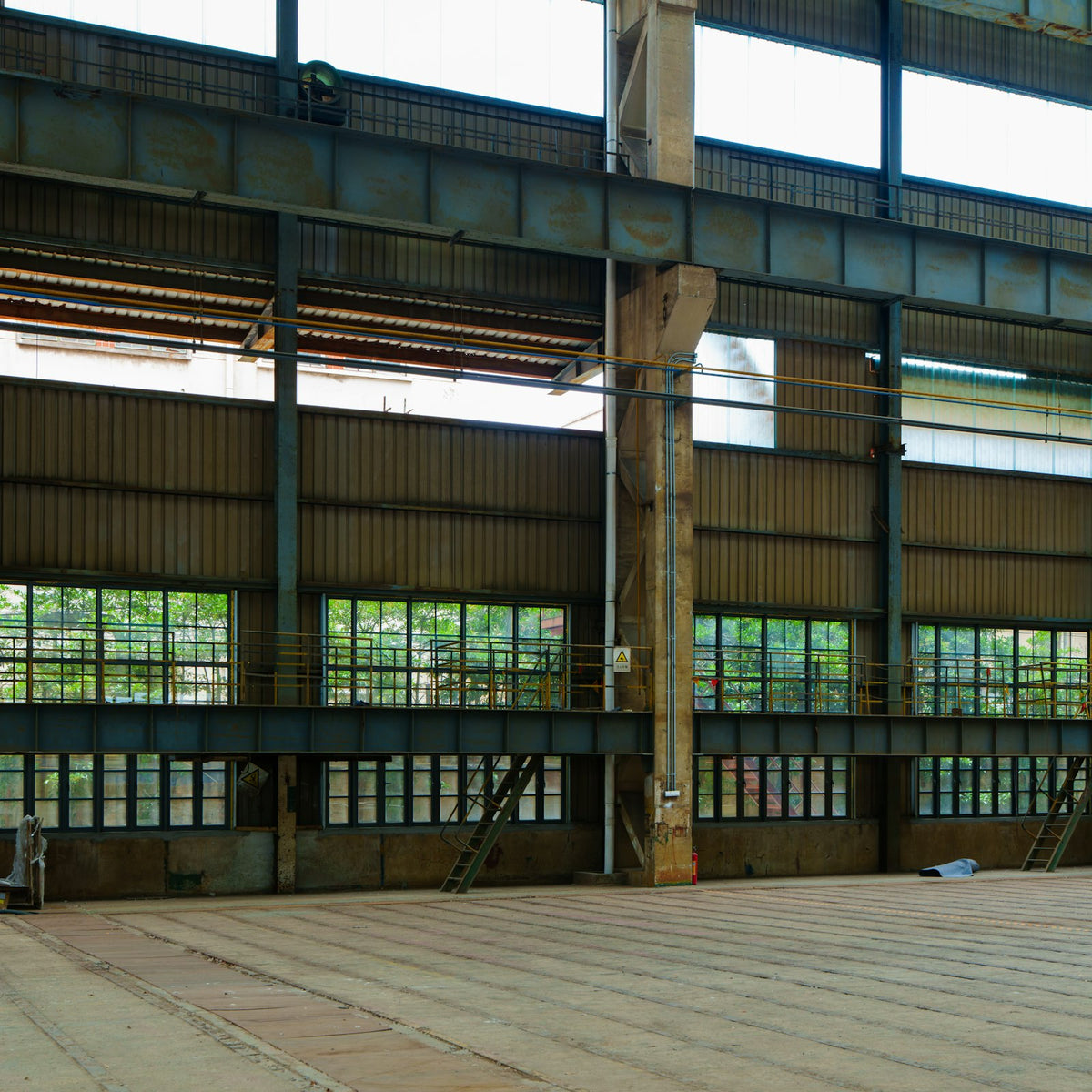
A coffee roastery is a manufacturing use, and that decides which buildings you can rent before the rent does. The city has to allow light manufacturing at that address, and the building's certificate of occupancy has to say the building is used that way. If the certificate currently says retail, or office, or restaurant, you are asking for a change of use, and a change of use is a permit, a set of drawings, and in some places a hearing in front of people who have never met you. Our own production floor in Pensacola holds gas and electric roasters, bag sealers, weigh-fill machines, sorters and spectrometers for grading roast color. Every one of those machines sits in a room a city agreed could hold them, and that agreement took longer than buying any of them.
What is the district actually deciding?
Two different books govern the building you are looking at, and they are kept by two different offices. The first is the local land-use ordinance, which divides the map into districts and publishes a table of what each district allows. The second is the building code, which governs how a structure is built and what it may safely hold. A room can be fine under one and impossible under the other, and the person who answers for one will not answer for the other.
The land-use table gives you one of three answers about roasting at a given address. Permitted by right, which means you file paperwork and nobody votes. Permitted conditionally, sometimes called a special exception, which means a board hears it and can attach conditions about hours, truck access or exhaust. Or not permitted, which leaves you asking for a variance or looking at another building. The first answer is the only cheap one — and it is worth walking away from a good room to get it.
What catches people is that the question is not asked about coffee. It is asked about the address. Two units in the same strip of warehouses can sit in different districts because a line on a map runs between them, and the leasing agent is very unlikely to know it.
What use is a coffee roastery under the building code?
Roasting is a processing operation, so it lands in the factory group rather than the retail one. The International Building Code defines the group this way, in Section 306.1:
"Factory Industrial Group F occupancy includes, among others, the use of a building or structure, or a portion thereof, for assembling, disassembling, fabricating, finishing, manufacturing, packaging, repair or processing operations that are not classified as a Group H hazardous or Group S storage occupancy."
Moderate-hazard factory industrial, Group F-1, is the subgroup that carries food, and the enumerated entry at Section 306.2 reads: "Food processing establishments and commercial kitchens not associated with restaurants, cafeterias and similar dining facilities more than 2,500 square feet (232 m2) in area."
Read that sentence twice and you will notice it can be parsed more than one way, depending on what you attach the 2,500 square feet to. I am not going to tell you which reading is right, because the reading that governs your building is the one your local official applies to it. I read the text above in the code as adopted in Illinois, which is where I could read it in full, and the link above may open a different edition than the one I quoted. Your state adopts its own version and your city may amend it further. That is not a dodge, it is the actual shape of the thing.
The useful part is that coffee is never named. The code is classifying what happens in the room, not what comes out of it. A roaster is a gas-fired machine that heats an agricultural product until it changes chemically and throws off chaff and smoke, and that description is what the classification answers to.
Does a retail counter change the answer? Often, and this is the version of the question that costs the most to get wrong late. A room where you roast and a room where the public buys are not the same use, and a building that holds both is a mixed-occupancy building. Mixed occupancy is a solvable problem — it is solved with separation, exits, restrooms and sometimes sprinklers, and all of those are drawings and money.
So ask it as a specific question rather than a general one: if I sell to walk-in customers from the same room I roast in, what does that do to the classification, the exits and the fire separation at this address. Ask it before the layout is decided, because the answer sometimes moves a wall.
What is a certificate of occupancy, and when do you need a new one?
A certificate of occupancy is the document that says a specific building may be used for a specific purpose. It is issued by the building department, it names the use, and it is the thing an inspector asks for when somebody complains. A building that has one for retail does not have one for manufacturing.
Perfect Daily Grind put this in front of the trade in January 2020, and I would rather send you to their roastery site checklist than restate it. Writing for them, SungHee Tark quoted Ryan Karatimus of Usonian Systems on where to start: "beginning by looking into the zoning, local codes, and restrictions," and then the line that matters most to a lease, "You may need to apply for a change of use of the building." Barista Hustle's roastery essentials lesson puts the same instinct as a rule: "Don't commit to a property until you know for sure that you can install the equipment you need on the site."
A change of use is not a formality. It is an application, usually a drawing prepared by a design professional, a plan review, inspections, and a new certificate at the end of it. In a friendly jurisdiction that is weeks. Where a hearing is involved it is months, and months is a rent number.
Who do you call, and in what order?
Four calls, and the order saves you the most time.
First the planning or zoning office. Give them the street address and the parcel number and ask whether light manufacturing, or a food processing use, is permitted at that parcel by right, conditionally, or not at all. This call is free and it is usually the same day.
Second the building department. Ask what the current certificate of occupancy says the building is, and what a change of use to a factory or food processing occupancy would require. Bring the roaster's make, model, rated batch capacity and fuel, because the second question they ask is always about the machine.
Third the fire and mechanical side, which owns the exhaust, the hood and whether an afterburner is required. That is a different set of thresholds and a different office, and it is set out in what the ventilation requirements for a coffee roaster are.
Fourth, food licensing, which is a separate system from all of the above and answers to your state rather than your city. That one is covered in whether you need a food permit to sell roasted coffee.
None of those four offices will volunteer what the others need. They do not share a queue and they do not share a file.
What does it cost to find out late?
We publish the barrier on our own page about starting a coffee roasting business, in a list of the things that stop people: a roastery "needs a commercial space zoned to allow it, with the ventilation and gas to support it, and a landlord willing to sign. Finding it is often harder than affording the machine." The same page is blunter about the machine itself. A roaster "arrives attached to a building with the right ventilation and gas, a landlord who allows it, inspections, and a lease that runs for years whether or not anyone buys the coffee."
That last clause is the whole exposure. The machine can be resold. The lease cannot, and a lease signed on a building that turns out to need a change of use is a bill that runs every month while you are waiting for a hearing date.
Here is where we are the wrong people to call, and I would rather say it plainly. If the constraint turns out to be the drawing rather than the coffee, you need an architect, and hiring one at the letter-of-intent stage is cheaper than hiring one after a contractor has framed something. We say the same thing about cafe layouts in how much space a coffee shop needs, and it is more true here, not less. I also cannot tell you what your address allows. Nobody writing on the internet can. The answer exists in one place and it is a table in your own city's ordinance.
What should you get in writing before you sign?
Two things, and both of them are ordinary requests that people feel awkward making.
The first is a zoning verification letter. Most planning departments will issue one on request for a specific parcel, stating the district the property sits in and what uses it permits. It is a piece of paper from the office that decides, about the address you care about, and it replaces a phone call you cannot produce later. Ask for it by name. If the leasing agent tells you the space is "zoned commercial," that phrase does not appear in most ordinances and it is not an answer.
The second is a contingency in the letter of intent. The plain version is that the lease is conditional on the tenant obtaining zoning approval and a certificate of occupancy for the intended use, within a stated window, and that the deposit comes back if it does not happen. Landlords who own industrial space see this request constantly and are rarely offended by it. A landlord who refuses it outright has told you something useful for free.
I am a roaster and not a lawyer, and a commercial lease is the one document in a new roastery where an hour of somebody else's expertise is obviously worth buying. What I can tell you is which question the contingency is protecting you from, because it is the same question this whole page is about: whether the building is allowed to be what you need it to be.
What if the answer at your address is no?
Then you have four moves, in rough order of cost.
Look at a different building in a district that permits the use by right. This is the cheapest move and the one people skip, because they have already fallen for a room.
Apply for the conditional use and plan for the hearing. Boards attach conditions, and for a roastery those tend to land on hours of operation, truck and loading access, and exhaust. Conditions are survivable. Surprises are not, so find out what the board has attached to comparable applications before you file.
Ask about an electric roaster. Fuel is not the same question as land use, and it does not change what district you are in, but it can change what the mechanical and air side asks of the building, which sometimes changes which buildings are realistic. That is a question for the ventilation side rather than the planning side.
Or roast in a room that is already approved, and put off owning one until the volume argues for it. That is not a consolation prize. It is what a large share of new brands do, and it is the reason shared roasteries exist at all.
Is renting a room somebody already got approved a real option?
It is, and it is the honest reason this page exists rather than a generic one about permits.
There are three ways to get coffee into a bag with your name on it without owning an approved building. Private label, where somebody else's coffee is packed under your brand. Contract roasting, sometimes called toll roasting, where you own the green and somebody else runs the machine in their building. And roaster rental, where you roast your own coffee on somebody else's equipment in a room that already carries the classification.
The Inheritance Coffee Lab is the third of those. It is a shared roastery in Pensacola holding a 15 kilo production roaster, a 2 kilo for development work, and the rest of the line in the same room, so a roast day ends in sealed bags at accurate weights rather than roasted coffee in a bin. Access runs as a membership: a base monthly fee plus an hourly fee for time on the roasters. We do not publish either amount, and the reason is not coyness. Volume moves the number more than everything else on the list combined, and quoting you before we have read your application would be a guess dressed up as a number.
And the version of that which costs us money to print. Renting a room somebody else got approved is only worth paying for above a certain volume, because below it the base fee does not spread over enough pounds, and our wholesale program is simply cheaper. The test is the one the lease question already forced on you. If your volume does not justify a building, it does not automatically justify renting time inside one either. A membership starts earning its keep when you are buying green in quantity, want control of the profile, and are selling under your own brand rather than reselling ours.
The building is the slowest thing in a roastery, and it is the only part of one that cannot be bought in an afternoon.
Starting out, and not ready to sign a lease? The Inheritance Coffee Lab in Pensacola rents time on a 15 kilo and a 2 kilo roaster in a room that already carries its approvals. The application takes about five minutes, there is no fee to apply, and we read every one personally.