Grind coffee coarse for a French press, medium for drip or pour-over, and fine for espresso, and get it wrong in either direction and no amount of good coffee saves the cup. Too coarse and the water runs through before it pulls much out of the grounds, so the cup tastes thin and sour. Too fine for the brewer you're using and the water sits too long against too much surface, so the cup turns bitter and dry on a coffee that tasted great at our cupping table that same week. The size has to match the method. Nothing else in brewing moves the result as far for as little effort.
What Grind Size Should You Use for Each Brewing Method?
Four brewers, four sizes, and the differences are large enough to see without a gauge.

- Espresso: fine, close to table salt. A shot should run in roughly 25 to 30 seconds; faster than that and the grind is too coarse for the basket.
- Drip and pour-over (a V60, a Chemex, an automatic machine): medium, close to coarse sand.
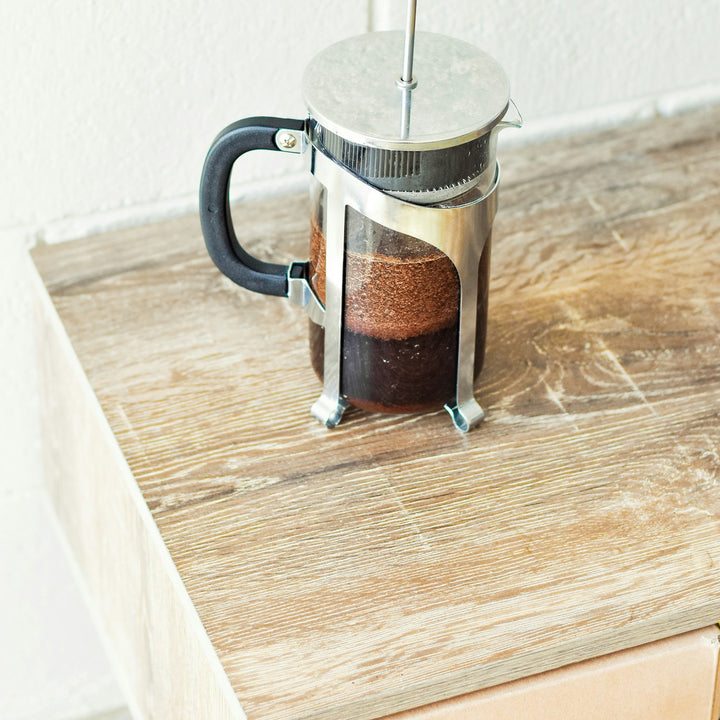
- French press: coarse, close to kosher salt or breadcrumbs, so the mesh plunger doesn't push fine particles straight through into the cup.
- Cold brew: extra coarse, close to peppercorns, because the long steep time will over-extract anything finer into bitterness.
A percolator sits with French press, not with drip, for a reason we got wrong ourselves until a reader caught it: the water in a percolator runs through the same grounds over and over rather than once, so a grind sized for drip clogs the basket and over-extracts on every pass.
Should You Buy a Blade Grinder or a Burr Grinder?
Buy a burr grinder if you can, because a burr grinder meters every particle through a fixed gap on its way out, which is what lets a dial actually mean the same thing twice. A blade grinder has no gap at all, just a spinning blade in open air, so "medium" on a blade grinder is a guess you make with a timer, not a setting you return to. We've written the mechanics of that difference up in full, with the measurements behind it, in a separate piece rather than repeat it here.
If you're buying one burr grinder for a single cup at a time at home, the Turin DF64 Gen 2.5 is the one we point people to most: it's a flat-burr, single-dose grinder, so you grind only what the next cup needs and nothing sits ground and staling in a hopper overnight.
How Do We Grind Every Retail Order Ourselves?
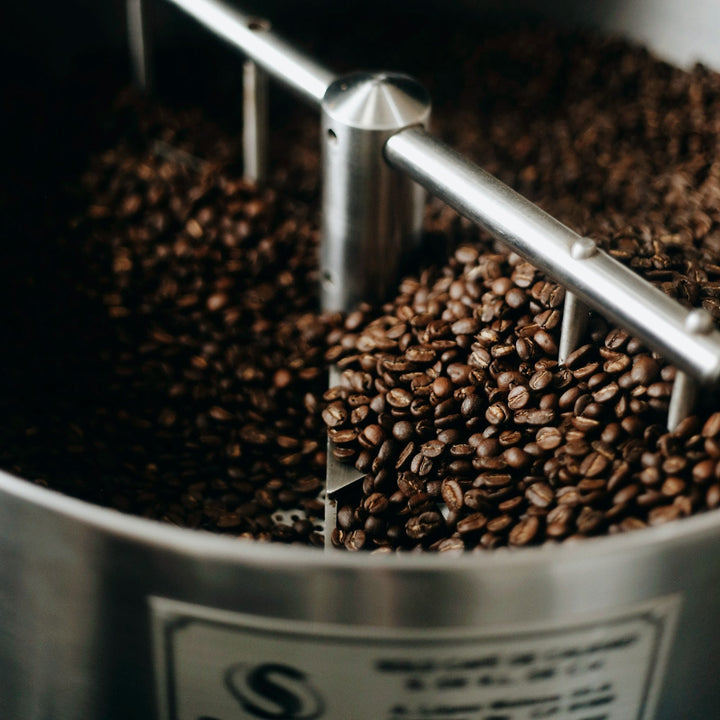
We grind every retail bag to order, free, for whatever method you tell us at checkout — pour-over, drip, French press, espresso — and the cost of that promise is that we can't get ahead of it. A bag ground to order can't be bagged until the order itself comes in, one pound at a time, on our own grinder, which is also why we ask for the brew method instead of guessing it from the coffee you picked. It would be faster for us to pre-grind a run of bags in a slow week and just ship from that pile. We don't, because a bag ground three days before your doorbell rings is not the same product as one ground the morning it ships, and we'd rather carry that cost ourselves than hand you a worse cup to save a few minutes on our end.
Does a Finer Grind Make Coffee Stronger?
Only a little, and the effect runs out faster than most people expect. A 2020 study on espresso extraction found that grinding past a certain fineness pulls less out of the coffee, not more, because the bed packs too tight and the water finds the easiest path through rather than the most even one. We've written that mechanism up on its own, with the full citation, here. The short version worth carrying into this guide: if a cup tastes weak, the grinder is almost never the real fix. The weight of coffee you measure out is.
What Matters More Than Grind Size?
Freshness and water, in that order, and I'll say plainly where that leaves this article: a perfect grind on stale beans still makes a stale cup. We roast to order every Wednesday in Pensacola for exactly that reason, and we'd rather you buy a smaller bag more often from anyone than a large one that sits on your counter for a month. If the water coming out of your tap already tastes off before coffee ever touches it, no grind setting fixes that either; that's a separate problem with its own fix. Get the grind right and skip those two, and you've traded a cheap problem for an expensive one.
If you want one burr grinder that does the job at home: the Turin DF64 Gen 2.5 is a single-dose flat-burr grinder built for grinding exactly one cup's worth at a time. And whatever you brew it in, we'll still grind your next bag from us free, to the size that method actually needs.