A batch of coffee keeps roasting for a few minutes after it leaves the heat, running on nothing but the heat already stored inside the beans, and if nobody pulls that heat out fast, it finishes a job nobody asked it to finish. That's what a cooling tray is for, and why every production roaster, ours included, treats the few minutes after the drop as part of the roast rather than the end of it.
What Keeps Cooking the Bean After the Heat Turns Off?
A roasting drum heats coffee from the outside, but by the time a batch is ready to drop, the center of each bean is still well above the temperature where roasting reactions slow down. Pull the heat source away and that stored heat doesn't vanish. It keeps moving outward, and the sugars and acids inside the bean keep reacting with it, the same way a steak keeps cooking on the counter after it leaves the pan. Our guide to roasting coffee at home puts it plainly: the roast does not stop when the heat does, so cooling is part of the roast rather than an afterthought. That's true at three ounces in a popcorn popper, and it's true at fifteen kilos in a production drum. The difference is how much stored heat there is to get rid of, and how little time there is to do it before the bean decides the roast level for you.
How Fast Does a Production Batch Actually Need to Cool?
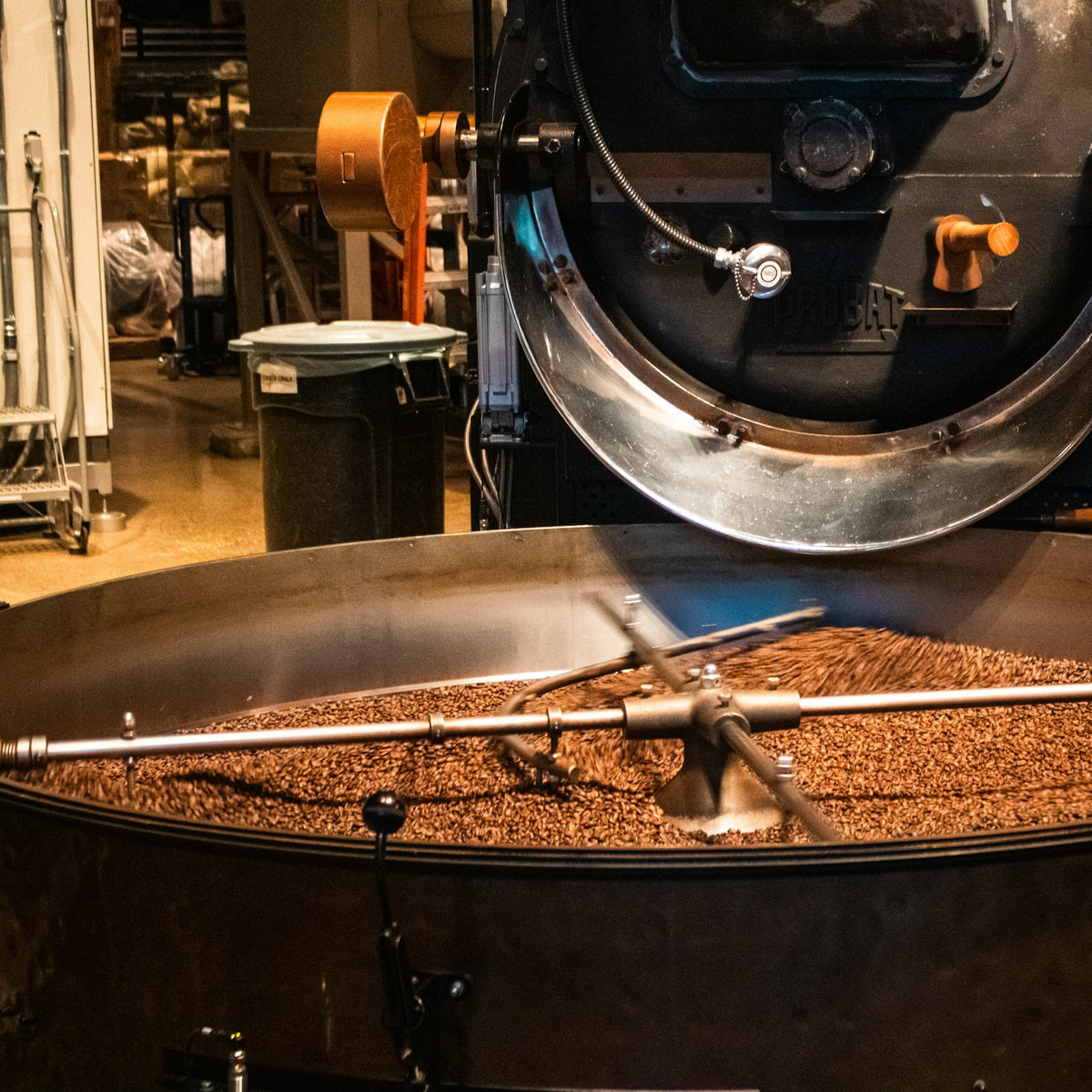
Fast enough that the beans stop climbing in temperature within a minute or two of hitting the tray, and fast enough that they're cool to the touch well before the next batch is ready to drop behind them. A home roaster chasing three ounces in a colander can get there by tossing the beans between two bowls. Fifteen kilos of beans holding their heat in a shallow pile is a different problem: the beans in the middle of the pile stay hot far longer than the ones on the surface, continuing to darken after the ones around them have already stopped. That's why a production cooling tray isn't just a tray. It has a perforated floor with a fan pulling room-temperature air up through the bed of beans, and in most machines a slow rotating arm that keeps turning the pile so no bean spends the whole cooldown buried in the middle. The agitation and the airflow are both doing the same job the colander toss does at home: breaking up the pile fast enough that heat has nowhere to hide.
Why Doesn't a Commercial Roaster Just Use a Bigger Colander?
Because the problem doesn't scale the way the equipment would have to. A colander move works because a couple of bowls and a few ounces of beans cool almost as fast as you can toss them. Scale that up to a full production batch and the same toss takes proportionally longer to move the same beans through the same air, while the beans themselves lose almost none of their heat during the wait. A production tray solves that by moving the air through the beans instead of the beans through the air, which is why the fan underneath usually matters more than the arm on top. We check the tray for another reason too, not just for heat. Once a batch is down near room temperature, we still pick the pale, underdeveloped beans, the quakers, out of it by hand rather than running it through a color sorter the way a lot of operations do, a practice we talk about more in why roasted coffee turns brown. It's slower than a machine and it doesn't catch every one, but it's the step where somebody is actually looking at the batch one more time before it goes in a bag, and we've kept it even as the rest of the line got bigger.

What Happens If the Beans Cool Too Slowly?
The roast keeps developing past the point you meant to stop it. A batch pulled at the end of first crack for a light roast can drift toward second crack if it sits hot too long on the way down, and the cup tastes like a darker roast than the one that was actually dialed in. On a bigger machine, slow cooling also makes the tray itself the bottleneck: if one batch is still shedding heat when the next is ready to drop, the roaster either waits or stacks batches that haven't finished cooling, and neither is a good trade against a tray built to clear in a few minutes.
None of this is complicated once you've watched it happen a few times, and that's most of what the first several roasts at our co-roasting Lab are actually for. Tenants come in knowing the theory and leave knowing what it looks like when a batch is still too hot four minutes after it should have been cool, which isn't a thing a reading list teaches. If you're past roasting at home and thinking about the step after it, that's the room where you find out what you don't know yet, on a machine you don't have to own first.