Nestlé has broken ground on a 23 billion baht coffee factory in Samut Prakan, the province that borders Bangkok, according to the company's release dated 22 October 2026. The site, which Nestlé calls the House of NESCAFÉ Thailand, is planned to make soluble coffee (the trade term for instant coffee), coffee mixes and ready-to-drink coffee, with a distribution center and a product development unit on the same grounds. Khaosod English reported the ceremony on the evening of 21 October, Nestlé's release on ThaiPR.net is dated the following day, and Comunicaffe carried the company's figures on 26 October.
The project itself is not new. The Thailand Board of Investment approved it on 8 July 2026 and put its value at US$688 million in an announcement published the next day. Every source read for this report gives the same 23 billion baht figure, and the dollar amounts differ only by the exchange rate each one used: Khaosod printed US$685 million and Comunicaffe US$680.6 million. What changed last week is that construction began.
- Investment: 23 billion baht according to Nestlé's release of 22 October 2026, or US$688 million according to the Board of Investment on 9 July 2026
- Capacity: 170,000 metric tons a year of soluble coffee, mixes and ready-to-drink coffee, according to the Board of Investment on 9 July 2026
- Jobs: more than 500 according to Nestlé on 22 October 2026, or over 520 according to the Board of Investment on 9 July 2026
- Local buying: about 4.3 billion baht a year of coffee, sugar, milk and other inputs, according to Nestlé on 22 October 2026
- Warehouse: room for more than 100,000 pallets, according to Nestlé on 22 October 2026
- Start of production: the latter part of 2028 according to Nestlé, or the fourth quarter of 2028 according to the Board of Investment
What will the factory make?
According to the investment board's announcement of 9 July 2026, the plant will have a capacity of 170,000 metric tons a year across NESCAFÉ soluble coffee, coffee mixes and ready-to-drink drinks. Nestlé's own release does not give a tonnage. The release says the site will have an automated warehouse with room for more than 100,000 pallets, a distribution center that will also handle Nestlé's other product lines, and a Coffee Innovation Center for new ingredients and recipes. The company says the plant will use its own coffee production technology alongside robotics, automation and AI-driven systems, and it calls the site one of its most advanced coffee factories anywhere.
The two documents differ slightly on staff. Nestlé's 22 October release says the plant will employ more than 500 people, including technology specialists, while the board's announcement says over 520 jobs for Thai engineers and technical specialists.
Why is Nestlé building its own plant in Thailand?
The new factory replaces a partnership that ran for more than three decades. Just Drinks reported on 9 July 2026 that Nestlé made NESCAFÉ in Thailand with a local company, Quality Coffee Products, from 1990 until the joint venture contract ended in December 2024, and that the court proceedings that followed were decided in Nestlé's favor earlier in 2026. Since 2025, according to the same report, Nestlé had kept the brand on Thai shelves through new lines in its existing factories, outsourcing to local firms and temporary imports.
Nestlé's stated reasons are demand and regional reach. Remy Ejel, who runs Nestlé's zone covering Asia, Oceania and Africa, said at the ceremony that Thailand is one of the company's largest and most dynamic coffee markets and that the plant will add NESCAFÉ capacity across Southeast Asia, according to Comunicaffe's account of his remarks. Nikhil Chand, chairman and chief executive of Nestlé Indochina, said the site would become one of Nestlé's most advanced coffee factories, according to the same account. In its 9 July statement, as reported by Keystone-SDA through swissinfo.ch, Nestlé valued the Thai coffee market at about CHF 1 billion.
The investment board's announcement says NESCAFÉ has led the Thai coffee market for more than 50 years and holds more than half of it. Narit Therdsteerasukdi, the board's secretary general, put the government's case in one line in that announcement: "This greenfield investment will support growing domestic and regional market demand." Varawut Silpa-archa, the industry minister and the board's vice chairman, attended the groundbreaking and pledged government support for investors of this kind, according to Comunicaffe and Khaosod.
What does the plant mean for Thai coffee farmers?
Nestlé's 22 October release says the company will buy about 4.3 billion baht of local ingredients and raw materials a year once the plant runs, and it lists coffee beans, sugar and fresh milk among them; the investment board converts that sum to US$130 million. The company also says it has bought Thai robusta for more than 40 years. Neither the release nor the board's announcement says how much of the 4.3 billion baht is coffee, how many farmers supply it, or how many tons of green coffee the plant will take in.
Both documents describe farm programs in general terms. The board's announcement mentions research into climate-resilient coffee varieties, distribution of saplings and training for farmers. Nestlé's release mentions knowledge-sharing, high-quality plantlets and expanding coffee growing into several more regions of Thailand. Neither attaches a budget, a planted area or a date to that work.
How does it compare with Nestlé's other coffee spending this year?
Just Drinks listed two other Nestlé coffee investments announced earlier in 2026: about €15 million for two packaging lines at its plant in Girona, Spain, in March, and 1.9 trillion dong, or about US$73 million, to expand a coffee site in Dong Nai, Vietnam, in April. The same outlet put Nestlé's 2025 sales of soluble coffee and coffee systems at CHF 17.17 billion. In the Philippines, the agriculture department and Nestlé Philippines signed a coffee development program for Northern Mindanao on 23 October, covered in our report on the Philippines' effort to grow more coffee.
What happens next?
Nestlé's release says production should start in the latter part of 2028, while the investment board's date is the fourth quarter of 2028. Nestlé's release also lists environmental aims for the site, including 100% renewable energy, biomass fuel, heat recovery, zero waste to landfill and water recycling. Those are design goals stated by Nestlé rather than results, and the release gives no baseline or method for checking them.
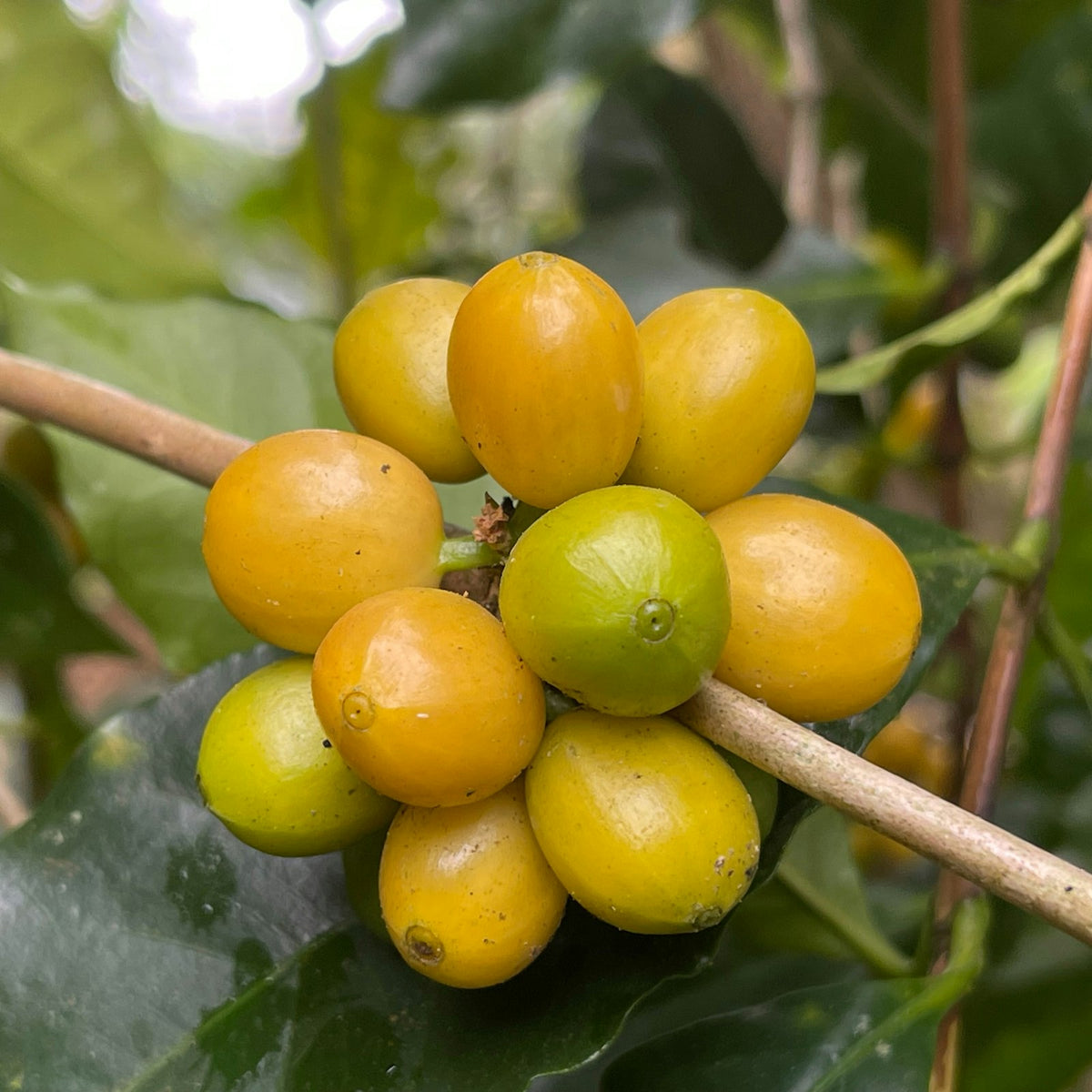
Photograph: Elle inlom, Unsplash. Arabica coffee cherries near Chiang Mai in northern Thailand; the photograph does not show the Nestlé site.