Ethiopia could lose between US$160 million and US$453 million in coffee export earnings if part of its EU-bound coffee is shut out by the European Union's deforestation regulation, according to a briefing paper published by the London research group ODI Global on 16 October 2026. The lower figure assumes 20% of shipments are excluded and the higher one assumes 57%, the paper said. The authors are Ermias Engida, Jodie Keane, Bernardo Arce Fernandez and Yohannes Ayele.
The Addis Ababa business weekly Capital reported the study on 21 October 2026, in a story by Eyasu Zekarias. Arabica coffee originated in Ethiopia, and our explainer on Ethiopian coffee covers the origin in more detail.
When does the EU deforestation regulation apply to coffee?
Coffee is one of the commodities the regulation covers. The European Commission's own page on the regulation, read on 22 October 2026, gives 30 December 2026 as the date it applies to large and medium operators and 30 June 2027 for micro and small operators. The page says companies placing coffee on the EU market must be able to prove it does not come from recently deforested land, and that a separate implementing regulation classifies countries by their risk of deforestation.
The ODI paper is about how that proof works on the ground. It looks at three gaps in Ethiopia: geolocation, meaning the mapping of each farm plot, traceability, meaning the record of each sale between the farm and the exporter, and legality. An exporter can only show where a bag of coffee came from if the farms behind it are mapped and the sales along the way are recorded.
Why is Ethiopia's coffee harder to trace?
Around 4 million smallholder and household farmers grow about 95% of Ethiopia's coffee, the ODI paper said, citing earlier academic studies, one published in 2025. Capital reported that most of those farms are smaller than one hectare, or about two and a half acres.
Much of that coffee changes hands before it reaches an exporter. About 57.4% of Ethiopian coffee is collected from farmers by local collectors, the paper said, citing research by Minten and colleagues. The authors called traceability the most serious of the constraints they examined, largely because of those informal collectors.
Mapping has started but is far from finished. By July 2024 the Ethiopian Coffee and Tea Authority had compiled data on about 200,000 of the country's 860,000 coffee hectares, or 23%, according to the paper. That leaves roughly three hectares in every four unmapped as of that date. The paper put the cost at US$4 to US$7 per plot to collect the data and US$5 to US$12 per plot to verify it, figures the authors said came from their own interviews with people in the trade.
How much export revenue is at risk?
The EU took about 30% of Ethiopia's coffee exports in 2024, the paper said, citing UN Comtrade data. Coffee brings in about 35% of the country's merchandise export earnings, according to the same paper.
The authors modeled two cases in their October 2026 paper. In the conservative one, the paper estimated, 20% of EU-bound coffee is excluded and Ethiopia loses about US$160 million in export revenue; in the severe one, 57% is excluded and the loss is about US$453 million. Spread across the 4 million smallholders the paper counts, the severe case comes to roughly US$113 a farmer (our arithmetic on the paper's figures, not a figure the authors published).
Excluded coffee would not simply go unsold. The paper estimated that if it were sold to other buyers instead, the net loss would still be about US$42 million to US$118 million, because coffee sold into the EU earns a premium. For that premium the authors used 26%, drawn from earlier studies by Minten and by Tamru and colleagues. These are scenario estimates from the authors' model, not measured losses, and the paper does not attach them to a specific year.
What is Ethiopia doing about it?
A three-year National Action Plan has been drawn up, beginning with data collection at the farm level, the paper said, and a National Steering Committee was set up in early 2024. Capital reported that the coffee authority is working with the Ministries of Finance and Agriculture on the plan.
Ethiopia also has a digital system for tracking coffee. The Coffee Market Information Management System was introduced in 2022 with support from GIZ, the German development agency, and has since been upgraded into the Ethiopian Coffee Traceability Management System, according to the paper, which said the new system is not yet fully operational.
What does the ODI paper recommend?
The authors argued that coffee is not a major driver of deforestation in Ethiopia and that the regulation's design may place a heavy burden on the country. That is their analysis, and the paper is a policy briefing rather than a regulator's finding. They recommended working with informal collectors so that farmers understand the risk of exclusion, strengthening cooperatives so more coffee moves through formal channels, and asking EU authorities for a more flexible approach to what counts as proof of legal production in Ethiopia.
The same paper said exclusion could also strain lenders, naming a bank it calls COOP as heavily exposed to coffee cooperatives. Elsewhere in East Africa, lots certified under a Rainforest Alliance EUDR scheme were reported at their own average price at the Nairobi auction in October, as we reported in our story on the first Nairobi auctions of the 2026/27 season.
The Commission's date for large and medium operators is 30 December 2026, about ten weeks after the paper was published.
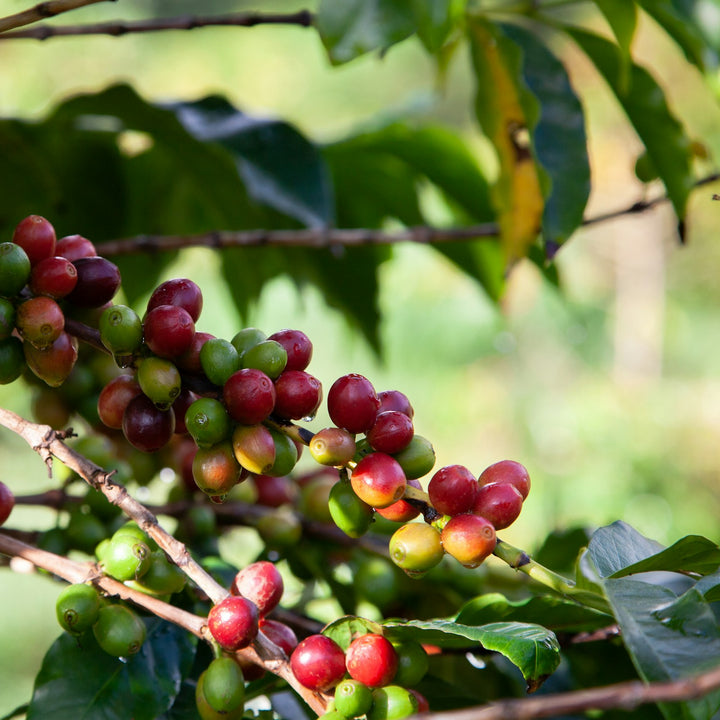
Photograph: yoseph hailu, Unsplash. Coffee beans the photographer describes as Ethiopian, not from any farm or business named in this story.
This report is built on ODI Global's briefing paper, Capital's reporting and the European Commission's published guidance. Figures are as published in those sources.