Brazil exported 287,300 metric tons of green coffee in October 2026, the most in any single month on record, according to Secex, the foreign trade secretariat, as reported by Reuters (Roberto Samora) on 6 November. That volume equals 4.79 million 60-kilogram bags and was 23.3% higher than in October 2025, Reuters reported, and it beat the previous monthly high, which Secex dated to November 2024.
The money did not rise as fast as the tonnage. Export revenue for October 2026 came to US$1.6 billion, up 5.2%, while the average price fell almost 15%, according to the same Secex figures as Reuters reported them. Notícias Agrícolas (Guilherme Dorigatti), working from Secex's consolidated data on 6 November, put the volume at 287,350 tons, up 23.28%, and the average export price at US$5,568.48 per ton, down 14.69% on a year earlier.
How does October compare with September?
Secex counted 3.93 million bags of green coffee, or 235,800 tons, for September 2026, up 20.4% and the highest monthly total in 20 months at the time, as reported in our coverage of the September figures. By our arithmetic on the two Secex totals, October shipped about 51,500 more tons than September, a rise of roughly 22% in one month.
Spread across the 31 days of October 2026, the 4.79 million bags Secex reported come to about 154,500 bags a day, by our arithmetic. The European Coffee Federation's guidance, as reported by Comunicaffe on 21 October and cited in our story on coffee shipping, puts 275 to 320 bags in a 20-foot container. On that basis, by our arithmetic, October's green coffee filled somewhere between 15,000 and 17,400 containers.
- Green coffee exports, October 2026: 287,300 tons (4.79 million bags), up 23.3%, according to Secex as reported by Reuters on 6 November 2026.
- Export revenue, October 2026: US$1.6 billion, up 5.2%, according to Secex as reported by Reuters on 6 November 2026.
- Average export price, October 2026: US$5,568.48 per ton, down 14.69%, according to Secex data reported by Notícias Agrícolas on 6 November 2026.
- Green coffee exports, September 2026: 3.93 million bags, up 20.4%, according to Secex as reported by Reuters on 6 October 2026.
- Exports in all forms, September 2026: 3.894 million bags, up 3.1%, according to Cecafé's September 2026 export report.
What does the per-bag price work out to?
At the October 2026 average of US$5,568.48 per ton that Notícias Agrícolas reported, a 60-kilogram bag of Brazilian green coffee sold abroad in October for about US$334 on average, by our arithmetic. Dividing Reuters' October revenue figure of US$1.6 billion by 4.79 million bags gives the same number, about US$334 a bag.
Why are the export counts different?
Brazil's coffee exports are counted more than one way, and the counts are not interchangeable. The Secex figures above cover green coffee only. Cecafé, the exporters' council, publishes its own monthly report that adds soluble and roasted coffee. Cecafé's report page still listed September 2026 as its newest report on 8 November, with 3.894 million bags shipped in all forms that month, up 3.1%, and revenue of US$1.282 billion, down 7.1%. Its October count had not been published.
How big is Brazil's coffee crop?
Icafé, the Costa Rican coffee institute, put Brazil's 2026-27 production at 72.75 million bags, up 16.6% and the largest on record, in an analysis of 15 statistical sources reported by Comunicaffe on 6 November. That is an aggregate of forecasts rather than a measurement. Brazil's own crop agency, Conab, estimated a record 67.6 million bags for 2026 in its survey published 24 September, as reported in our coverage of that estimate.
Laleska Moda, a market intelligence analyst at Hedgepoint Global Markets, told Notícias Agrícolas that a weaker Brazilian real had offset part of the fall in dollar prices for exporters, while the wider fundamentals remained bearish in her analysis.
What did coffee futures do this week?
Arabica for December delivery settled at 280.00 US cents per pound on Friday 6 November, up 2.85 cents on the day but down 7.20 cents, or 2.51%, from 287.20 cents on 30 October, Notícias Agrícolas reported. The daily coffee market report dated 6 November on the website of Uganda's coffee authority gave the previous session's settlement as 277.15 cents, which matches the Friday gain. Our report on that five-week low covers the three sessions before it.
Robusta moved the other way across the week. London's January contract settled at US$3,270 per ton on 6 November, up US$29 on the day and up US$66, or 2.06%, from US$3,204 on 30 October, according to Notícias Agrícolas. Both Notícias Agrícolas and the Ugandan report cited a cut by India's Coffee Board to its 2026-27 estimate, from 400,000 to 380,000 tons, as support for robusta.
The International Coffee Organization's composite indicator price, which blends arabica and robusta, averaged 262.18 US cents per pound in September 2026, down 8.7% from August, according to the ICO. Its October report was not yet listed on 8 November. The composite indicator and the New York futures contract are different series and do not move as one.
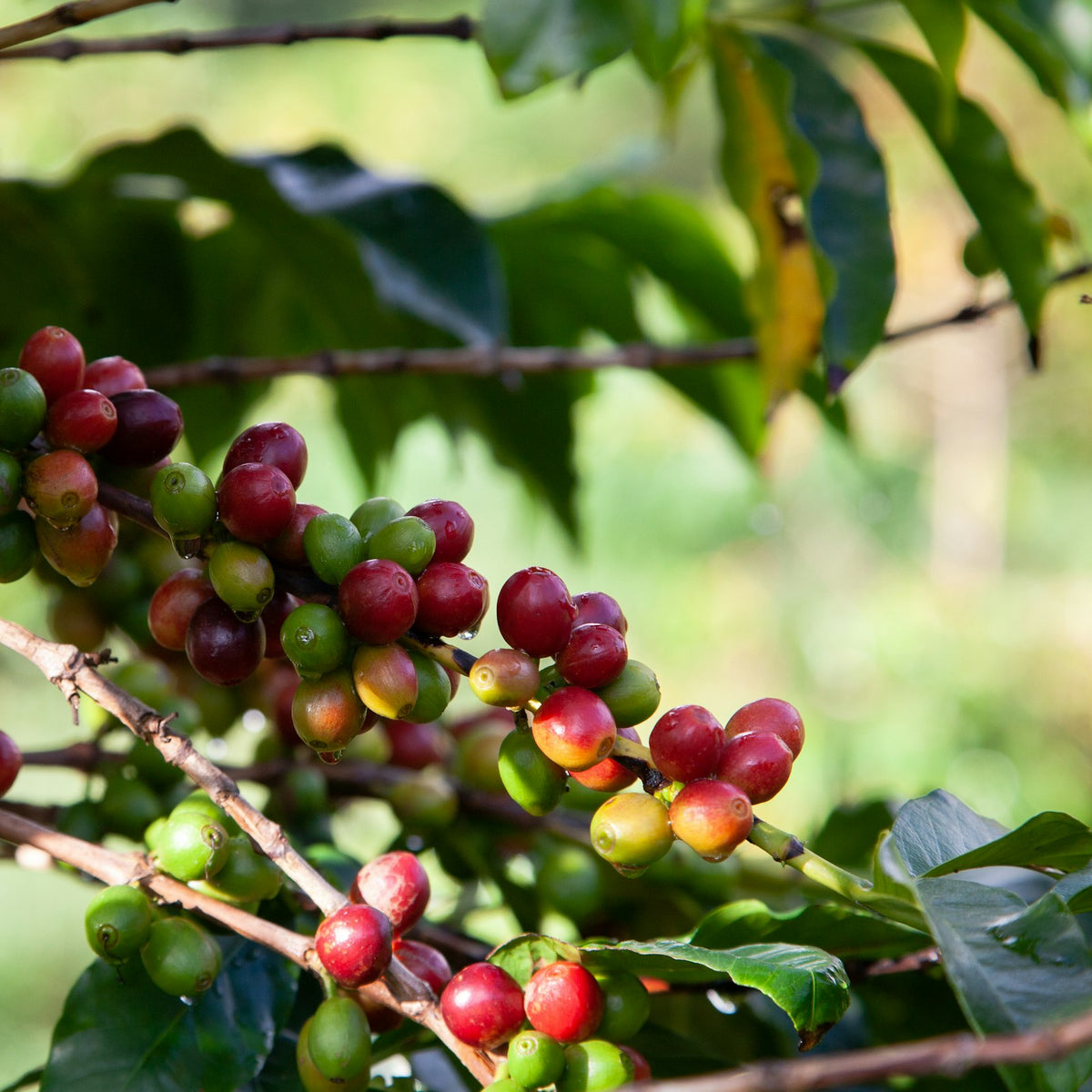
Photograph: PROJETO CAFÉ GATO-MOURISCO, Unsplash. Taken in São Sebastião da Grama, São Paulo state, Brazil, and not connected to the events reported here.