Italy launched a Global Coffee Initiative at its Foreign Ministry in Rome on 14 October 2026, a plan built with the World Bank Group and the Italian state lender Cassa Depositi e Prestiti (CDP) to prepare coffee projects in producing countries and raise money for them. The ministry's press release of 14 October said Deputy Foreign Minister Edmondo Cirielli opened the event, and that the strategy has a second arm, ACT Coffee, a program for African coffee run by UNIDO with the International Coffee Organization (ICO).
The money figure came from CDP rather than from the ministry. HorecaNews reported on 15 October 2026 that the initiative aims to mobilize at least US$500 million in its first phase, and stated that the figure is a target, not money already paid out. For scale, that target is less than half of the US$1.282 billion Brazil earned from coffee exports in September 2026 alone, according to the Cecafé figures in our report on the ICO's September market report.
What did Italy announce at the Farnesina?
The ministry's release describes a strategy titled "Italy's international coffee strategy: development, value and partnerships." It has two parts. ACT Coffee works on the sustainable transformation of the coffee supply chain in Africa and is implemented by UNIDO with the ICO, in partnership with the Italian Coffee Committee. The Global Coffee Initiative was developed with the World Bank Group and CDP to help projects get ready for investment and then to mobilize that investment. The release itself gives no amounts, countries or dates for either part.
Cirielli opened the session. HorecaNews and Focus Italia Web (Nicola Rivieccio, 14 October) both quoted his remarks as beginning "Sostenere i Paesi produttori e valorizzare il saper fare delle imprese italiane," which translates as "supporting producing countries and making the most of the know-how of Italian companies." The ministry's English release says he tied that aim to a more sustainable, fair and resilient coffee supply chain.
The release lists those taking part. They included Robinah Nabbanja, Prime Minister of Uganda; Mutahi Kagwe, Kenya's Minister of Agriculture; Indalecio Dangond, Colombia's Minister of Agriculture; Vanúsia Nogueira, Executive Director of the ICO; Maurizio Martina, Deputy Director-General of the FAO; Marina Ponti, Deputy Director-General of UNIDO; Giuseppe Lavazza, president of the Italian Coffee Committee and chairman of the Lavazza Group; and Andrea Illy, president of illycaffè. The ministry's release and the two Italian reports cited here carry no remarks from any of them.
How will the Global Coffee Initiative raise money?
According to CDP, as HorecaNews reported, the initiative works through two tools: a fund for project preparation and technical assistance, and a co-financing platform that brings public and private capital together. HorecaNews reported that the projects chosen are meant to make farms more resilient, give producing families higher and steadier incomes, and build local supply chains and jobs. The report gave no amount for either tool, no list of countries and no timetable.
HorecaNews also reported that the initiative stems from commitments G7 leaders made during Italy's 2024 presidency. Comunicaffe reported on 20 June 2024 that leaders at the G7 summit at Borgo Egnazia in Apulia recognized coffee as a strategic sector and pledged to support a public-private initiative on coffee, including a look at whether a dedicated global fund was feasible. Nogueira credited the ICO's coffee diplomacy and its private-public task force for that recognition, Comunicaffe reported.
What is the Espresso Fund?
The ministry's updated press note of 14 October said the initiative would include the Espresso Fund, which it described as the first global public-private fund dedicated to the coffee supply chain, promoted by Italy and the World Bank. Beverfood reported on 12 October, from the ministry's earlier note, that Foreign Minister Antonio Tajani would launch it; the updated note named Cirielli instead.
Beverfood also reported that the fund's size and governance had not been made public. The reports read after the event did not change that. The ministry's 14 October release does not mention the Espresso Fund by name, and HorecaNews described it only as planned, with no size.
What is ACT Coffee?
ACT Coffee, short for Advancing Climate-Resilience and Transformation in African Coffee, came first. UNIDO announced it on 25 March 2025 as a flagship program of Italy's Mattei Plan for Africa, funded by Italy with €15 million and starting in Ethiopia, Kenya, Tanzania, Uganda and Malawi, with the ICO and the Inter-African Coffee Organization as partners. HorecaNews reported the same €15 million and the same five countries in its account of the Rome event.
Divided evenly, €15 million across five countries comes to €3 million each, though UNIDO's March 2025 announcement did not say how the money would be split. Two of the five have been in this journal's news this month. Uganda's coffee exports fell 13.6% by volume in August 2026, according to the government's monthly report, and the Nairobi Coffee Exchange closed its 2025/26 season at Ksh 41.63 billion, KBC reported on 7 October 2026, as covered in our Kenya story.
How many people depend on coffee?
The bodies behind the two parts of the strategy give different numbers. CDP, as HorecaNews reported on 15 October 2026, said coffee provides an income for more than 100 million people in about 50 countries. UNIDO's Director General, Gerd Müller, said in the March 2025 announcement that around 125 million people worldwide depend on coffee for their livelihoods. Neither source gives a year for its figure.
CDP also described Italy, which grows no coffee, as the world's sixth-largest coffee exporter and Europe's second-largest producer of roasted coffee, HorecaNews reported. The ICO's part in the new strategy, as the ministry's release sets it out, sits with ACT Coffee; the release does not say what role the ICO plays in the Global Coffee Initiative. Two weeks earlier, on 30 September 2026, the ICO launched a free market-data platform at its council session in Geneva.
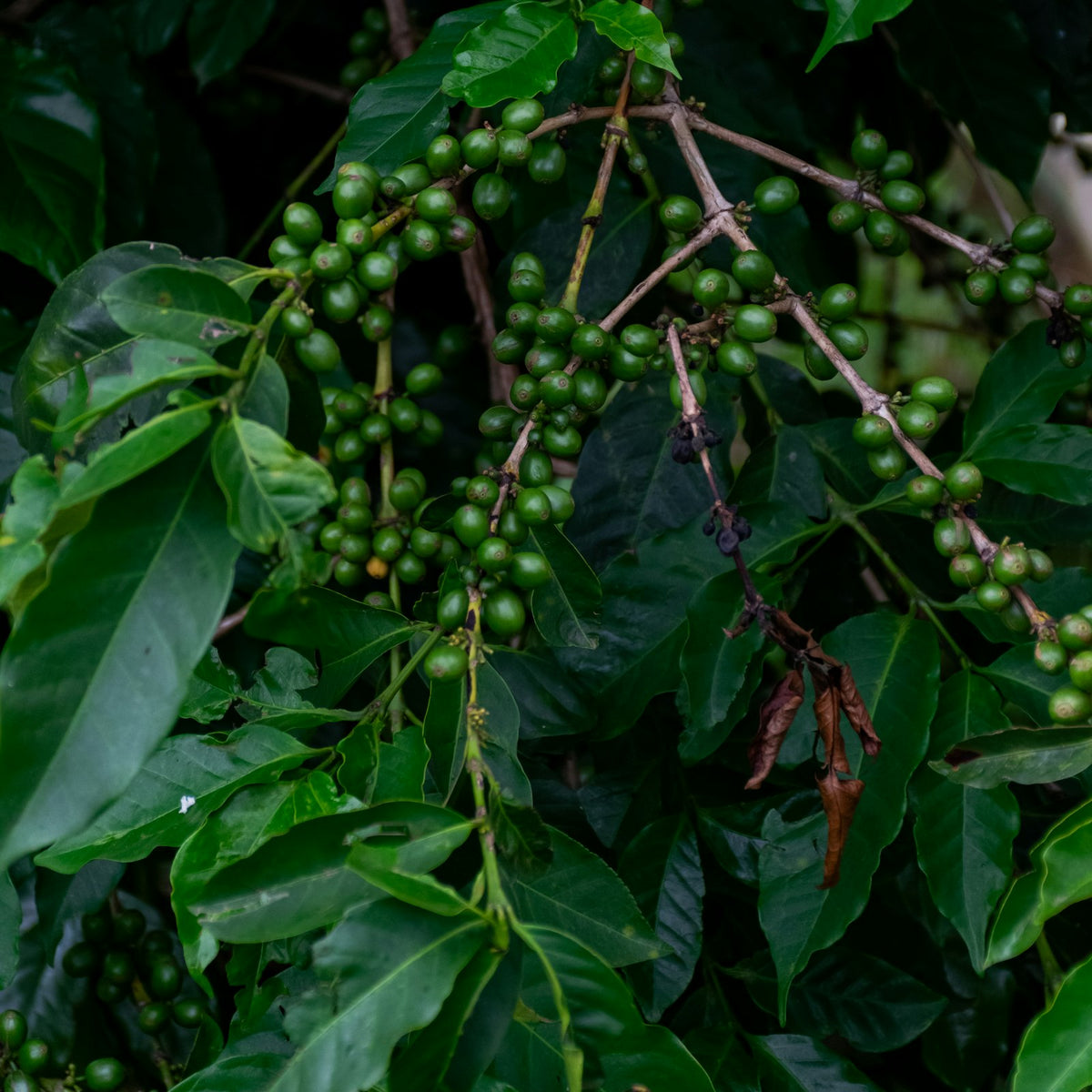
Photograph: Kia Sheikhy, Unsplash. Taken in Ibanda, Uganda.