The US Department of State announced on 15 October 2026 that the University of Hawaii at Mānoa would lead a new federal research program on coffee and cacao, the Feed the Future Innovation Lab for Coffee and Cacao, with Clemson University as co-director. The university said on 15 October that the agreement runs for up to five years, with an initial obligation of $8 million for the first year. Daily Coffee News, which reported the award on 16 October, described it as a research program spread across several institutions rather than a single building.
The coffee and cacao lab was one of a group of Feed the Future Innovation Labs named in the same State Department release. The others cover fertilizer and soil health, high-value crops, peanuts, cereals, farming systems, fish and animal health.
Who is running the coffee and cacao lab?
Parwinder Grewal, dean and director of the university's College of Tropical Agriculture and Human Resilience, is the principal investigator. In the university's announcement he described the lab as built to "transform coffee and cacao science into practical benefits for small farmers."
The university listed its partners on 15 October as Clemson, Michigan State University, The Ohio State University, Pennsylvania State University, the University of California, Davis, the Coffee Quality Institute, Mars, PlantVillage+, the Synergistic Hawaiʻi Agriculture Council and World Coffee Research. The same announcement carried statements from Sen. Brian Schatz of Hawaii, from Reps. Jill Tokuda and William Timmons, who co-chair the Congressional Coffee Caucus, and from William Murray, president and CEO of the National Coffee Association.
What research is the lab funded to do?
The university's announcement names four lines of work: breeding varieties that hold up against disease and drought, improving farm management and post-harvest processing, building research capacity in partner countries, and producing economic evidence that countries can use to plan their own research spending. It says the work covers small farmers in Hawaii and the continental US as well as in Latin America, Africa and Asia.
The university also set out why it says the work matters at home. Its 15 October announcement states that more than 99% of the coffee and cacao Americans use is imported, and that coffee supports more than 2.2 million US jobs and adds more than $343 billion a year to the economy. Those are the university's figures as published in that announcement.
The State Department release groups coffee, cacao and peanut research together as support for the supply chains of everyday American purchases. The 15 October release also says that university-led international agricultural research returns $8 for every $1 invested.
How does $8 million compare with what coffee research is estimated to need?
Daily Coffee News reported on 16 October that a 2023 World Coffee Research report estimated coffee needs an additional $452 million a year in agricultural research and development, every year for a decade. Set against that estimate, the lab's first-year obligation of $8 million is under 2% of one year's estimated shortfall. That comparison is our arithmetic on the two published figures, and the two numbers measure different things: one is a single lab's first-year budget, the other a sector-wide estimate.
What happened to the earlier Feed the Future labs?
DTN's ag policy editor, Jake Zajkowski, reported on 15 October 2026 that termination notices reached the Feed the Future labs in early 2025, after the cuts to the US Agency for International Development that February. According to DTN, 16 long-running research programs were affected and only the Climate-Resilient Cereals lab at Kansas State University continued.
The two accounts count the new group differently. The State Department release lists eight labs led by seven universities, with Kansas State leading two. DTN reported seven new labs, $64 million available for up to seven programs out of an additional $72 million Congress appropriated for fiscal year 2026, and that the continuing cereals lab received $8 million. DTN also reported that the labs will partner with 24 more universities, and cited an estimate from the Association of Public and Land-grant Universities that the labs have generated more than $8 billion in impact.
One of the terminated awards was for coffee. Daily Coffee News reported on 16 October that a five-year, $5.485 million cooperative agreement through Cornell University for World Coffee Research's coffee improvement work had about $1 million obligated before it was terminated in 2025. World Coffee Research is now one of the new lab's named partners, according to the university's announcement.
What is happening to Hawaii's own coffee crop?
Hawaii's coffee farms are within the program's stated scope. Daily Coffee News reported on 16 October that coffee leaf rust, a fungal disease that strips leaves from the tree, was first found in Hawaii in 2020, and that the USDA awarded the Synergistic Hawaiʻi Agriculture Council more than $6 million for leaf rust research in 2021.
The council estimates Hawaii's 2025–26 coffee production at 20.7 million pounds, down from 23.3 million pounds in 2023–24, as reported by Daily Coffee News, which said output has fallen every year since 2022, largely because of leaf rust. Suzanne Shriner, a coffee farmer and the council's administrator, is named in both the university's announcement and the Daily Coffee News report.
For scale, the council's estimate of 20.7 million pounds, as reported by Daily Coffee News on 16 October, is roughly 156,000 bags of 60 kilograms. Cecafé reported on 9 October that Brazil exported 3.894 million bags in September 2026 alone, as covered in our report on the ICO's September market report, so Hawaii's estimated season is about 4% of one month of Brazilian exports. That comparison is our arithmetic on the published figures.
How does this fit with other coffee funding announced this month?
The award came a day after Italy presented its own coffee strategy in Rome on 14 October, including a Global Coffee Initiative with the World Bank Group, which we covered in What Is Italy's Global Coffee Initiative? Variety breeding, one of the US lab's four stated priorities, is also the work behind Rwanda's planned release of climate-resilient varieties with World Coffee Research, reported in What New Coffee Varieties Is Rwanda Releasing? For what a variety is and how one differs from another, see What Is a Coffee Varietal?
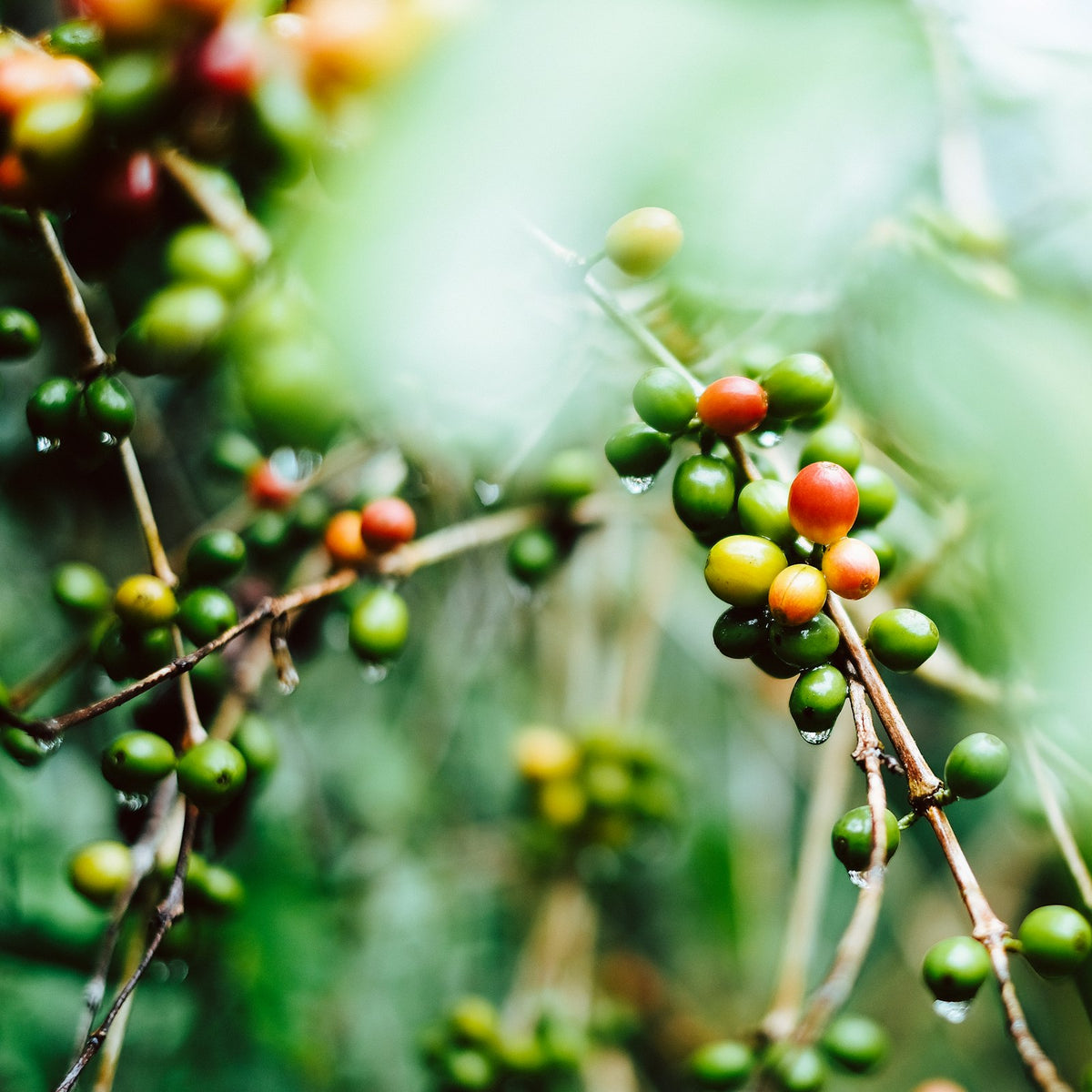
Photograph: Gerson Cifuentes, Unsplash. Taken in Tajumulco, Guatemala.