Peru's National Coffee Board (Junta Nacional del Café, or JNC) expects the country to produce between 220,000 and 230,000 metric tons of coffee in 2026, a fall of 18% to 22% on the 280,000 tons it puts on the 2025 harvest. The JNC's general manager, Lorenzo Castillo Castillo, gave the projection to the agricultural news site Agraria, which published it on 1 October 2026 in a report by José Carlos León Carrasco.
That is a lower number than the board gave in the summer. In July, JNC president Delky Gutiérrez told Agraria the 2026 harvest would come in between 230,000 and 240,000 tons, a fall of 15% to 20% on a 2025 crop he put at 285,000 tons, Agraria reported on 22 July 2026. Both figures are forecasts from the same producer body, and the two spokesmen used slightly different totals for 2025.
What does the JNC say is causing the drop?
Castillo told Agraria on 1 October that erratic temperatures and a shortage of rain upset flowering and the filling of the bean, mainly on farms below 1,500 meters, and that he expects the effects to carry into the 2027 harvest. In July, Gutiérrez pointed to the same lack of rain during flowering and grain filling, with the damage worst below 1,400 meters.
The second cause he named is age. Castillo said 75% of Peru's coffee plantations are past their productive cycle, with an average age of 15 to 20 years against an ideal of about 10, and that average yields are about 700 kilos of green coffee per hectare, Agraria reported on 1 October. He also named nematodes, small parasites that attack the roots, as doing more damage than the leaf rust farmers can see.
His remedy is a government-backed program to renovate or rehabilitate plantations alongside agroforestry, which he told Agraria could lift output to 300,000 tons by 2030 and 400,000 tons by 2050. The report gives no budget, no hectare target and no start date, so those totals are the board's goals rather than a funded plan.
How does 2026 compare with Peru's best years?
Peru's record harvest was 335,000 tons in 2011, when coffee covered 425,000 hectares, according to the JNC figures Agraria published on 1 October. Castillo put the area at 360,000 to 380,000 hectares in 2026. On those numbers, the 2026 crop would be roughly two-thirds of the 2011 record.
The board's export projection follows the same line. Castillo projected 2026 exports of about $1.5 billion for 4.8 million quintals, against $1.849 billion for 5.35 million quintals in 2025, with an expected average price of $300 a quintal against $340 in 2025, Agraria reported. A quintal is a traditional sack weight used in the coffee trade. The exporters' association ADEX puts 2025 coffee exports at a lower $1.796 billion, Agraria reported on 2 October 2026, and the reports do not explain the gap.
Do other measurements agree?
Not entirely. The national statistics institute, INEI, recorded coffee production of 66,280 tons in July 2026, up 8.0% on July 2025, which it credited to larger harvested areas and favorable temperatures, Agraria reported on 29 September 2026. July is one month, and a single month does not settle the annual total.
The US Department of Agriculture forecast a steady crop in June. Its annual Peru report forecast 2026/27 production at 4.78 million 60-kilo bags, up 0.3% on 4.764 million, and said coffee leaf rust now affects nearly 40% of the crop, Daily Coffee News reported on 17 June 2026. The USDA forecast came before both of the JNC's summer and autumn estimates, and it is labeled 2026/27 rather than 2026.
For background on where Peruvian coffee is grown and how it tastes, see our explainer What Is Peruvian Coffee? Prices are part of the same picture, covered in why coffee is still so expensive, and another origin's year is in our report on Honduras' coffee export earnings.
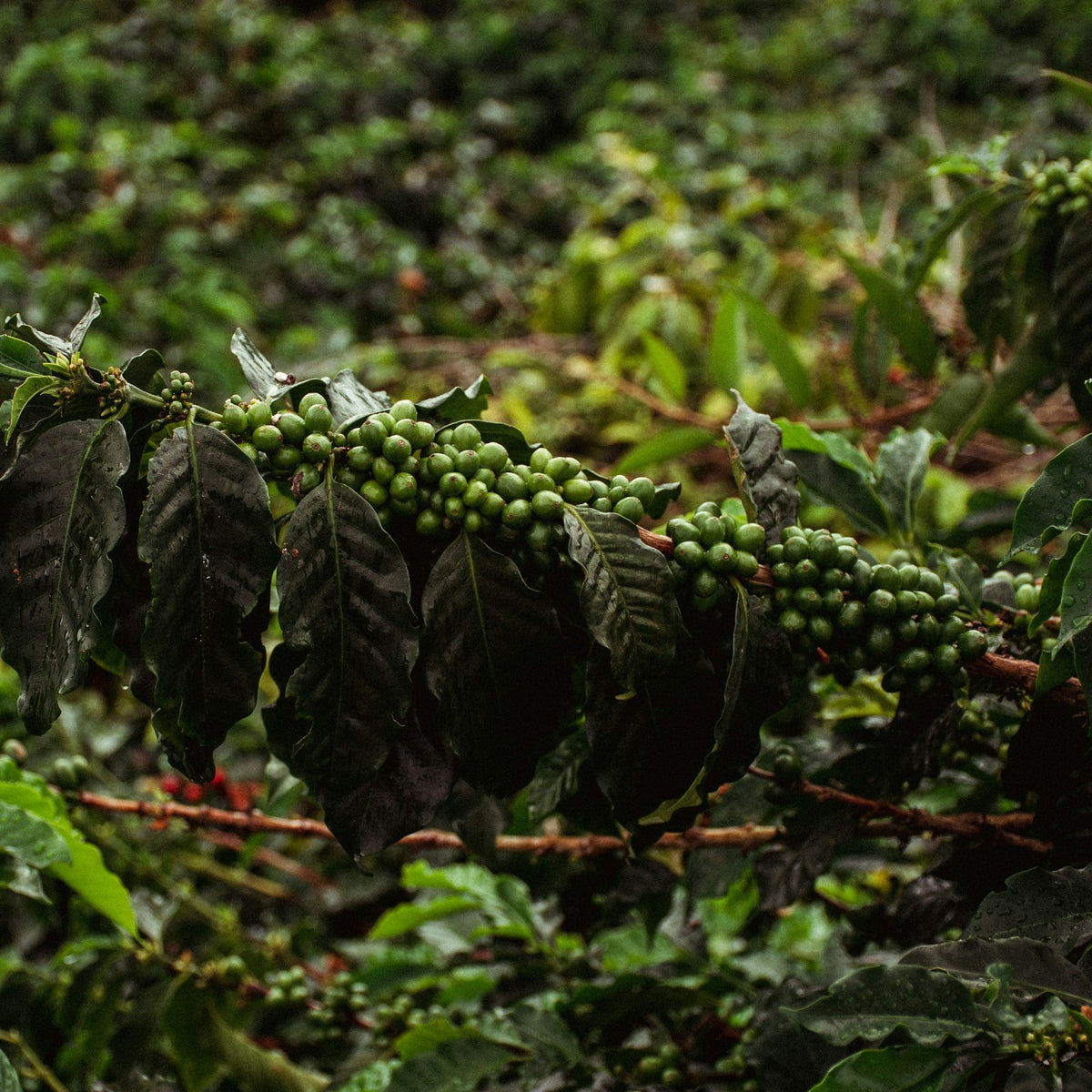
Photograph: David Restrepo, Unsplash.