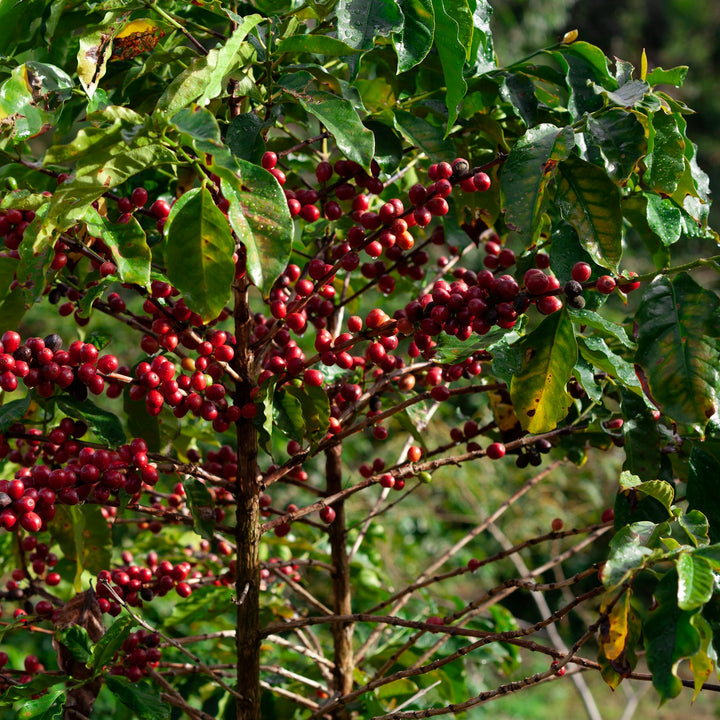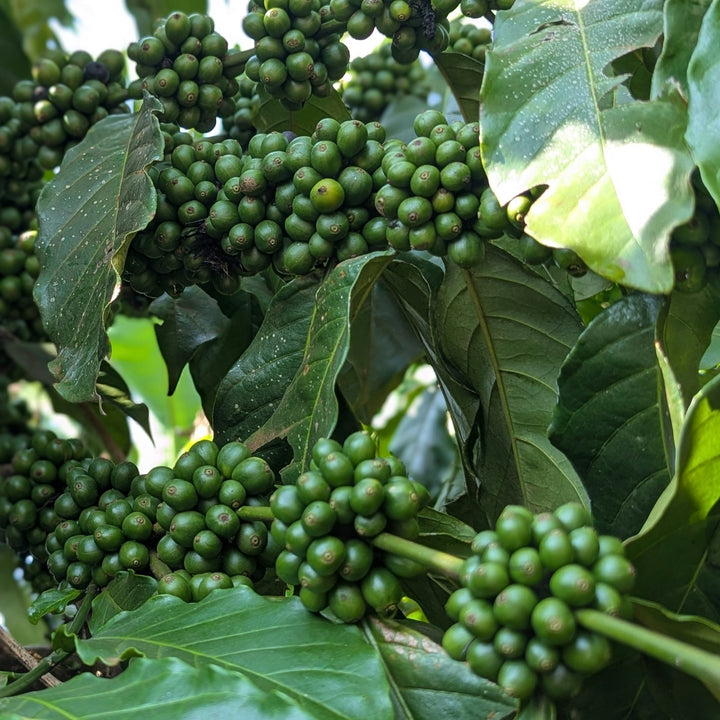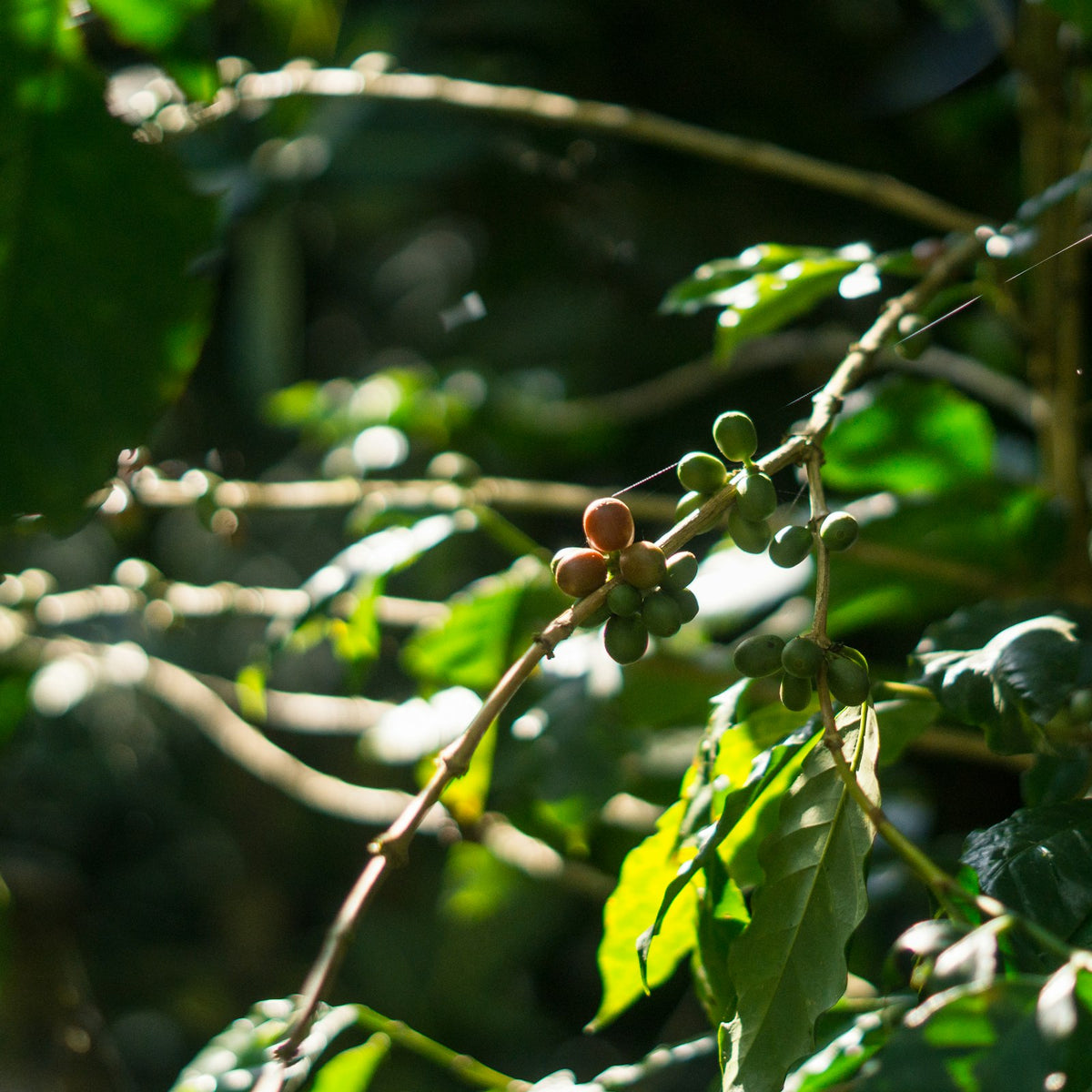
Honduras sold $2.285 billion worth of coffee abroad in its 2025-26 coffee year, which closed on 30 September 2026, according to figures the Honduran Coffee Institute (Ihcafé) released that day and that EFE reported through La Prensa on 30 September. The institute put exports at 7.3 million sacks, against roughly 7.5 million produced, shipped to 53 countries. Coffee remains the country's largest export, EFE reported.
For its 2025-26 figures, Ihcafé counts in sacks of 46 kilograms, a little over 100 pounds each, which EFE's report calls quintales. On the institute's 2025-26 figures, 7.3 million of them comes to about 336,000 metric tons of coffee. Spread across the 96,903 registered producers EFE reported for the 2025-26 cycle, that is about 75 sacks, or three and a half metric tons, for each one.
Why did earnings rise less than volume?
Volume grew much faster than money. Ihcafé's figures, as reported by Honduras.com on 1 October 2026, show exports up from 6,117,313 sacks in 2024-25 to 7.3 million in 2025-26, a rise of 19.3%. Foreign exchange earnings rose from $2,147.28 million to $2,285 million over the same two cycles, a gain of 6.4%.
The gap is the price. The same Ihcafé figures show an average price of $312.58 per sack for 2025-26, down from $351.14 a year earlier, a fall of about 11%. Proceso Digital reported the same $312.58 average on 30 September 2026. Honduras shipped about a fifth more coffee and was paid about a tenth less for each sack of it.
Adilson Ávila, Ihcafé's general manager, credited the year's results to technical support through extension, research and training, and to a program of renewing coffee plantings, according to EFE's 30 September report. Francisco Ordóñez, Honduras' vice minister for coffee growing, reported that road work in coffee areas had covered 10,468 kilometers in 162 municipalities across 15 departments during 2025-26, at a cost of 243.7 million lempiras, Proceso Digital reported.
Where did Honduran coffee go?
Figures from the Honduran Coffee Exporters Association (ADECAFEH), reported by Honduras.com on 1 October 2026, put the United States first among buyers in 2025-26 with 32.8% of exports, followed by Germany at 16.5% and Belgium at 10.9%. By region, Europe took 50.9% and the Americas 42.6%. About half of the coffee exported carried a quality or sustainability certification, the same report said.
Inside the country, Comayagua was the largest producing department in 2025-26, with 1,229,198.52 sacks, and the municipality of La Unión in Copán reported the highest average yield, at 26.63 sacks per manzana, a local unit of land area, according to Ihcafé figures carried by both Honduras.com and Proceso Digital.
How does it compare with the rest of the region?
The International Coffee Organization's monthly data point the same way for Honduras and the opposite way for its neighbors. In its Coffee Market Report for August 2026, the ICO said exports from the Caribbean, Mexico and Central America fell 15.9% to 1.39 million bags in July 2026, while Honduran exports rose 16.3% to 0.53 million bags, against 0.46 million in July 2025. The ICO counts in 60-kilogram bags, so its figures are not directly comparable with Ihcafé's sacks.
The same ICO report said its composite indicator price, a blended benchmark across the main types of green coffee, averaged 287.29 US cents per pound in August 2026, against 287.26 cents in July. The ICO reported that its Other Milds group indicator averaged 361.31 cents in August 2026, up 0.7%.
What do the forecasts say about 2026-27?
The new coffee year began on 1 October 2026, and the two main forecasts for it differ. Ihcafé projects a 2026-27 crop of 7.0 million sacks, according to both Proceso Digital and Honduras.com. That is a forecast, not a measurement.
The exporters' association published a higher one. Basilio Fuschich, president of ADECAFEH, told ICN Digital on 10 September 2026 that the 2026-27 crop could reach 7.5 to 7.6 million sacks if the weather causes no setbacks. In the same interview he said drought had hurt plantations at lower altitudes more than those higher up. Both are projections, not measured crops.
What did the best Honduran coffee sell for?
The averages sit a long way from the top of the market. At the 22nd Honduran Cup of Excellence, the top coffee was a geisha from Finca El Pimporro in Masaguara, Intibucá, grown by Francisco Alvarado Gómez and scored at 90.50 points, Honduras.com reported on 1 October 2026. At the competition's auction on 16 July 2026, it sold for $90 a pound, and the auction raised $591,251.26 at an average of $31.48 a pound, according to the same report.
The average export sack, by Ihcafé's figures, sold for about $6.80 a kilogram, or a little over $3 a pound. The winning lot sold for close to thirty times that.
What are the key figures?
- Export earnings, 2025-26 coffee year: $2.285 billion, according to Ihcafé, reported by EFE on 30 September 2026
- Export volume, 2025-26: 7.3 million 46-kilogram sacks, up 19.3% from 6,117,313, according to Ihcafé figures reported by Honduras.com on 1 October 2026
- Average price per sack, 2025-26: $312.58, down from $351.14, according to Ihcafé figures reported by Proceso Digital and Honduras.com on 30 September and 1 October 2026
- Largest buyer, 2025-26: the United States at 32.8% of exports, according to ADECAFEH figures reported by Honduras.com on 1 October 2026
- Honduran exports, July 2026: 0.53 million 60-kilogram bags, up 16.3%, according to the ICO's August 2026 Coffee Market Report
- Crop forecast, 2026-27: 7.0 million sacks according to Ihcafé (30 September 2026), against 7.5 to 7.6 million according to ADECAFEH's Basilio Fuschich (10 September 2026)
For how a rising harvest and falling prices played out in other origins this season, see our reports on Vietnam's coffee export revenue and the late-September arabica rebound, the ICO's new market data platform, and our explainer on why coffee is still so expensive.
Photograph: José Ramos, Unsplash.