Vietnam shipped 15.4% more coffee in the first nine months of 2026 than in the same months of 2025 and earned 7.3% less for it, according to figures from the country's Ministry of Agriculture and Environment published by the Vietnam News Agency on 2 October 2026. The ministry put January to September exports at 1.4 million metric tons worth $6.54 billion. The average export price it reported for January to September 2026 was $4,537.3 a ton, down 19.7% on a year earlier. More coffee went out, and less money came back.
Deputy Minister of Agriculture and Environment Võ Văn Hưng singled out coffee as a notable case, in remarks reported by the Government Newspaper on 25 September 2026 and republished by the Vietnam Chamber of Commerce and Industry. He put the nine-month volume at about 1.44 million tons and said the 7.3% fall in revenue came from the 19.7% fall in the average export price.
How much coffee did Vietnam export in the first nine months of 2026?
At the 1.44 million tons the deputy minister cited on 25 September, Vietnam's nine-month shipments come to roughly 24 million of the 60-kilogram bags the trade counts in. That is more than a third of the 67.6 million bags Conab, Brazil's national supply agency, estimated in September for Brazil's entire 2026 harvest, the largest crop in the world.
Most of what Vietnam grows is robusta, the second of the two coffee species traded at scale and a different plant from arabica. The jump in volume shows up in the International Coffee Organization's figures too. Its Coffee Market Report for August 2026 said Vietnam's robusta exports in July 2026 rose 87.4% to 2.4 million bags, from 1.28 million bags in July 2025.
Coffee was one line in a larger account. The Vietnam News Agency reported on 2 October that the country's farm, forestry and fishery exports reached $56.3 billion over the nine months, up 7.8%, with September alone at $6.51 billion. The Government Newspaper reported on 25 September that the sector needs another $17.91 billion in the last three months of 2026 to reach its annual goal of $74.212 billion.
Why did Vietnam's coffee export price fall?
The ministry's figures give the size of the fall rather than its cause. At $4,537.3 a ton, the January to September 2026 average the Ministry of Agriculture and Environment reported works out to about $4.54 a kilo of green coffee, or a little over $2 a pound.
That average sits below what Vietnamese forecasters expected at the start of the year. In January, the Institute of Economics and Finance at Vietnam's Ministry of Finance projected an average export price of $4,800 to $5,200 a ton for 2026, 10% to 15% below 2025, according to a report by the Dong Nai provincial Department of Industry and Trade dated 15 January 2026. That report attributed the price declines of the time mainly to sharply rising supply from the new crop. The 19.7% fall the ministry has now reported for January to September 2026 is larger than the 10% to 15% the institute projected.
The ICO's August report recorded a softer robusta market, saying its robusta group indicator fell 2.2% in August 2026 to an average of 180.63 US cents a pound. On the exporter side, Thái Như Hiệp, vice chairman of the Vietnam Coffee and Cocoa Association, said that weak links between Vietnamese exporters limit their collective bargaining power over how value is shared, according to a Government News Agency report carried by the Vietnam Chamber of Commerce and Industry on 28 September 2026.
What have robusta futures done since?
Robusta futures in London recovered in the last week of September. Comunicaffe reported on 1 October 2026 that the November robusta contract settled at $3,445 a ton on 30 September, up 1% on the day and up 5.7% from its 22 September low of $3,260. Over the month as a whole, Comunicaffe reported, robusta futures fell just under 0.5%.
A futures settlement and a nine-month average export price measure different things. The first is one contract on one day; the second is every shipment over three quarters of a year. Neither is a price for this morning.
What comes next for Vietnam's coffee crop?
Forecasts for the next crop are already in circulation. In August, Thái Như Hiệp cited a US Department of Agriculture forecast of 32 million 60-kilogram bags for the 2026/27 Vietnamese crop, Reuters reported on 21 August 2026. That number is a forecast, not a measurement. In the same report Hiệp said the threat from El Niño cannot be ignored, because the Central Highlands, where most of Vietnam's coffee grows, are particularly vulnerable to extreme weather at crucial points in the crop cycle. "For Vietnam, adapting to climate change is no longer a future concern," he said. "It has become an urgent necessity to safeguard coffee production."
El Niño is the periodic warming of the eastern tropical Pacific that shifts rainfall around the world. In its diagnostic discussion of 10 September 2026, the US Climate Prediction Center kept an El Niño Advisory in place and said there is a greater than 90% chance of a very strong event through the Northern Hemisphere fall and winter of 2026/27. The center also said that with an event of this size the chances of El Niño-type impacts are larger, though not guaranteed. Its next scheduled update is 8 October 2026.
- 1.4 million metric tons of coffee exported, January to September 2026, up 15.4% (Ministry of Agriculture and Environment, via the Vietnam News Agency, 2 October 2026)
- $6.54 billion in coffee export revenue, January to September 2026, down 7.3% (same source)
- $4,537.3 a ton average export price, January to September 2026, down 19.7% (same source)
- 2.4 million bags of robusta exported in July 2026, up 87.4% on July 2025 (ICO Coffee Market Report, August 2026)
- 180.63 US cents a pound, the ICO robusta group indicator averaged across August 2026 (ICO Coffee Market Report, August 2026)
- $3,445 a ton, the November robusta settlement on 30 September 2026 (Comunicaffe, 1 October 2026)
- 32 million bags, the USDA forecast for Vietnam's 2026/27 crop cited by Thái Như Hiệp (Reuters, 21 August 2026)
Earlier in this series: what the arabica market did after Brazil's record crop estimate.
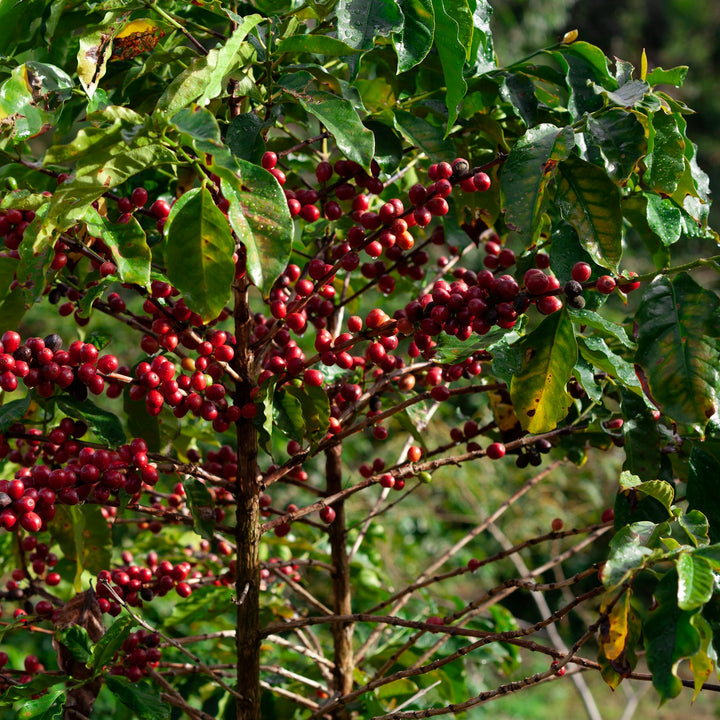
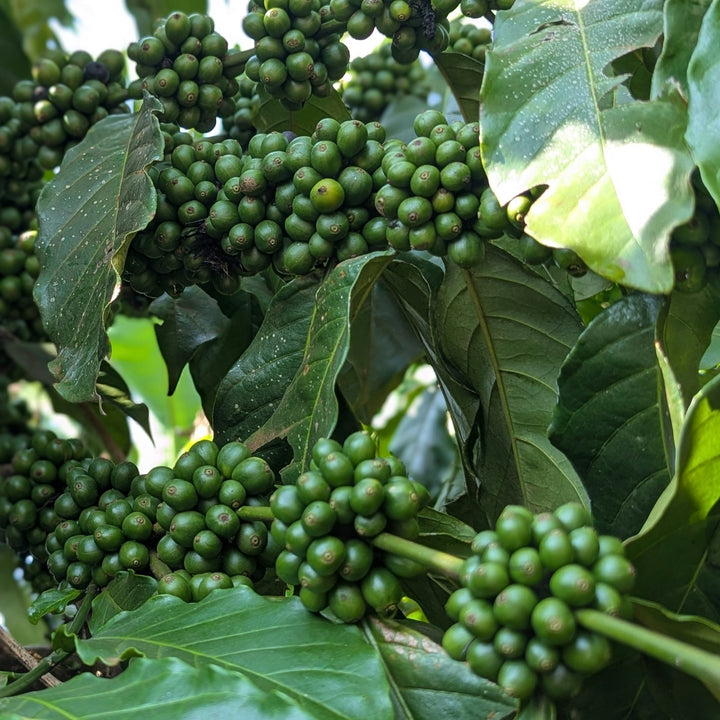
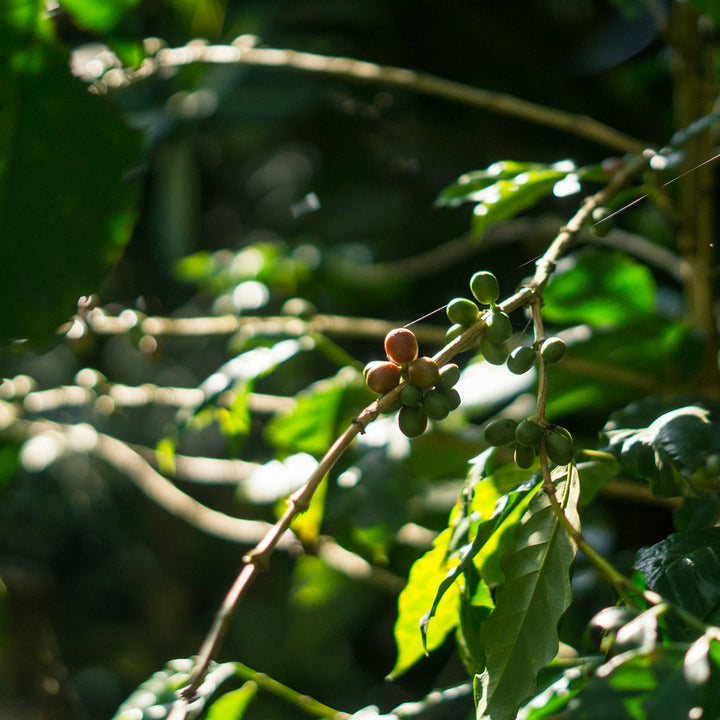
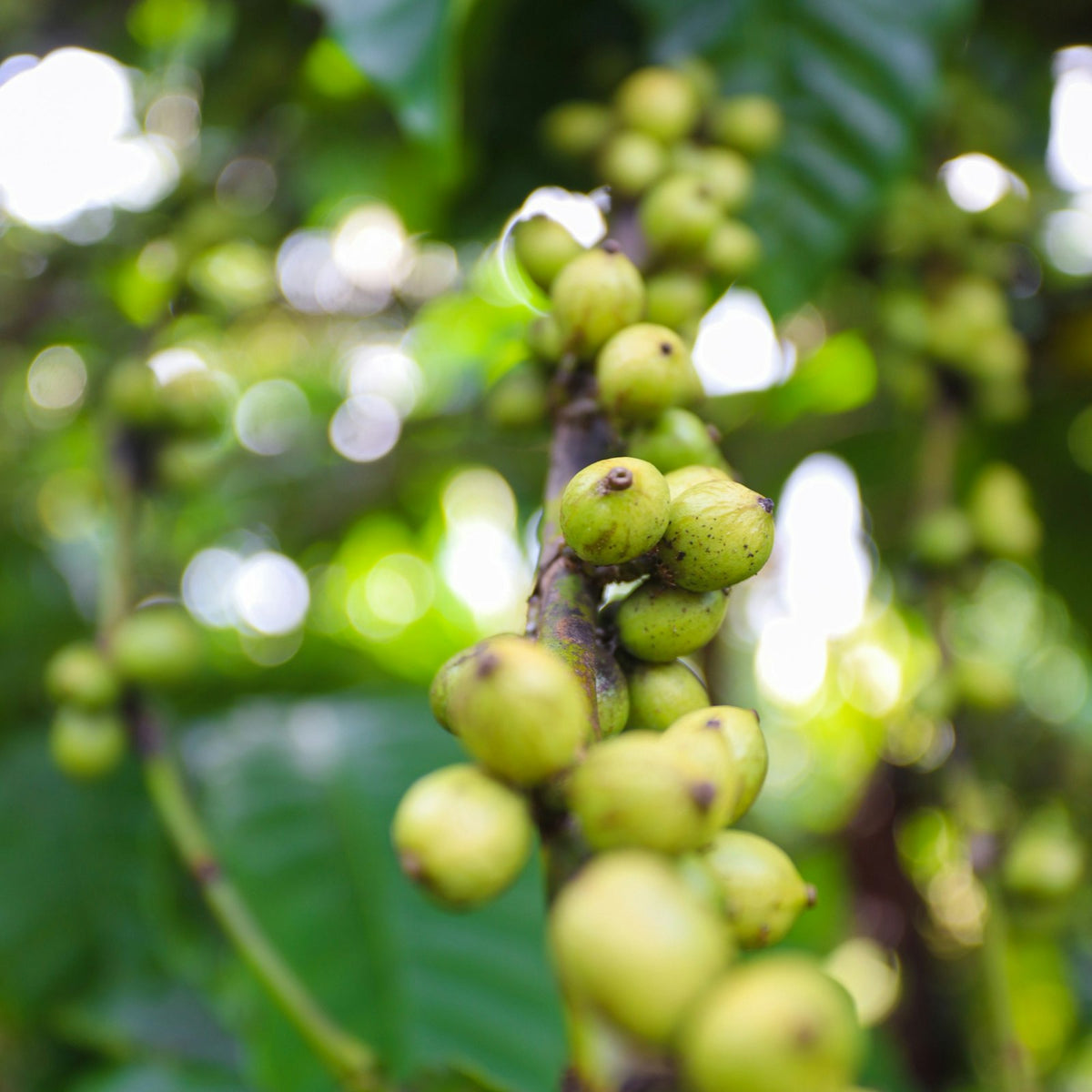
Photograph: Helena Coffee Vietnam, Unsplash.