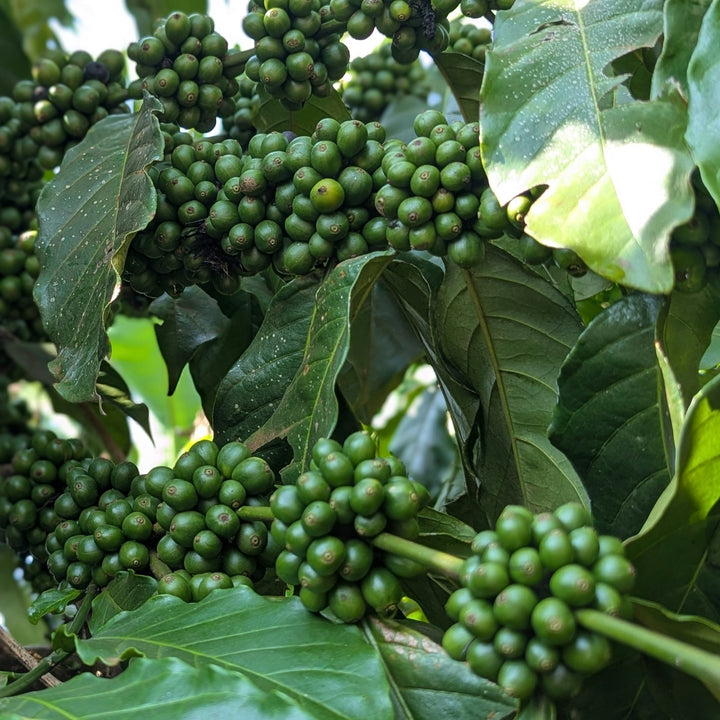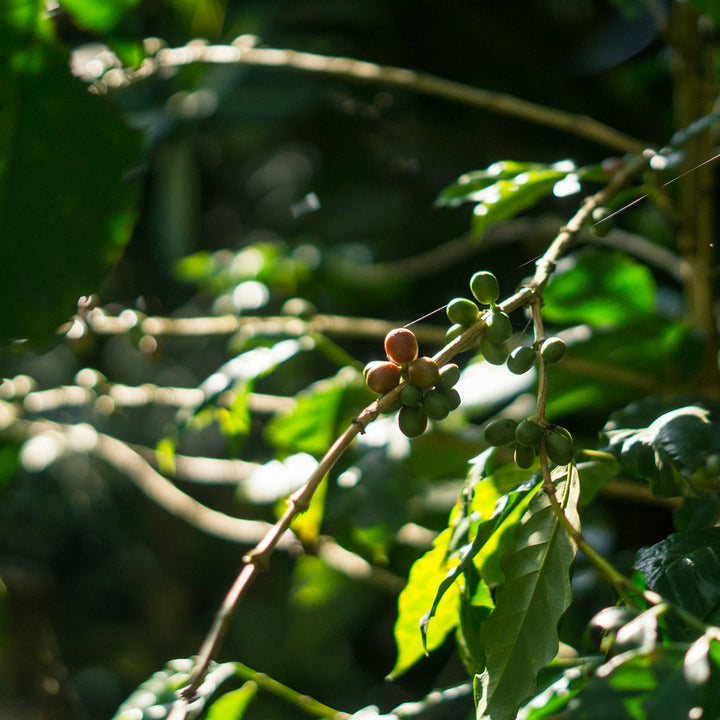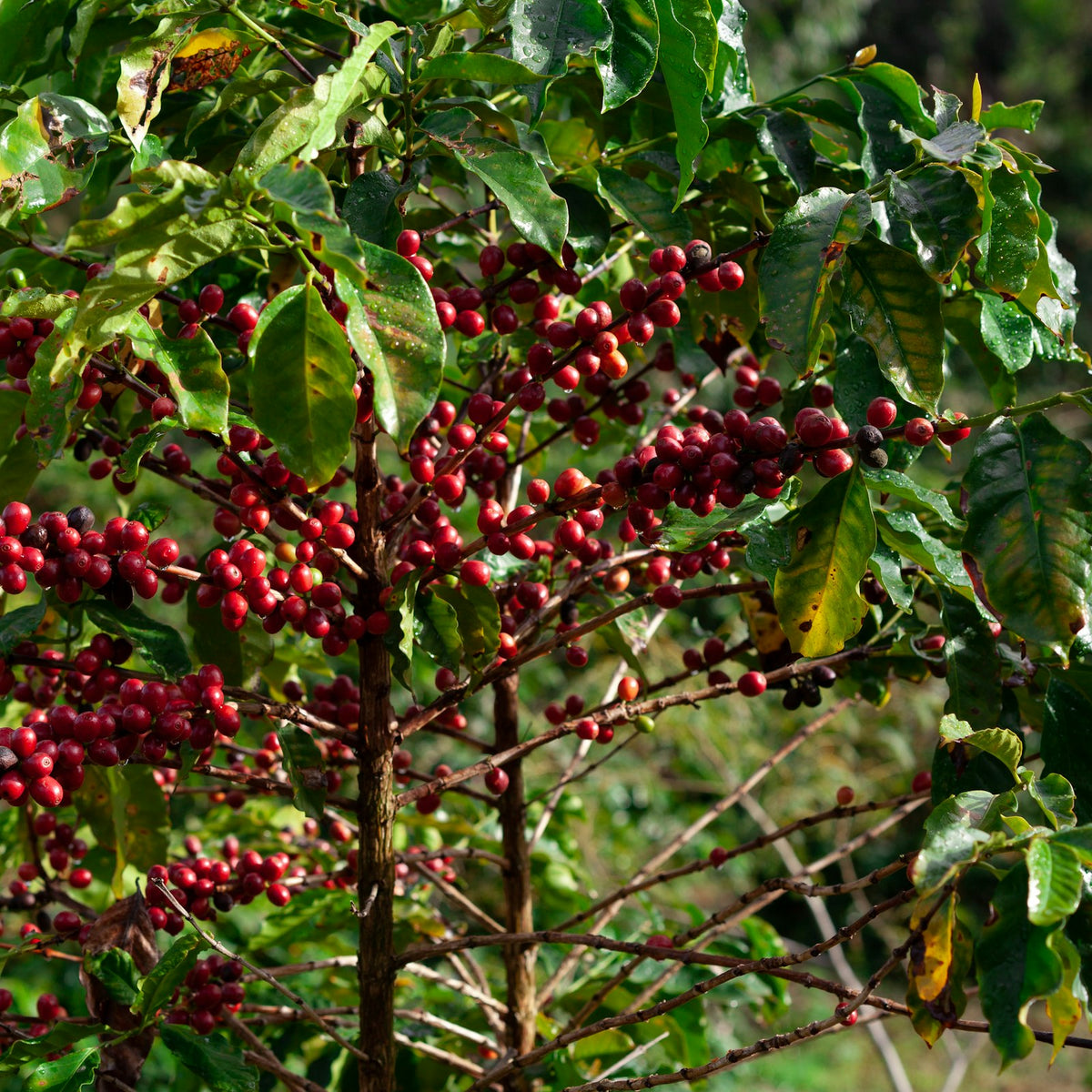
A coffee cherry is the whole fruit that grows on a coffee tree, and the bean you grind is only the center of it, usually one of two seeds, wrapped in four more layers that come off somewhere between the farm and your cup.
What Are the Layers of a Coffee Cherry?
Cut one open and you'd find, working from the outside in: the skin, a thin layer of pulp underneath it, a sticky coat called mucilage, a papery parchment shell, and a thin silverskin wrapped directly around the seed. Sweet Maria's glossary entry on the coffee cherry is the clearest short account of the whole structure, and it's the one we point people to rather than writing a competing version of it.
Two of those layers we've measured ourselves because they matter to how a coffee gets processed. Mucilage is about 84 percent water held in a pectin gel, which is why it's slick rather than sweet. The silverskin is what survives everything else and travels all the way to a roaster, where it sheds in the drum as chaff, running 4 to 5 percent of the finished bean's weight.
Why Do Most Coffee Cherries Hold Two Seeds?
Most cherries grow two seeds facing each other, each with one flat side where they pressed together inside the fruit. Occasionally only one seed develops, and without a neighbor to flatten against it grows round instead. That single round seed is called a peaberry, and it's a common enough variation that most origins sort some out of every harvest.
What Happens to the Cherry Once It's Picked?
From here the fruit goes one of two ways, and the choice is made at origin within hours of picking. In washed processing, the skin and pulp come off right away, the mucilage is fermented and rinsed clean, and what dries is a bare seed still in its parchment. In natural processing, nothing comes off. The whole cherry dries intact, and the fruit is hulled away afterward in one pass.
Our own shelf runs both forks. Kenya Kiambu is washed: the cherry came off within hours of picking and the seed dried alone. El Salvador Finca San Luis is natural: its cherry stayed on through the whole dry. Same fruit, two different decisions about how long it keeps its skin.
I should say plainly where our own hands stop. We buy finished green coffee. I've never pulped a cherry, run a fermentation tank or spread one on a drying bed myself. Those decisions were made at origin, months before the lot reached Pensacola, by people whose work we're reporting on rather than doing ourselves.
Why Does an Underripe Cherry Still Matter After the Roast?
Because a cherry picked before it ripened produces a seed that never built the sugar it needs to brown. It comes out of the roaster pale instead of dark, a defect called a quaker, and the fruit's ripeness at picking is the reason it happened.

I sort most of my own quakers by hand, off the cooling tray, after the roast, rather than running a color sorter and destoner the way a lot of larger roasters do. It's slower, it doesn't scale past a certain batch size, and I know it doesn't catch every one. It's how I've chosen to do it anyway.
Taste the fork for yourself. Kenya Kiambu dried without its cherry attached. El Salvador Finca San Luis dried with it still on. We roast both to order every Wednesday in Pensacola and grind either one free to your brewer. Kenya Kiambu and El Salvador Finca San Luis are both here.