Natural process coffee is coffee that dried whole, with the seed still inside its fruit, and was hulled out of the dried cherry in one pass afterwards. The name records an operation somebody performed at origin. It doesn't tell you what the coffee tastes like, and our own shelf is the reason we can prove it.
Key takeaways
- The whole cherry dries around the seed, and the dried fruit is hulled off at the mill afterwards.
- Most of the single origins we can sell today are recorded as natural process on our product pages, and their published notes run from mango and papaya to dark chocolate and berry jam.
- Drying in the fruit moves flavor the fruit already carried into the seed; it cannot put in a flavor the fruit never had.
- The variety and the growing region predict the cup far better than the processing word does.
The whole cherry dries with the seed still inside
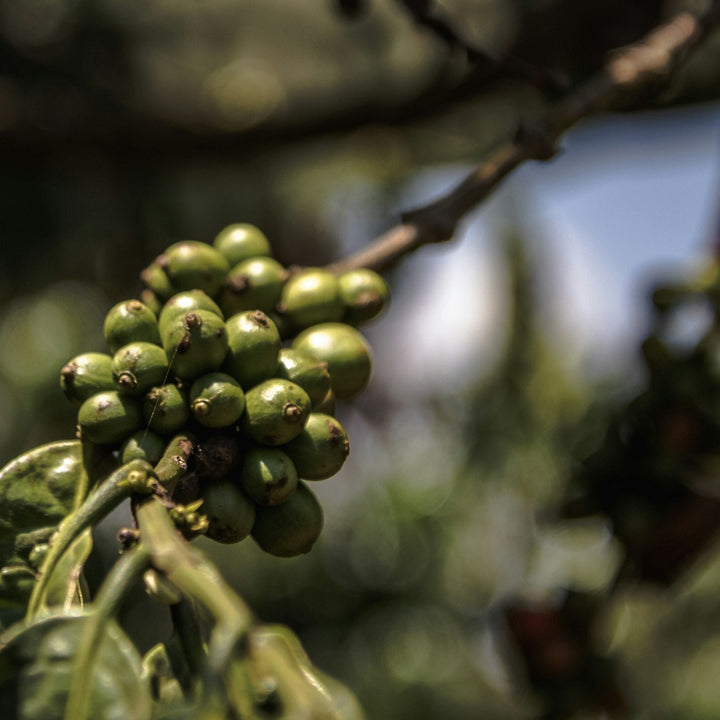
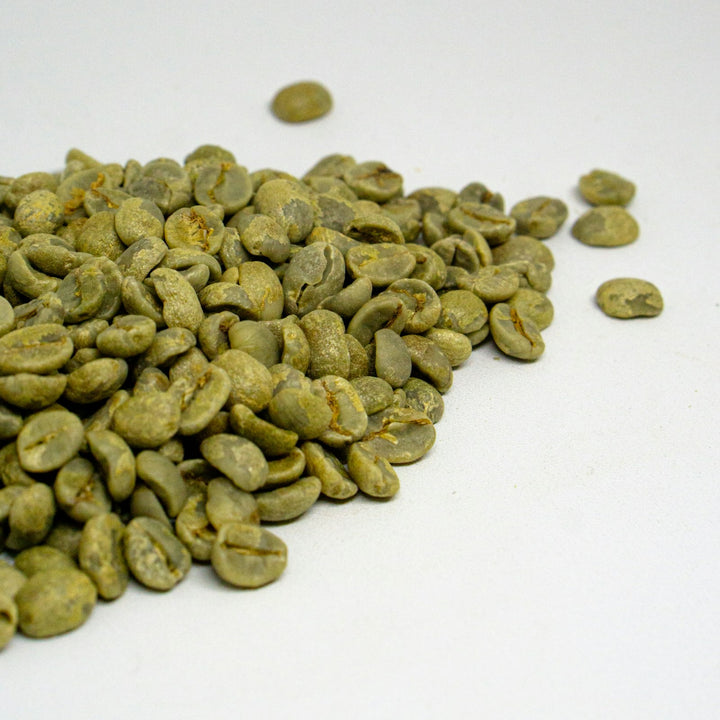
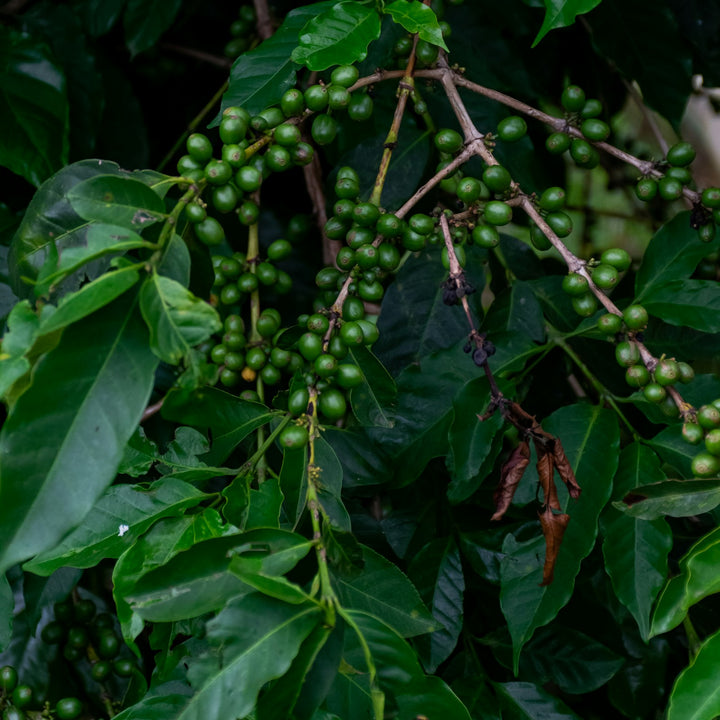
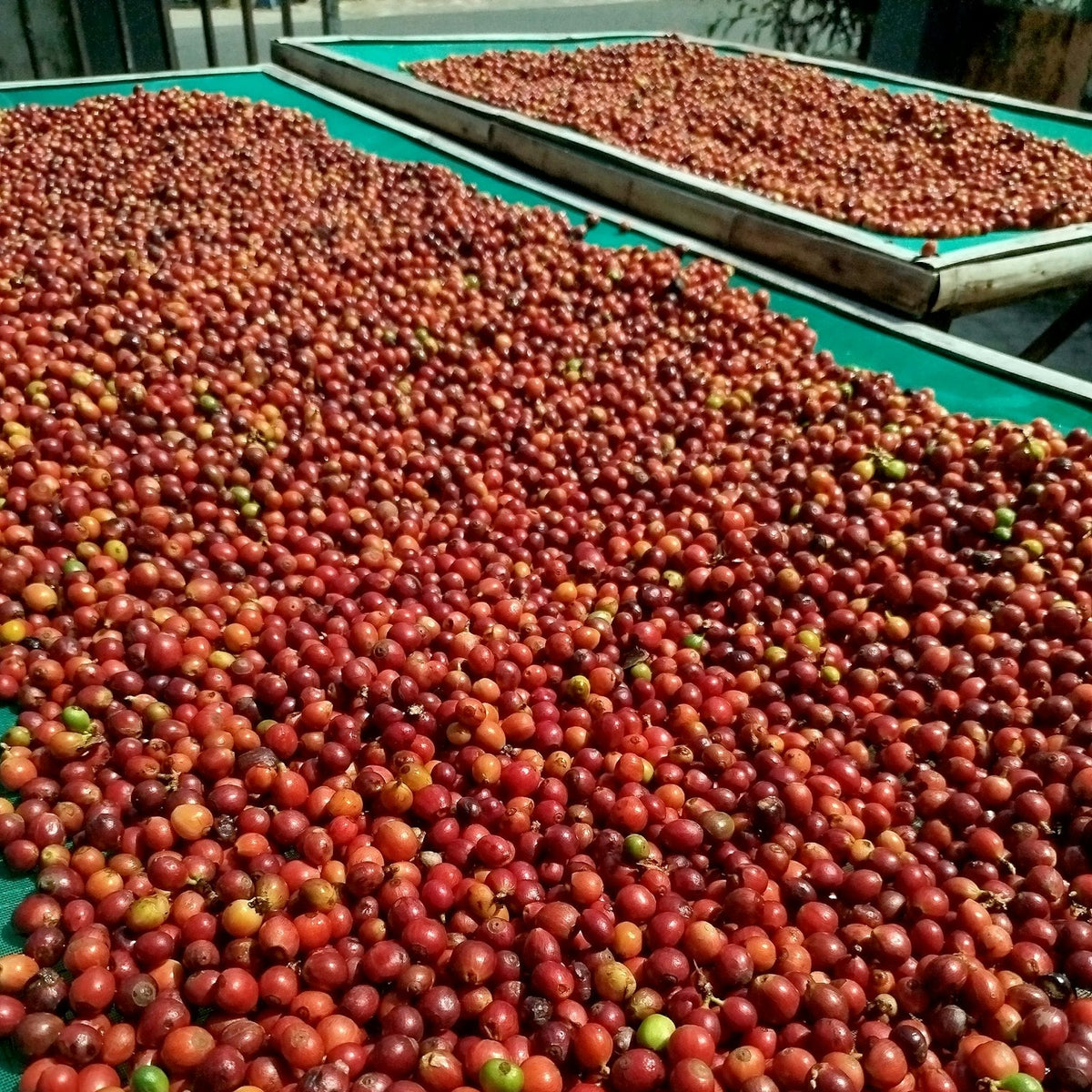
A coffee goes onto a patio or a raised bed as whole ripe cherry and stays there until the fruit is hard. Only then does the mill hull the dried pod away, leaving the green coffee that gets roasted. That's the whole operation, and it's what we record as natural on a product page.
Washed processing runs a different sequence: the pulp comes off within hours of picking, the sticky layer underneath is fermented in tanks and rinsed away, and what goes out to dry is a bare seed in parchment. In a natural, nothing comes off until the fruit has gone hard.
Sweet Maria's, whose guide to dry processed coffee is the clearest technical account of the method published anywhere, offers a useful field marker: a farm that can take ripe cherry to a hard, dried pod in about 20 days is probably well suited to it. Twenty days is a narrow window, and why it's narrow decides where naturals can be made at all.
Most of the single origins on our shelf are naturals
We publish a cup score on every coffee we sell, and across those naturals the scores run from 86.8 to 93. That's a six-point spread inside a single processing word, measured on one scorecard in one roastery. Here is what our product pages record:
- Ethiopia Buku Abel, heirloom varieties from Guji, cupping 93: mango, papaya, berries, chocolate, chai, cinnamon and star anise.
- Brazil Machado, the Catuai from Minas Gerais we last roasted, cupped 90.5: milk chocolate, caramel, roasted almond, dried cherry and orange zest.
- Organic Peru Decaf, Bourbon, Caturra and Typica from San Martín, cupping 88.4: dried strawberry, dark chocolate, berry jam, sarsaparilla and banana milk.
- El Salvador Finca San Luis, from Ahuachapán, cupping 86.8: cherry wine, earthy cacao, dried date, baking chocolate and Brazil nut.
Most of the coffees among our single origins carry the same processing method on their listings, and their notes have almost nothing in common. Say clearly what that is and isn't: a record of the lots we bought, not a claim about those countries. The trade buys most Peruvian and Salvadoran coffee washed, and nothing here contradicts that.
What separates them isn't the drying bed. It's that a Catuai ripening in Minas Gerais is a different plant in a different place from a heirloom ripening in Guji, and a chocolate coffee at the tree doesn't become a mango coffee because the fruit stayed on through drying.
Two of them are chocolate coffees
Organic Peru Decaf leads on dark chocolate, berry jam and dried strawberry. El Salvador Finca San Luis carries earthy cacao, baking chocolate and Brazil nut. Neither one is a berry coffee, and both dried in the fruit exactly as the Ethiopian did.
The line runs in the other direction too: our one washed single origin, Kenya Kiambu, lists citrus and cranberry among its notes. Fruit turns up on both sides of the processing question, which is not what that origin's reputation would predict either.
None of this is a new caution. Several of the better pages on this subject attach a version of it, then go on to describe the fruit anyway. What is missing from all of them is a counterexample, and two chocolate naturals sitting on one shelf next to a mango one is a counterexample. A bag marked natural has told you what happened at the mill. It hasn't told you what will happen in the cup.
What drying in the fruit actually does
Sweet Maria's describes the likely mechanism as a transfer. Water moves out of the drying fruit, compounds in the fruit skin bond ionically with the seed, and fruited character is infused into the coffee over the days it takes to dry. Read it carefully, because it's the engine of the whole argument. The process moves what the cherry already had into the seed. It doesn't invent a flavor the cherry never carried.
Then there's the counterweight, which almost nobody prints. The same guide records that the bulk of commercial dry processed coffee shows dirty, earthy and musty flavors, and also that the better modern lots reach a consistency, uniformity and clean taste that rival wet process coffees. Both of those sentences are about naturals. A method whose ordinary output is muddy and whose best output is clean isn't a flavor promise. It's a harder, riskier route to a dry seed, with a much wider band of results.
None of that work happens here. We buy green coffee, so every decision above was made at origin months before the lot reached Pensacola. What we can tell you is which decision was made, and what the coffee did on the cupping table. The drying surface is a second specification, made weeks after the first, and most listings drop it.
Why it is not done everywhere
If naturals were simply cheaper and easier, every producing country would make them. Sweet Maria's is direct about why they don't: the method wants an arid climate. Where the air is humid or rain arrives during drying, fruit degrades on the bed, and a lot can rot or mold before it's hard enough to hull. That's a crop lost at origin. Brazil's sharply separated wet and dry seasons are a large part of why the method works there, and Ethiopia and Yemen are its traditional homes for the same reason.
Sprudge, writing on this question, makes the fair point that natural processing uses far less water and far less equipment than the washed route does, and then asks the obvious follow-up about why everyone isn't doing it. The answer isn't cost. It's climate, and the risk that comes with it. A washed coffee is easier to make consistent. A natural is a bet on the weather.
Questions we get about natural process coffee
What does natural process coffee taste like?
It depends on the variety and the growing region, which is why our naturals taste nothing alike: the Ethiopian leads on mango and papaya, the Peruvian on dark chocolate and berry jam. Drying in the fruit adds sweetness and body, but the fruit it moves into the seed is whatever that cherry already had.
Is natural process coffee better than washed?
No. They solve different problems at origin. Washed lots are easier to make consistent. A natural accepts more risk on the drying bed in exchange for body and fruit character. Among our single origins the highest cup score and the lowest are both naturals, which is the clearest evidence that the method is not a quality ranking.
Where does natural process coffee come from?
From dry climates, mostly. Ethiopia and Yemen are the traditional homes of the method, and Brazil works at it because its rainy and dry seasons are sharply separated. What they share is a stretch of dry weather long enough to take whole cherry to a hard pod. Humid regions can produce naturals, but they are fighting their own weather to do it.
Does natural process coffee involve fermentation?
Yes, though not as a separate step. The fruit is still on the seed while it dries, and fermentation happens inside that fruit on its own, without the controlled tank stage a washed coffee goes through. That uncontrolled fermentation is where a natural gets both its best character and its worst.
Is natural process coffee better for the environment?
On water and equipment, yes. Sprudge notes that the method uses far less water and needs less machinery than washed processing, since there is no pulping, no fermentation tank and no wash channel. What it costs instead is space, time and risk: drying whole cherry takes longer and can lose a lot outright to bad weather.
Read the variety and the origin, then pick your natural
Before you order any coffee labeled natural, read the variety and the origin on the listing, because that pair is what tells you whether you're buying fruit or chocolate. If chocolate is what you want, Organic Peru Decaf is the one: a natural from San Martín, cupping 88.4, published as dark chocolate, berry jam and dried strawberry, and the clearest counterexample on our own shelf. If you want the mango and the papaya, Ethiopia Buku Abel is sitting right beside it. Both dried in the fruit. We roast to order every Wednesday in Pensacola.