Brazilian coffee is coffee grown in Brazil, the largest coffee-producing country in the world, and most of it is naturally processed, low in acidity, and weighted toward chocolate, caramel and nut rather than brightness. Because Brazil grows more coffee than anyone else, the word Brazilian covers a wider range of quality than any other origin on a shelf.
Key takeaways
- Brazil is the world's largest coffee producer, ahead of Vietnam, Colombia, Indonesia and Ethiopia.
- Because Brazil grows more coffee than anywhere else, the word Brazilian on a bag spans a wider range of quality than any other origin word.
- Brazilian coffee is typically naturally processed, heavy in body, and weighted toward chocolate, caramel and nut rather than citric brightness.
- Sul de Minas, in the state of Minas Gerais, is Brazil's traditional Arabica heartland and the source of Brazil Machado.
- On Brazil more than any other origin, the lot carries the quality claim, so look for a named farm, a published cup score and a roast date rather than a country name.
Brazil grows more coffee than any other country, and that is the first thing the bag is telling you
Brazil is first. Vietnam is second, then Colombia, Indonesia and Ethiopia. That ordering belongs before any flavor note, because scale is what makes the word Brazilian behave differently from the word Kenyan.
An origin name is useful shorthand only when the origin is small enough for the shorthand to mean something. Brazil is not. It supplies coffee at every level of the market at once, from the cheapest tin on the supermarket shelf to lots picked and sorted for the cupping table, and one word carries all of it. Our explainer on Colombian coffee can describe a national cup profile; a Brazil article honestly cannot. Neither, for different reasons, can a region name on an Ethiopian bag.
Our Brazilian lot had coordinates rather than a country. It came from Recanto do Engenho, a family farm in the municipality of Machado, in Sul de Minas, the southern end of Minas Gerais, at roughly 1,150 meters. That's the level of address this article argues for, and the level our origin story for Brazil and our Brazil page work at.
The same word covers the cheapest coffee in the supermarket and a lot we paid $8.74 a pound for
Two reputations sit on this origin, and both are honestly reported. The first is celebratory: smooth, chocolatey and dependable. The second is skeptical, and the clearest statement of it comes from Sweet Maria's, whose green-coffee library has covered the origin for years. They describe a country that produces "relatively few containers of coffee that truly cup from 84-87 points, and a staggering quantity of coffee that cups below 80 points, commercial-grade coffee."
They're right, and we won't soften it. Most of what this country grows is commercial-grade. Both stories are accurate; they describe different coffees and call them by the same name.
What almost nobody in that argument does is publish a figure against a specific lot. We paid $8.74 per pound for the green coffee that became Brazil Machado, and that number still sits on its product page. We publish the same figure on most of the coffees you can buy from us today. On a Brazil it does more work than usual, because this is the one origin most people believe they already know the price of.
The reasons usually given for Brazil's ceiling are altitude and variety, and the research supports one of them
Sweet Maria's attributes the ceiling to "the varietals and bean density." That's a practitioner's judgment, offered as one, and no page competing on this term has opened the measured literature.
Ahmed and colleagues published a systematic review in Frontiers in Plant Science in 2021 on how environmental and management variation affects coffee quality. Across the studies reviewed, altitude showed "the most consistent trends," with "increased altitude was associated with enhanced sensory attributes." Light ran the other way: of the twelve studies examining light exposure, eight found that "increased light exposure is associated with decreased sensory attributes of coffee."
Set that against Brazil's geography and one fact does two jobs. Brazil's coffee ground is flatter, lower and sunnier than the specialty-growing regions of Ethiopia, Kenya or Colombia. That's what makes it harvestable by machine at a scale no other origin approaches, and it's the same condition the review associates with weaker sensory scores. The thing that makes Brazil number one is the thing that sets its average.
An association is not a cause, and the review says so. It also says something this article turns on: environmental effects "may be offset by climate adaptation strategies and other management conditions." Management is what a farm is.
Catuaí, natural process, patio drying: the most ordinary specification in Brazil
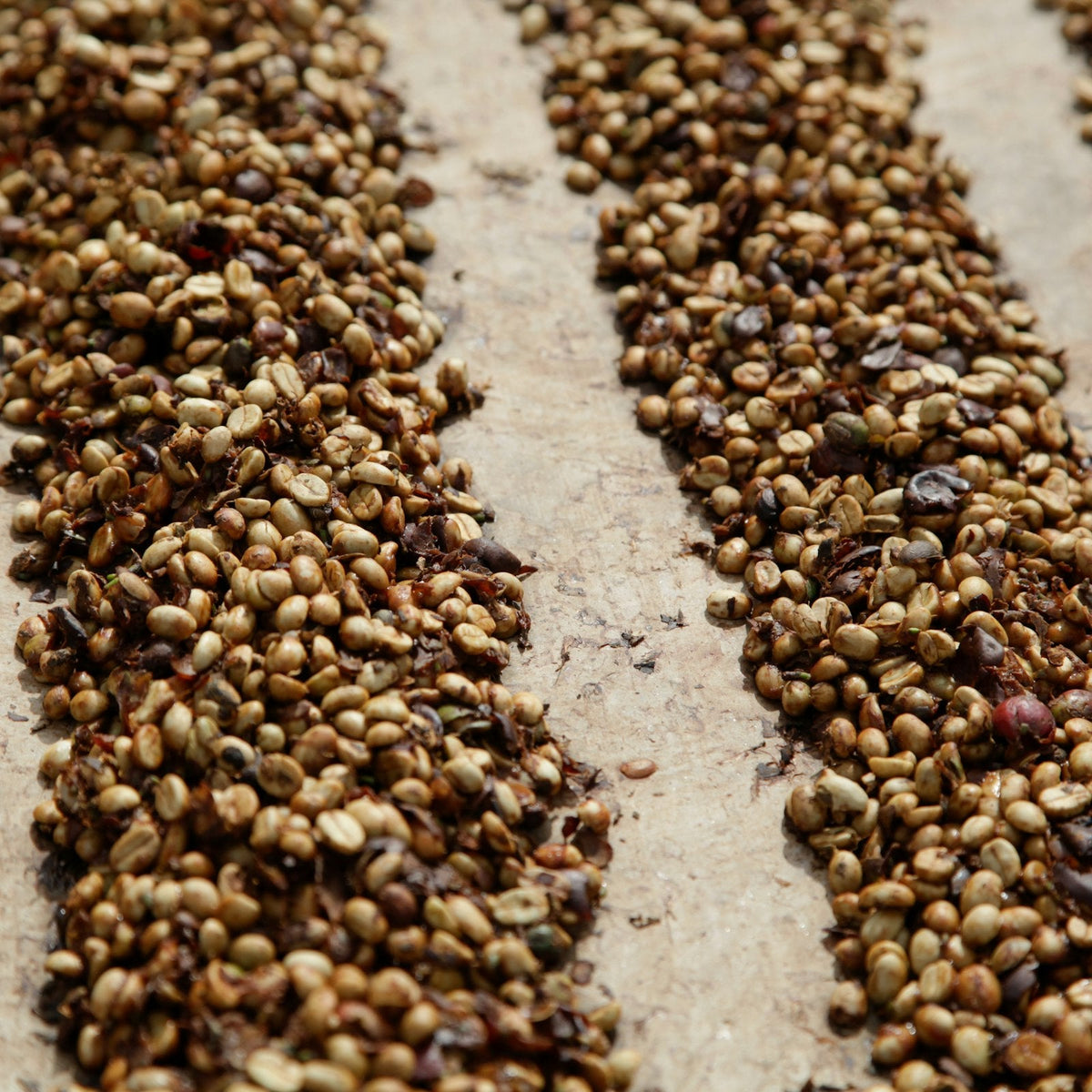
Read Brazil Machado's specification and nothing on it is unusual. The cultivar is Catuaí, bred in Brazil for Brazilian growing conditions and the country's workhorse. The processing is natural: whole cherries dried with the fruit still around the seed. The drying happens on patios, with mechanical drying to finish. The region is Sul de Minas. Every line is the Brazilian default.
The farm doesn't even keep its varieties apart. Adilson Moreira Soares, second generation on Recanto do Engenho, picks Catuaí alongside other Bourbon-related and hybrid trees and gathers the ripe cherries into a field blend that represents the property rather than a cultivar. It's the reverse of Ethiopia's heirloom varieties, where thousands of native types sit under one word because nobody has catalogued them.
Then the one line that does distinguish it. Brazil Machado cups 90.5, and publishes Milk Chocolate, Caramel, Roasted Almond, Dried Cherry and Orange Zest. The specification doesn't set this coffee apart from the commodity crop. The cupping table does.
Low acidity is the part of the profile readers ask about most, and it's a tasting attribute rather than a measurement. We cover what that label actually measures in its own article.
What to look for when the bag just says Brazil
If the country name can't carry a quality claim, five other things can, and we publish them: the farm, the producer, the cup score, what we paid for the green coffee, and the roast date. Any roaster could publish them. Few do, and on Brazil that absence tells you more than anywhere else.
Roast level is worth checking too, and ours isn't a house opinion. We assign it from measured ground color on the Agtron scale, classified against the SCA's roast color classification. Brazil Machado read Medium, alongside the rest of our medium roasts. It was also marked best for espresso, where low acidity and heavy body give a shot sweetness and texture instead of sharpness.
We roast to order every Wednesday in Pensacola and ship within 1-2 business days of the roast. If you want to see what this article is arguing, read Brazil Machado's published record and put its numbers against whatever else is on your counter.
Questions we get about Brazilian coffee
What does Brazilian coffee taste like?
Brazilian coffee typically tastes of chocolate, caramel, nut and dried fruit rather than the citric brightness of a washed East African coffee, with low acidity and a heavy body. That profile follows from natural processing and lower-altitude growing rather than from the country itself. Brazil Machado, the Brazilian lot we last roasted, published Milk Chocolate, Caramel, Roasted Almond, Dried Cherry and Orange Zest.
Is all Brazilian coffee the same?
No, and the range is wider than in any other origin, because Brazil grows more coffee than anywhere else. The same country supplies a great deal of commercial-grade coffee and a much smaller quantity of carefully picked specialty lots. That is why the word Brazilian on a bag tells you where a coffee grew and almost nothing about how good it is.
Where is coffee grown in Brazil?
Coffee is grown mostly in the southeast of Brazil, and Minas Gerais is the center of it. Within that state, Sul de Minas is the traditional Arabica heartland, and it is where our Brazilian lot came from: Recanto do Engenho farm, in the municipality of Machado, at roughly 1,150 meters.
How is Brazilian coffee processed?
Most Brazilian coffee is processed by the natural, or dry, method: whole cherries are dried with the fruit still around the seed before the husk is removed. Brazil's dry post-harvest climate suits it, and it gives the country's coffee its heavier body and rounder sweetness. Brazil Machado was naturally processed and dried on patios, with mechanical drying to finish.
Is Brazilian coffee good for espresso?
Brazilian coffee is one of the origins espresso was effectively built around. Low acidity, heavy body and bittersweet chocolate roast character give a shot sweetness and texture rather than sharpness, and they hold up in milk. El Salvador Finca San Luis is one of the coffees on our shelf marked best for espresso, and it sits in our Best for Espresso collection alongside our blend.
What is Sul de Minas coffee?
Sul de Minas coffee comes from the southern part of Minas Gerais, one of Brazil's oldest and largest Arabica-growing areas, built on family farms rather than large estates. Coffees from it are typically sweet, chocolatey and full-bodied. Brazil Machado came from Machado, a historic coffee municipality in Sul de Minas, from a farm the Moreira family has worked for two generations.