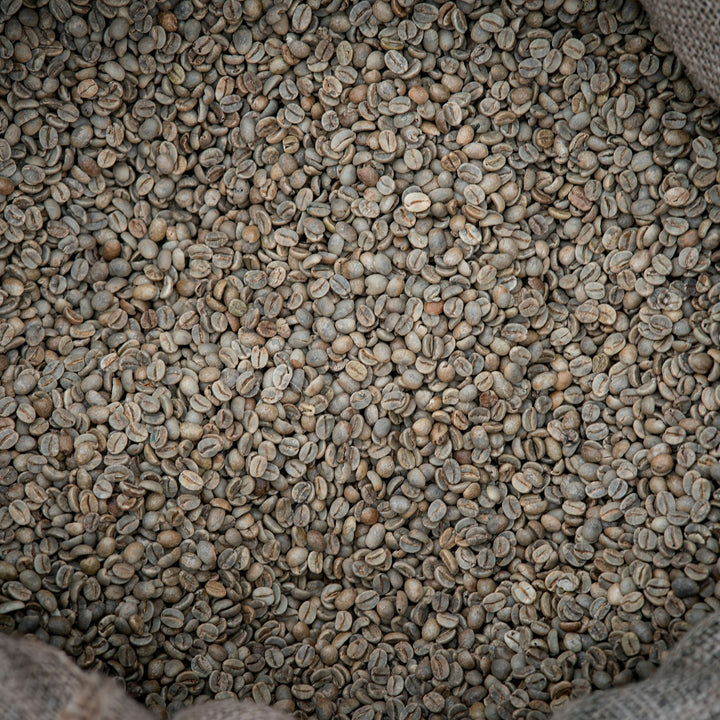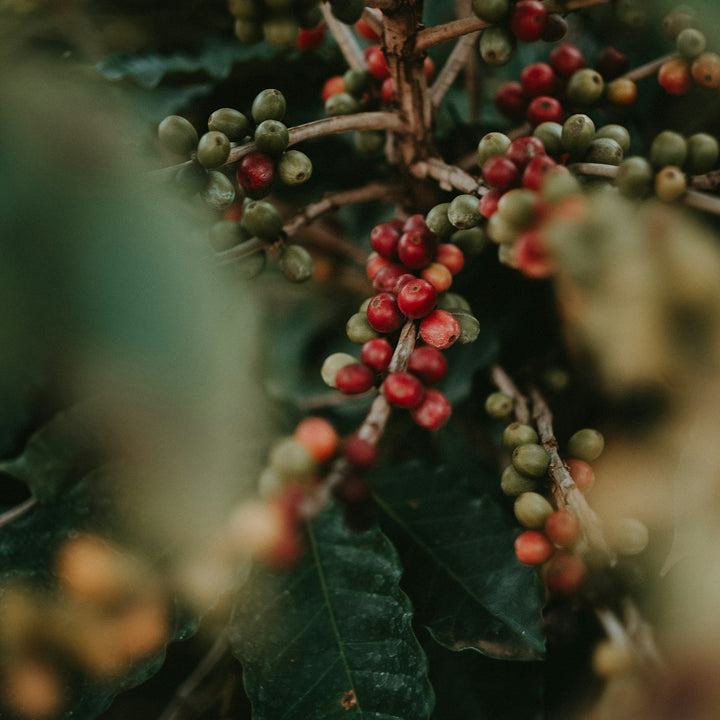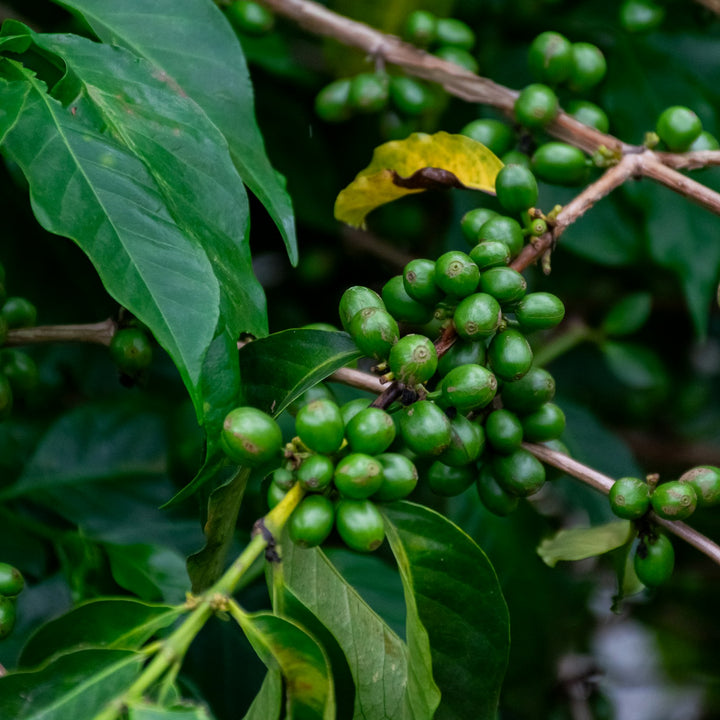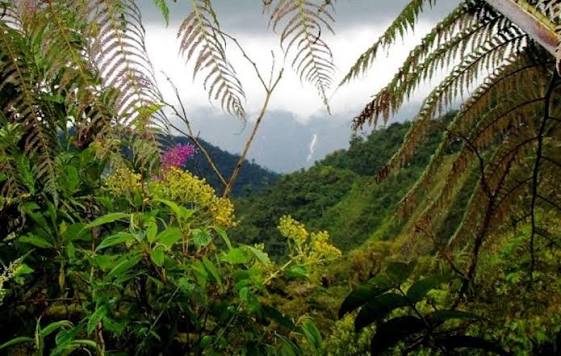
Colombian coffee is grown across roughly twenty departments on three Andean ranges. It is not a single flavor, not a roast level, and not a quality grade.
Key takeaways
- Supremo and Excelso are screen-size grades describing how large the beans are, not how good the coffee tastes.
- Colombia harvests twice a year, a main crop and a smaller mid-year mitaca, so its green reaches roasters nearly year-round.
- Colombia replanted much of its Caturra with rust-resistant Castillo after 2008, which is why the classic profile changed.
- Roast level and freshness move the cup more than the country on the label does.
Colombian coffee names a country, not a flavor
Coffee grows in roughly twenty of Colombia's thirty-two departments, across three branches of the Andes. A bean from Nariño on the Ecuadorian border and one from the Sierra Nevada de Santa Marta on the Caribbean coast are 900 miles apart and do not taste alike.
That a supermarket bag can promise one consistent flavor is an institutional achievement, not an agricultural fact. The Colombian Coffee Growers Federation, founded in 1927, introduced Juan Valdez in 1958 and has spent a century standardizing the national crop into one product. That is a brand promise, not a cup description. Our Colombia origin story covers how it was built, though the coffees pictured there are gone.
Two harvests a year is the thing that actually makes Colombia unusual
Colombia sits between 1 and 11 degrees north of the equator, close enough that many growing areas flower and harvest twice. The main crop arrives from about October through February; the smaller mid-year mitaca follows around April to June.
So Colombian green lands at importers nearly year-round while most origins ship one annual wave. That is why Colombia became the default base for American blends, and why the variable to check on a bag is the roast date, not the season.
Supremo and Excelso are bean sizes, not quality grades
These two words appear on almost every American bag of Colombian coffee, and almost nobody explains them. Both are export classifications based on screen size: beans are sifted over perforated screens measured in sixty-fourths of an inch. Supremo is screen 17 and above. Excelso covers roughly 14 to 16, and it is the grade most of the crop ships under.
A Supremo bag tells you the beans are large. It tells you nothing about variety, processing, producer, or how the coffee cups. Large beans do roast more evenly across a batch. If the most specific word on a bag is Supremo, the bag is describing a sieve.
The range of flavors varies by department
The southwest, meaning Huila, Nariño and Cauca, grows highest, commonly above 1,700 meters, and tends toward bright acidity and tropical fruit. The central belt of Caldas, Quindío and Antioquia gives the caramel-and-red-apple profile people mean by "classic Colombian." Santander and the Sierra Nevada, in the north, sit lower and lean nuttier.
Huila is where Pink Bourbon was identified, a variety now trading at two to three times commodity prices.
Colombia replanted itself to survive leaf rust, and you can taste the decision
Colombia was a Caturra country for most of the twentieth century. Caturra is a compact mutation of Bourbon that cups beautifully and has almost no resistance to leaf rust, and by the 2000s it made up close to half the national crop. Cenicafé, the Federation's research center founded in 1938, bred the alternatives: the Colombia variety in 1982, then Castillo in 2005, both from a Caturra cross with the rust-resistant Timor Hybrid.
A national replanting program beginning in 2008 moved farms off Caturra and onto Castillo. It worked, and it traded some cup character for survival, which is the honest answer to why "classic Colombian" tastes different than it did in 1985. World Coffee Research's variety catalog documents the susceptibility that forced it; our Caldas region page covers how it played out. For the opposite case, read about Ethiopia's heirloom varieties.
Roast level and freshness move a Colombian cup more than the country does
Origin sets a ceiling and the roaster decides how much of it reaches you. The same Huila lot roasted light reads as citrus and cane sugar; roasted dark it reads as cocoa and toast. Neither is more authentic. If you want fruit and acidity, read what light roasting actually does and buy light; if you want chocolate and body, buy dark without apologizing.
Roast level barely moves caffeine, and it moves it opposite to the common assumption. Beans lose 12 to 20 percent of their weight in the drum, mostly water, while caffeine only sublimes above roughly 400°F. Mass leaves faster than caffeine, so a gram of dark roast carries slightly more than a gram of light. Research puts a brewed 8-ounce cup at 134 to 165 milligrams across roast levels.
Questions we get about Colombian coffee
Is Colombian coffee strong?
Strong means one of two things. If you mean caffeine, no: a Colombian cup sits in the same range as any other arabica, and dose and brew time control it. If you mean bold and roasty, that is the roaster's decision, not the origin's.
What is Colombian coffee?
Colombian coffee is grown across roughly twenty departments on three ranges of the Andes. It names a country of origin, not a variety, a roast level, or a quality tier, and the cup varies widely from Nariño to the Caribbean coast.
What is in Colombian coffee?
Arabica, almost always washed, and increasingly the rust-resistant Castillo and Colombia varieties rather than the older Caturra and Typica.
Is Colombian coffee dark roast?
No — dark roast is a decision the roaster makes, not a property of the bean, and American supermarkets roasted Colombia dark for decades until the association stuck. Read the roast level on the bag, and see what light roasting actually does if you want fruit.
Is Colombian coffee stronger?
No, not in any measurable sense: Colombia is no higher in caffeine than other arabica origins, and its typical profile is balanced rather than heavy. Strength comes from brew ratio, grind and roast level, not from the country on the bag.
Is Colombian coffee good?
Yes, it is unusually consistent. High altitude, careful wet processing and a century of Federation quality control put the floor higher than almost any origin. Ethiopia and Kenya give more distinctive cups.
What does Colombian coffee taste like?
The classic profile is caramel, red apple, brown sugar and clean citrus acidity, with medium body. Huila, Nariño and Cauca in the southwest push brighter and more tropical; Santander and the Sierra Nevada run nuttier and heavier. Natural-process lots taste of berries.
Does Colombian coffee have more caffeine?
No. Caffeine is driven by species, dose and extraction, not country, and Colombia grows arabica, which carries roughly half the caffeine of robusta. Brewed coffee generally lands between 134 and 165 milligrams per 8-ounce cup across roast levels. Use more coffee, not another origin.