Kenyan coffee is Arabica grown at altitude in the country's central highlands, almost all of it washed, sorted by bean size into grades like AA, and sold largely through a national auction. Every one of those facts describes a country. None of them tells you what's in the bag sitting on your counter.
Key takeaways
- Kenya grows Arabica in its central highlands, washes it with an extended fermentation, and dries it on raised beds for roughly 10 to 20 days.
- AA is a screen size rather than a quality rating: it describes how large the beans are and says nothing directly about how the coffee tastes.
- Most of the country's crop comes from smallholders delivering cherry to cooperative washing stations; our lot comes from Spike Farm Estate, a privately managed farm of about 12 hectares in Kiambu County.
- That lot grades AA and cups 91.5, and its published tasting notes contain no blackcurrant, the flavor the origin is best known for.
Kenya names a system before it names a taste
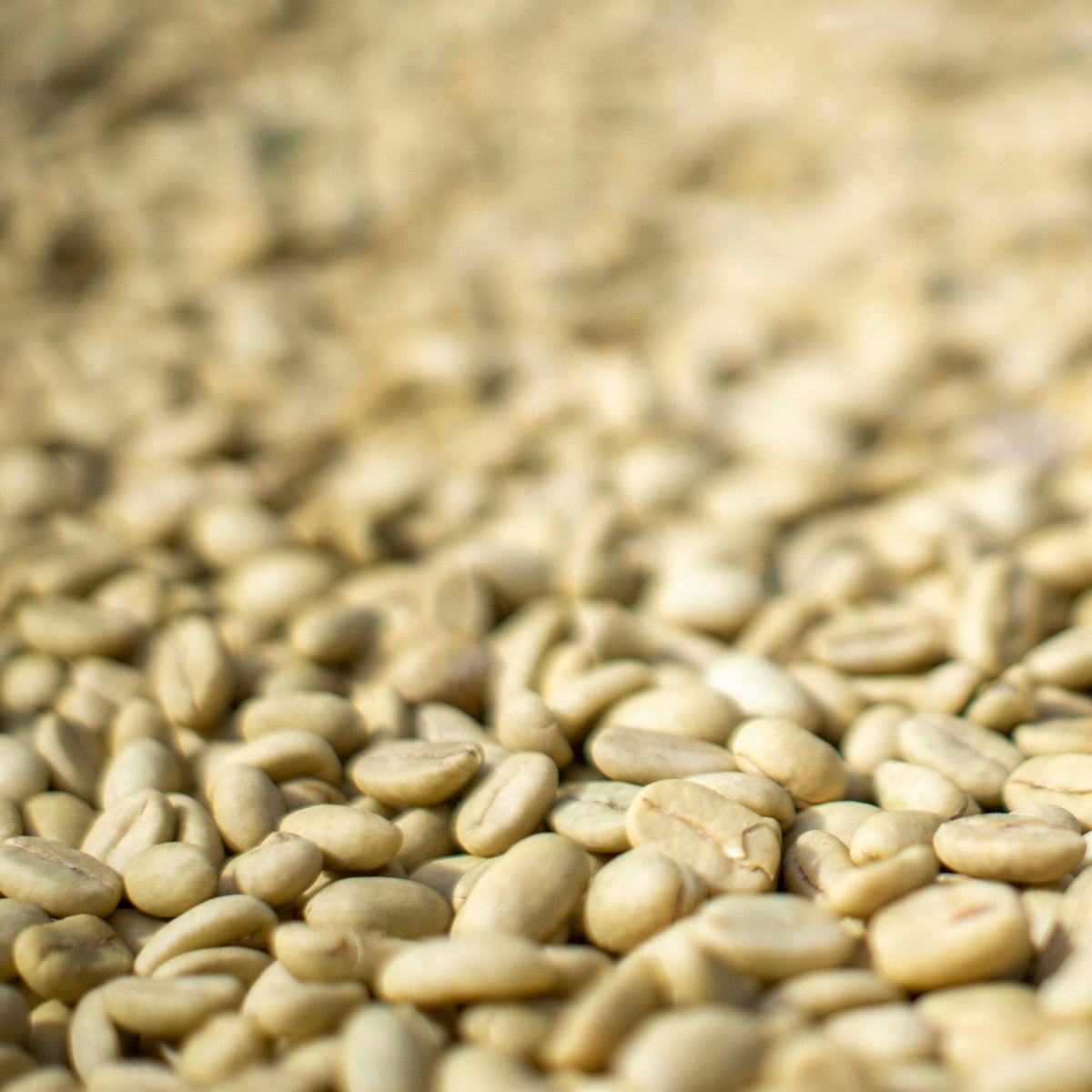
Ask what makes a Kenyan cup recognizable and the honest answer is infrastructure rather than flavor. Cherry is depulped, fermented until the mucilage breaks down, washed thoroughly, then dried on raised mesh beds, turned routinely and covered against sun and night humidity, for roughly 10 to 20 days. Our own record of the origin lists the growing counties as Nyeri, Kirinyaga, Murang'a, Embu, Kiambu and Meru, plus Bungoma and Kisii in the west, at roughly 1,500 to 2,100 meters. Most of the crop sells at a national auction.
That system is why the reputation exists. It produces a cup with bright, juicy acidity and a clean finish often enough that the description became shorthand for the whole origin. Whether that brightness is a measurement rather than a tasting note is a different question, and our article on low-acid coffee answers it.
The grading letters measure the bean, not the cup
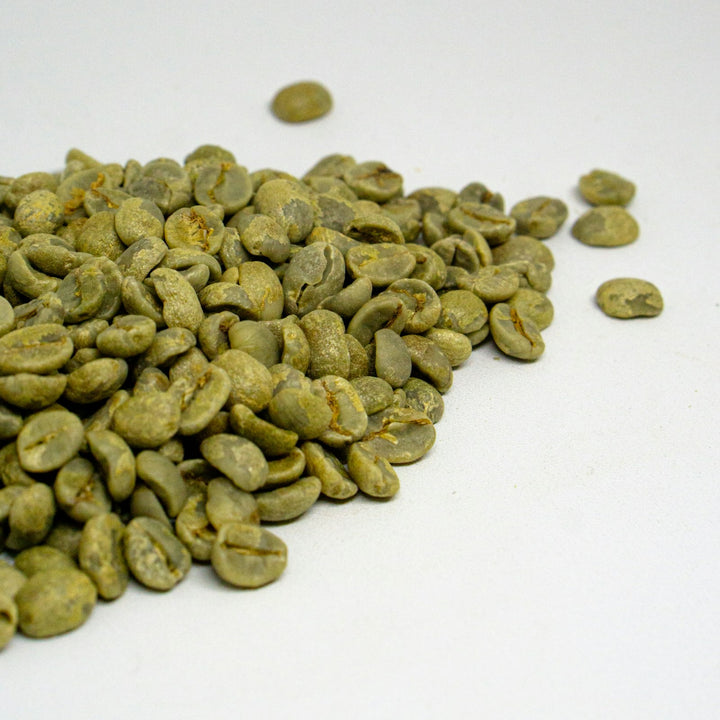
AA is a screen size. Kenya's system sorts finished green coffee through a set of sieves, and AA is the largest common size, which describes the bean and not the cup. The field gives away that it knows this: two pages ranking for this question list the same eight Kenyan grades in incompatible orders, one running MH/ML, T, TT, C, AB, AA, PB, E from lowest to highest, the other opening with E, PB, AA, AB and working down. Eight letters, two orders, both presented as a quality ladder. It was never one.
There's a reason a size grade carries this much weight. The Specialty Coffee Association publishes four Coffee Value Assessment standards, SCA-102 through SCA-105, covering how a coffee is prepared, tasted, described and assessed. SCA-110, "Green Coffee: Grading, Specifications, and Test Methods (for the Purpose of Trading)," is listed as still in development. There are published standards for tasting a coffee while the green-grading standard is still being drafted. Kenya's system grades size, and it grades size well.
Our Kenya is not the Kenya the guides describe
Every guide to this origin describes a smallholder system, and it's right to. Between 60 and 70 percent of the crop comes from farmers with a few hundred trees delivering cherry to a cooperative washing station, often called a factory. Our lot is the other share, which the guides barely acknowledge exists.
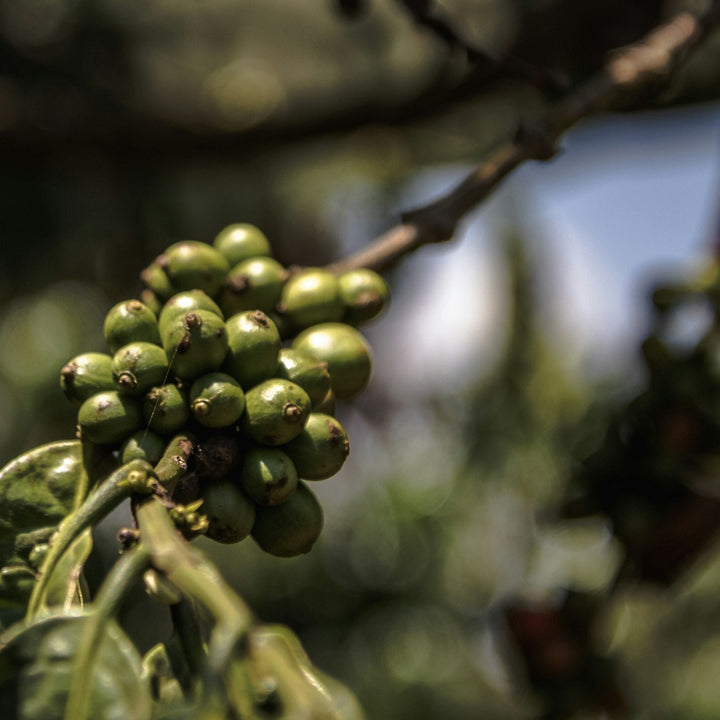
Kenya Kiambu comes from Spike Farm Estate in Kiambu County, just north of Nairobi. It's a privately managed estate of roughly 12 hectares, so cherry becomes green coffee under one manager rather than passing through a collective. Moses, the farm manager, oversees cultivation, the selective hand-harvest, the wet mill, fermentation and the raised beds, and buyers who have visited have documented him working the pulper himself. On our shelf the lot arrives as one of the single origins, and it's the only washed one — everything else we sell dried in the fruit.
Two cultivars carry the reputation, and this farm is already hedging against them
SL-28 and SL-34 were both selected by the Scott Agricultural Laboratories in Kenya in the 1930s. SL-28 was catalogued in 1935 from a drought-resistant Bourbon type out of Tanganyika, chosen for resilience alongside cup quality; SL-34 came from the French Mission Bourbon line and suits high rainfall. Compare Ethiopia's heirloom populations, thousands of native varieties nobody has finished naming. Kenya's reputation rests on two named selections with a laboratory and a year attached.
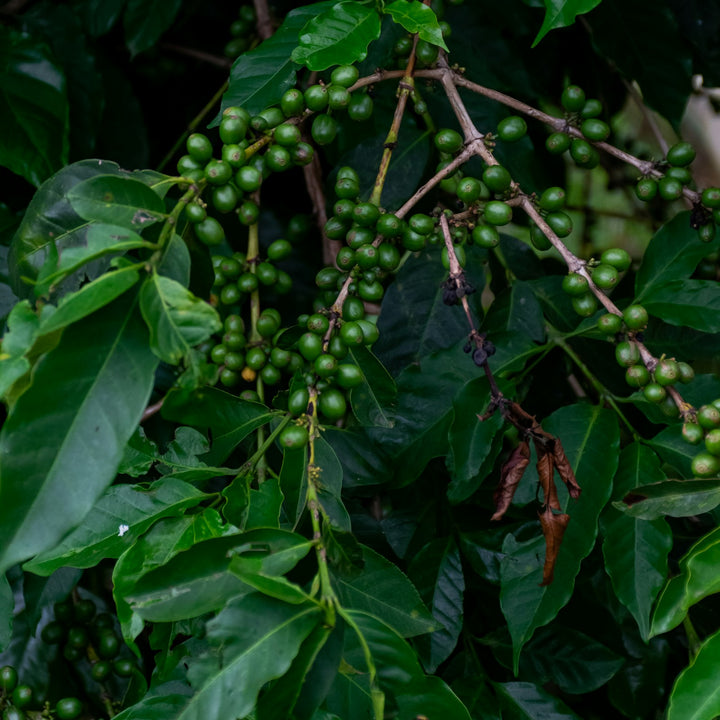
Both are vulnerable, and the field knows it. Our own cultivar records rate SL-28 low for leaf-rust resistance and mark both selections susceptible to coffee leaf rust and coffee berry disease. Sweet Maria's, the best page in this field, gives varieties and plant disease a whole section on exactly that premise, and they're right to. What nobody publishes is what a particular farm does about it. Spike Farm grows Ruiru 11, bred for resistance, and is grafting it onto SL rootstock to keep the SL cup on a hardier root. The next harvest is to be kept separate by cultivar, so the difference can be tasted rather than argued about.
What we publish about this bag, and the one line that is blank
Kenya Kiambu carries Kenya's AA grade and cups 91.5. The first number measures how big the beans are; the second measures how the coffee tastes. We publish both, because the letter is the one everybody quotes and the score is the one that answers the question they were actually asking. Bean size alone doesn't determine quality; AA lots are prized for consistency in roasting rather than for flavor.
We publish what we paid per pound for the green coffee on most of our shelf, and on this Kenya that line is blank. It's a gap in our record, not a statement about the coffee, and we'd rather leave it empty than put a number there we can't stand behind. Read nothing into the blank in either direction; it carries no information about this lot.
The rest of the record is filled in. The lot is washed, dried on raised beds, and roasted light, a level we assign from measured ground color read against the SCA's roast color classification. What a light roast actually is takes longer to answer than this article has room for. Its published notes are brown sugar, maple syrup, dried tamarind, cranberry, citrus and clove, and we list it for drip.
Questions we get about Kenyan coffee
What does Kenyan coffee taste like?
Bright and juicy, with citrus, dark sugar and often blackcurrant over a clean finish. That is the country's reputation and it is earned, but it describes no particular bag. Our Kiambu lot's published notes are brown sugar, maple syrup, dried tamarind, cranberry, citrus and clove, with no blackcurrant at all, on a coffee from the county most associated with it.
What is Kenya AA coffee?
A size grade, not a farm and not a flavor. AA is the largest common bean screen size in Kenya's grading system, which sorts green coffee through a set of sieves. Larger beans correlate with density and careful sorting, which is why the letter carries a reputation, but it tells you nothing directly about how the coffee tastes. Our Kiambu lot graded AA.
Does Kenya AA taste better than Kenya AB?
Not reliably, and the letters were never designed to tell you. Both describe screen size, and pages that rank the eight Kenyan grades cannot agree on the order: some put AA at the top, others put PB and E above it. The number that answers the question is a cup score, produced by tasting under a published protocol. This lot grades AA and cups 91.5.
What coffee varieties grow in Kenya?
Mostly two old Scott Laboratories selections and two newer hybrids. SL-28 and SL-34 were selected in Kenya in the 1930s and still carry the country's reputation for acidity and structure; both are susceptible to coffee leaf rust and coffee berry disease. Ruiru 11 and Batian were bred for resistance. Our lot is SL-28 and SL-34, from an estate that also grows Ruiru 11 on SL rootstock.
Where is coffee grown in Kenya?
In the central highlands around Mount Kenya and the Aberdares, and in pockets of the west. The main coffee counties are Nyeri, Kirinyaga, Murang'a, Embu, Kiambu and Meru, with Bungoma and Kisii in western Kenya, at elevations roughly between 1,500 and 2,100 meters on volcanic soil. Our lot comes from Kiambu County, just north of Nairobi.
Why is Kenyan coffee so highly regarded?
Because the country built its infrastructure around quality rather than volume: exacting washed processing with an extended fermentation, drying on raised beds, deliberate cultivar selection, and an auction that pays measurable premiums for better lots. That is a reputation earned at country level, which is exactly why the farm, the process and the score on the bag still matter.
Start with the bag, not the country
Kenya Kiambu is where the country description stops being abstract: a washed AA lot from Spike Farm Estate, SL-28 and SL-34, cupping 91.5. If what you want is the blackcurrant the origin is famous for, this isn't the bag, and you should know that before you order rather than after.
We roast it to order in Pensacola every Wednesday and grind it to your brewer at no charge. Order Kenya Kiambu, brew it on drip, and check the country description against the cup in front of you.