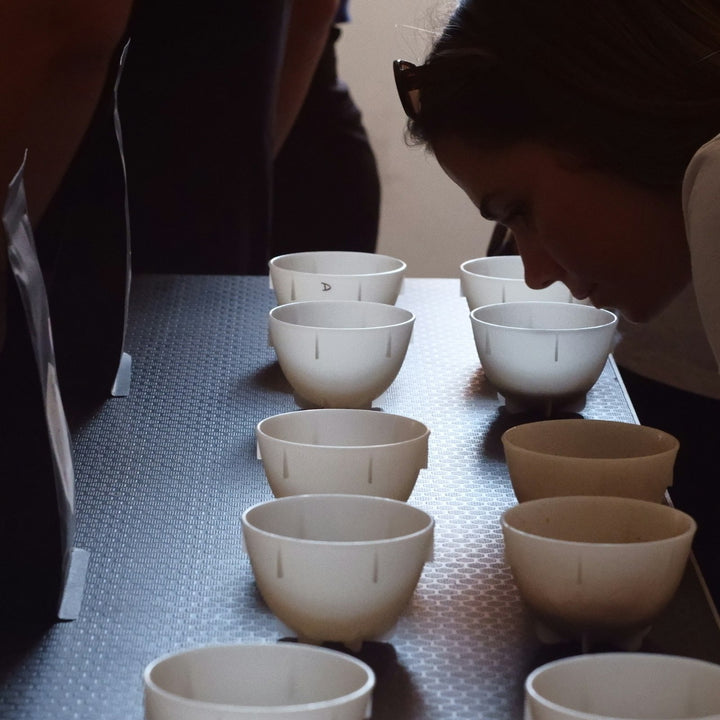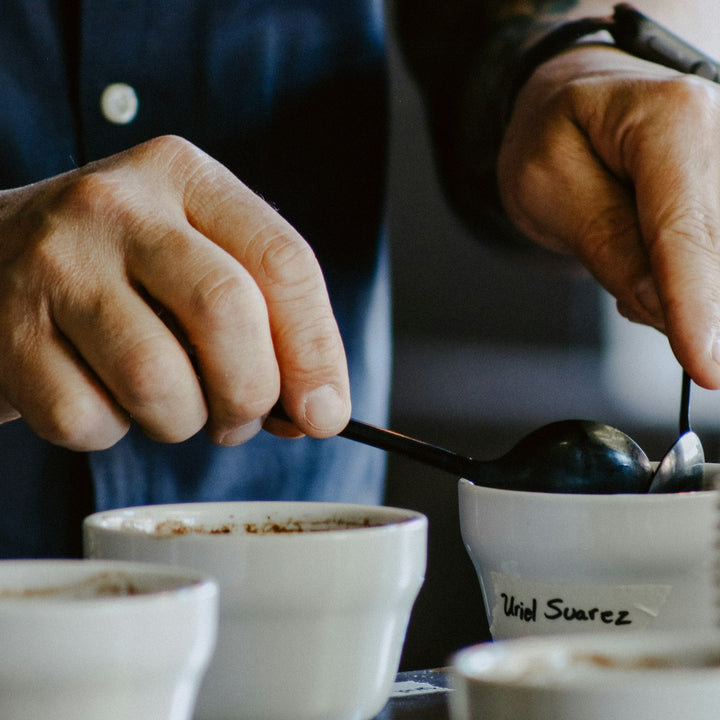
Acidity in coffee is the tartness and liveliness that come from citric and malic acid, the same organic acids that make a green apple taste crisp or a lemon taste sharp. On the Specialty Coffee Association's current cupping form, acidity is one of five scored Affective attributes, alongside fragrance and aroma, flavor and aftertaste, sweetness, and mouthfeel, and a high score there is a compliment, not a complaint.
That surprises people who grew up hearing "acidic" used as a knock on cheap coffee, so it is worth being precise about what the word means on a cupping table before going any further.
Is Acidity the Same Thing as Sourness?
No, and mixing the two up is where most of the confusion starts. Acidity, scored well, reads as bright, structured, and clean: a citrus snap, a grape-like tartness, something that makes a cup feel alive rather than flat. Sourness is different. It shows up as a flat, vinegar-like edge, usually from a coffee that was picked underripe, over-fermented during processing, or roasted in a way that never fully developed the bean's sugars. A cupper scoring a coffee for acidity is rewarding the first thing and marking the second thing down, often on the same line of the same form.
Our own piece on malic acid covers how one specific acid actually tastes and why altitude concentrates it. This one is about the broader attribute: what the cupping table is scoring, why some coffees carry more of it than others, and what we do with that on our own shelf.
Why Do Some Coffees Have More Acidity Than Others?
Altitude is most of the answer. A cherry that ripens slowly, in the cooler air higher up a mountain, has more time to build organic acids before sugar production takes over, and the altitude figures we cited in the malic acid piece (roughly 1,600 to 2,200 meters as the band where that effect gets strong) hold for acidity generally, not just for one acid in particular. Processing plays a second role: a washed coffee, where the fruit is removed before drying, tends to taste more structured and acid-forward than a natural, where the fruit stays on the seed through drying and pushes the cup toward fruit and fermentation character instead.
Roasting only ever takes acidity away, never adds it. Royal Coffee's own explainer on the subject puts it plainly: "lighter roasts retain fruity malic and citric acids, while darker roasts break them down into bitter quinic and caffeic acids." A green coffee arrives with whatever acidity its altitude, variety, and processing gave it, and from the first crack onward, heat can only spend that down. How you brew it afterward matters too: filter methods like pour-over show a coffee's acid structure more clearly than an espresso shot does, where pressure and crema tend to mute it.

How Do We Build Acidity Into ASCENT?
Most of what we sell is single origin, where the acidity is whatever one farm and one harvest gave us. ASCENT is the one coffee on our shelf where we build the acidity on purpose rather than inherit it. It is a 50/50 blend, and our own product page says it plainly: the washed Kenya half is there to bring "structure, citrus acidity and a clean finish," while the natural Ethiopia half brings the fruit and sweetness that keep that acidity from reading as sharp on its own. We buy both halves at the top of each harvest, so the specific lots rotate through the year even though the ratio and the character we are building toward do not.
That is a deliberate trade against simplicity. A single-origin coffee's acidity is whatever the harvest handed us, for better or worse. A blend takes more sourcing work, twice a year instead of once, to keep that same citrus structure showing up in the cup bag after bag.
Does Decaffeination Remove Acidity?
Mason has ruled on this directly: "Caffeine removal and acid removal are two different processes. Decaffeination doesn't necessarily remove acid, but some methods remove soluble matter and re-infuse the soluble matter with the coffee seed after the caffeine removal. It's conceivable that some of the acids are not reabsorbed into the coffee, but the difference is probably hard to notice." In plain terms, there is no blanket rule that decaf tastes flatter because the caffeine is gone. Whether a given decaf process touches acidity depends on how that specific method pulls the caffeine out, not on decaffeination as a category.
Our own Organic Peru Decaf is tagged low-acid on our own shelf, and it is also a natural-processed lot, which tends toward rounder, less acid-forward character before decaffeination even enters the picture. If citrus brightness is what you are chasing, this is not the coffee for it. If you want the caffeine gone without the sharp edge, it is exactly the coffee built for that instead.
Questions We Get About Acidity
Is high acidity a sign of a better coffee?
Not automatically, but it correlates. High-grown washed coffees tend to score well on acidity and tend to be harder and more expensive to produce, which is part of why they often cost more. A low-acid coffee is not a defective one. It is simply built, by altitude or processing, around a different kind of brightness, or around none at all.
Why did my coffee taste sour instead of bright?
Sourness and acidity are not the same attribute. A flat, vinegar-like sourness usually points to underripe cherry, uneven fermentation during processing, or a roast that stopped before the bean's sugars had a chance to develop. Bright, structured acidity is the opposite of that, and a cupper scores them on opposite ends of the same line.
Does roast level change a coffee's acidity?
Yes, in one direction only. Lighter roasts retain more of the citric and malic acid the green coffee arrived with. Darker roasts break both down into less bright compounds as the roast pushes past first crack.
One honest limit: we do not run our own titratable acidity measurements or publish a pH number for any coffee we sell. Everything above is the cupping-table kind of acidity, not a lab figure, and we would rather say that plainly than hand you a number that isn't ours.
Taste it for yourself. ASCENT is built on a washed Kenya half specifically for citrus acidity and a clean finish, roasted to order in Pensacola every Wednesday. Want the caffeine gone without the brightness? Organic Peru Decaf is our low-acid pick instead. More on how we score a cup at all in Taste & Culture, or see how acidity sits next to sweetness and balance on the same cupping form. We covered chlorogenic acid, a different compound that does not drive perceived brightness, separately in What Is Chlorogenic Acid in Coffee?