Vietnam's 2026/27 coffee crop is expected to come in at about the same size as last season's, growers and traders in the Central Highlands told Reuters in a report published on 19 October 2026. The worry they described is the crop after this one. Trinh Duc Minh, chairman of the Buon Ma Thuot Coffee Association, said output this season would be "broadly in line with the previous crop," and that younger, replanted trees were yielding more in some areas and making up for earlier weather losses, according to the Reuters story as republished by The Star on 19 October 2026.
Vietnam grows about 40% of the world's robusta, Reuters reported on 19 October 2026, or roughly two of every five robusta beans grown anywhere. Robusta is a different species from arabica, a point covered in our explainer on robusta.
What does the USDA forecast for Vietnam's 2026/27 crop?
The most recent official number in the Reuters report is the US Department of Agriculture's May 2026 projection. It forecast Vietnam's 2026/27 output at 32.5 million 60-kg bags, up 2.5% on the season before, with robusta at 31.4 million bags, up 3%, Reuters reported on 19 October 2026. At 60 kg a bag, 32.5 million bags is about 1.95 million metric tons of green coffee (our arithmetic on the USDA figure).
The USDA attributed the gain to replanted and renovated farms entering a stable harvesting phase, and to high 2024/25 prices that encouraged growers and larger private companies to expand, according to the Reuters report carried by Forbes Brasil on 19 October 2026. Reuters described the industry's own view as more cautious than the USDA's. An unnamed trader in Dak Lak province told the agency that output would be roughly unchanged, and that excess rain and pest outbreaks early in the year had hurt some areas but not the whole region evenly. That is a forecast from the trade, not a measurement, and the USDA's May figure was published before the harvest began.
Why are growers watching the 2027/28 crop?
The concern in the Reuters report is El Niño. Minh said the event was expected to be very severe, that it could cut output in the 2027/28 crop, and that irrigation water was expected to fall short. Tran Thi Mai, who farms 2 hectares (about 4.9 acres) in the Central Highlands, told Reuters that she had been through a similar episode a decade ago, when El Niño hit both output and prices. She said drought could begin to affect irrigation as early as February, and that next season's crop would very likely be smaller. Both are growers' expectations rather than estimates, and Reuters reported that industry participants said it was still too early to put a number on the effect.
Reuters also cited Japanese meteorologists, who said on 9 October 2026 that the change in eastern Pacific water temperature was the largest since records began in 1949.
The NOAA Climate Prediction Center's diagnostic discussion of 8 October 2026 kept its El Niño Advisory in place, reported a monthly Niño-3.4 index of +2.1°C, and put the chance of a strong-to-very strong El Niño lasting through January to March 2027 at greater than 83%. The CPC said its next update is due on 12 November 2026. We reported that 8 October discussion, and what it meant for Central American growers, in our story on El Niño and coffee.
What has Vietnam's own weather service warned?
Vietnam's government warned of drought in the Central Highlands months before the harvest. At a Ministry of Agriculture and Environment press conference on 17 June 2026, Mai Văn Khiêm, director of the National Center for Hydro-Meteorological Forecasting, said the region's rainy season might end early and that perennial crops, coffee in particular, would be affected, according to Sài Gòn Giải Phóng on 17 June 2026. He advised farmers to store water for irrigation early.
In a later interview with the same paper, published on 23 July 2026, Khiêm said an early end to the rains would lengthen the dry season and hit coffee and other crops that need a lot of water. Đặng Thanh Mai, deputy director of the ministry's hydro-meteorological department, put the chance of a very strong El Niño at about 60% to 65% and said the Central Highlands faced drought and water-shortage risk in late 2026 and early 2027, Sài Gòn Giải Phóng reported. Deputy Minister Lê Công Thành told the paper that provinces had been instructed not to plan production beyond the water supply they could guarantee.
How has the 2026/27 harvest started?
The new harvest has begun and fresh coffee is reaching buyers gradually, the Vietnamese daily Báo Văn Hóa reported on 20 October 2026, in a market report by Hùng Nguyễn. The paper listed farm-gate prices for the 19 October session, each up 200 dong a kilogram:
- Đắk Nông: 93,200 dong per kg (Báo Văn Hóa, 19 October 2026 session)
- Đắk Lắk: 93,000 dong per kg (Báo Văn Hóa, 19 October 2026 session)
- Gia Lai: 93,000 dong per kg (Báo Văn Hóa, 19 October 2026 session)
- Lâm Đồng: 92,300 dong per kg (Báo Văn Hóa, 19 October 2026 session)
Báo Văn Hóa's own analysis said that as more new-crop coffee is sold, price gains could meet resistance if buyers purchase slowly. That is the paper's assessment, not a reported figure.
How does this compare with Vietnam's exports so far this year?
The crop outlook follows nine months in which export volume rose and earnings fell. Vietnam's agriculture ministry reported exports of about 1.4 million metric tons in January to September 2026, up 15.4%, earning US$6.54 billion, down 7.3%, as we covered in our report on Vietnam's nine-month exports on 2 October 2026. The International Coffee Organization's September 2026 market report recorded Vietnam's August exports, in all forms, at 2.24 million bags, up 48.0% on August 2025, as set out in our summary of that report.
The next dated readings on the weather risk are the CPC's 12 November update and the dry season itself, which growers quoted by Reuters said could begin to bite on irrigation from February.
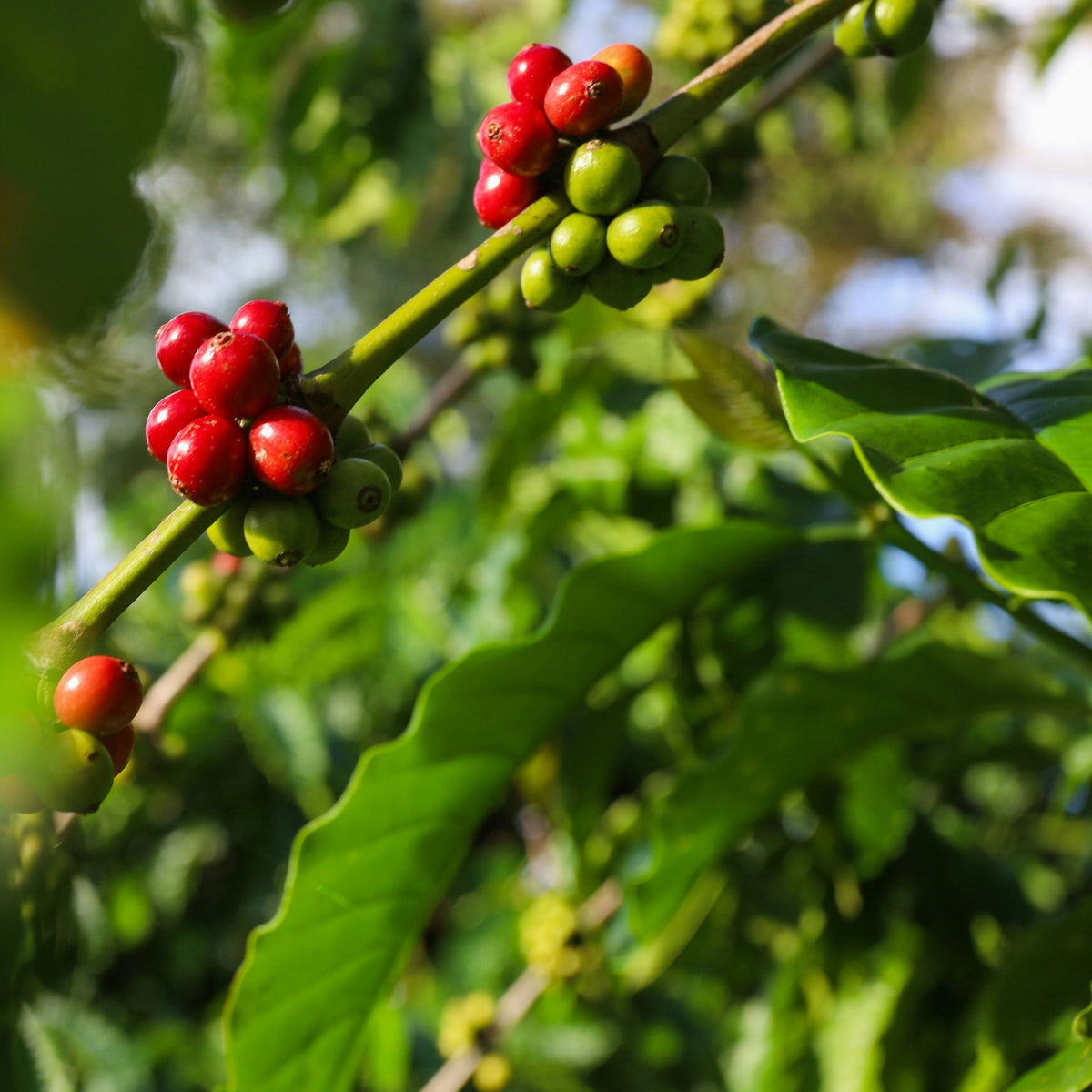
Photograph: Helena Coffee Vietnam, Unsplash. Coffee cherries on a robusta branch, not taken at any farm named in this story.
This report is built on reporting by Reuters (via The Star and Forbes Brasil), Sài Gòn Giải Phóng and Báo Văn Hóa, and on the NOAA Climate Prediction Center's published discussion. Quotations are as published in those reports.